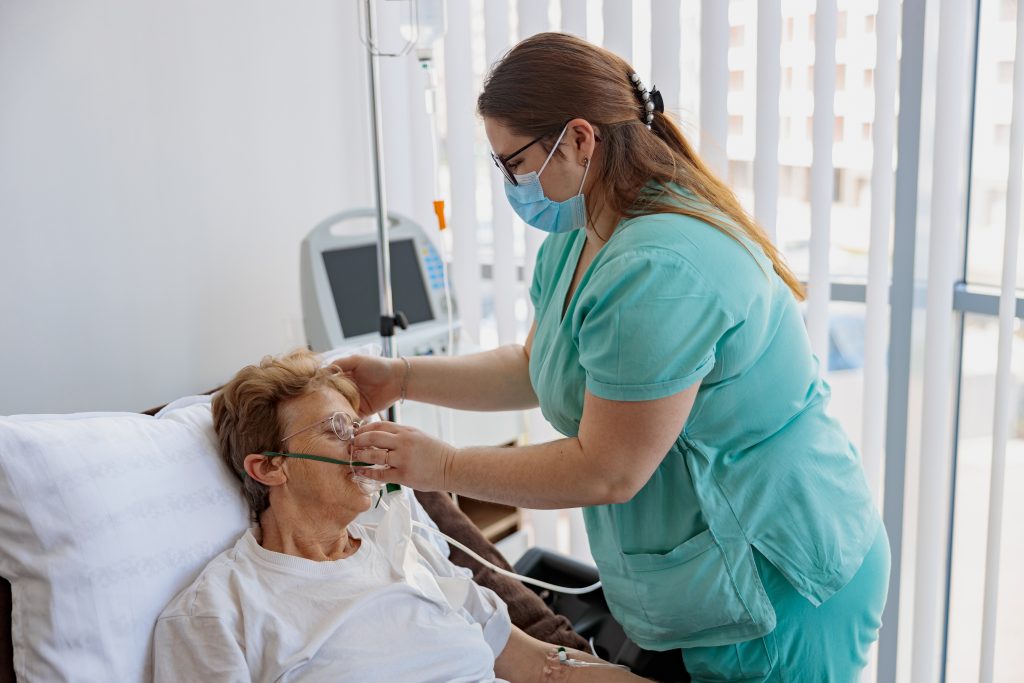
Compare Ohio's top accelerated BSN programs by cost, format, and NCLEX outcomes to choose your best fit.
By Hannah Pierce, BSNReviewed by TopNursing.org TeamUpdated August 12, 202625+ min read
Points of interest…
Ohio ABSN programs graduate nurses in 12 to 18 months for career changers with a prior bachelor’s degree.
Ohio projects 7,630 annual RN openings through 2030, fueling demand for accelerated nursing graduates.
Students can access Ohio-specific scholarships like the $10,000 TriHealth Nursing Scholarship to offset costs.
Our rankings prioritize NCLEX pass rates (30% weight) to highlight programs that best prepare for licensure.
With Ohio projected to need roughly 7,600 new registered nurses each year this decade, hospitals and universities are leaning on accelerated BSN tracks to speed career changers into licensure.
These programs compress a BSN into 12 to 18 months for students who already hold a non-nursing bachelor's degree. The intensity is non-negotiable: most students treat the program as a full-time job, and admission often hinges on prerequisite completion and a competitive GPA.
ABSN Programs in Ohio at a Glance
Accelerated BSN programs in Ohio offer a fast, structured path for career changers ready to become registered nurses, with most full-time students finishing in about 12 to 18 months.1
Quick-Reference Table
Factor | What to Know in Ohio
---|---
Typical Program Length | 12, 18 months of full-time study
Delivery Formats | Campus, hybrid, and online coursework; all require in-person labs, simulation, and clinical rotations2
Prior Degree Required | A completed bachelor’s degree in any non-nursing field from an accredited school3
Common Prerequisites | Anatomy & Physiology I and II with labs, Microbiology with lab, General Chemistry, Statistics, Lifespan Development, Psychology, Nutrition, English composition, and social sciences4
Minimum GPA | Overall GPA 2.5, 3.0; science GPA 2.8, 3.0 (varies by school)2
Major Nursing Markets | Cleveland, Columbus, Cincinnati, Akron, Dayton, Toledo, and surrounding metro areas
State Board of Nursing | Ohio Board of Nursing
Nurse Licensure Compact (NLC) | Ohio is a compact state, allowing multi-state practice for eligible nurses
Ohio’s central location and diverse healthcare systems, including major academic medical centers, community hospitals, and rural clinics, provide clinical placements across urban and underserved areas. Because the state is part of the Nurse Licensure Compact, ABSN graduates who pass the NCLEX-RN can apply for a multistate license, giving them flexibility to practice in other compact states without obtaining additional single-state licenses.
Prerequisites must be finished before beginning core nursing courses, and many Ohio ABSN programs expect a prior degree GPA of at least 2.5 to 3.0, with a higher science GPA often required.2 Since clinical rotations are arranged by the school, students typically train at facilities across Ohio’s major healthcare markets, including the Cleveland Clinic, OhioHealth, University of Cincinnati Medical Center, and Summa Health systems. The intensive, year-round format means balancing a job during the program is challenging, but for motivated learners, it is a proven route to a nursing license in the Buckeye State.
Best ABSN Programs in Ohio
Our ranking of Ohio’s best ABSN programs combines NCLEX-RN pass rates, graduation outcomes, and net price to help career changers find a rigorous and affordable path to nursing licensure. Below, we highlight five standout programs with strong clinical networks, flexible schedules, and proven student success. While every program listed offers an accredited accelerated BSN, the top picks balance academic quality with real-world value for Ohio residents.
Factors considered
NCLEX pass rates
Graduation rates
Affordability (net price)
Clinical network depth
Data sources
Independent program research
NCES-IPEDS federal institutional data — nces.ed.gov
Baldwin Wallace University’s Accelerated BSN is a 15-month, full-time program with a concept-based curriculum and 700 clinical hours at Cleveland Clinic and University Hospitals. It boasts a 100% first-time NCLEX pass rate, personalized support with small clinical groups, and was named the #1 Nursing Program in Ohio for 2026 by RegisteredNursing.org. The program is designed specifically for individuals who already hold a non-nursing bachelor’s degree.
Commission on Collegiate Nursing Education and Ohio Board of Nursing accredited
$44,348 total program tuition
15-month full-time program
63 total credit hours; starts fall
100% first-time NCLEX-RN pass rate
700 clinical hours at Cleveland Clinic and University Hospitals
Concept-based curriculum with clinical groups of 6-8 students
No transfer credit accepted; 2.8 GPA minimum
#2
Ohio State University
Columbus, OH
$17,000/yr (net price)
In-state students seeking public university value
Ohio State University launched its Accelerated BSN in 2024 to help address Ohio’s nursing shortage. In as few as 18 months (five consecutive semesters), students complete 59 credits through a hybrid format that blends online coursework with in-person labs and clinicals. The program leverages OSU’s Wexner Medical Center and other Ohio healthcare partners, and offers strong value for in-state students with a public university net price.
Designed for non-nursing bachelor’s degree holders; 3.0 minimum GPA
59 credits over five consecutive semesters
Hybrid delivery with online classes and in-person labs/clinicals
Starts summer; one cohort per year
Clinical experiences at Wexner Medical Center and Ohio partners
Anchored in a top-ranked public nursing program (U.S. News)
Does not admit RN/ADN holders or foreign bachelor’s graduates
#3
Ursuline College
Pepper Pike, OH
$15,000 – $20,000/yr
Job-placement-focused full- or part-time learners
Ursuline College’s ABSN is a values-driven program on the Pepper Pike campus near Cleveland, offering both full-time (15 months) and part-time (24 months) tracks. The college reports a 100% job placement rate and above-average NCLEX pass rates, and the curriculum incorporates high-tech VR simulation and TeamSTEPPS certification. With three annual start dates and rolling admissions, it accommodates a variety of schedules for career changers.
Xavier University’s Cincinnati-based ABSN emphasizes holistic, values-driven nursing within the Jesuit tradition. The program reports a strong 94.44% first-time NCLEX pass rate and leverages state-of-the-art simulation labs and interprofessional learning experiences. It serves career changers in southwest Ohio and Northern Kentucky, preparing graduates as generalist nurses for a variety of settings.
Designed for students with a prior non-nursing bachelor’s degree
Focus on holistic health and wellness; Jesuit values
State-of-the-art clinical simulation labs and interprofessional experiences
94.44% first-time NCLEX pass rate
Prepares for RN licensure; campus-based in Cincinnati
Two concentration options available
#5
Mount Carmel College of Nursing
Columbus, OH
$10,000/yr
Mount Carmel College of Nursing in Columbus offers a Second Degree Accelerated Program (SDAP) with both standard and evening/weekend tracks. It reports a 91% NCLEX pass rate and 100% job placement within a year. As part of Trinity Health, students gain clinical placements throughout the Mount Carmel Health System, and the evening/weekend track is specifically built for working adults in central Ohio.
Designed for busy lifestyles; starts fall with rolling admissions
#6
Capital University
Columbus, OH
$23,000/yr
Capital University’s ABSN in Columbus offers both a daytime campus track and a flexible hybrid option that meets one evening per week and one clinical day. Students begin clinicals in the first semester at over 80 central Ohio hospitals, including OhioHealth and Nationwide Children’s. The program also embeds three master’s-level courses, allowing graduates to earn graduate credits toward an MSN.
CCNE accredited; starts fall with rolling admissions
Two tracks: daytime campus or flexible hybrid (evening/weekend clinicals)
Clinicals in central Ohio at 80+ hospitals including OhioHealth and Nationwide Children’s
100% NCLEX pass rate (reported by program)
Three embedded master’s-level courses for future MSN credit
Holistic nursing focus; prepares for holistic nurse certification
3.0 GPA minimum; three letters of recommendation
#7
Mercy College of Ohio
Toledo, OH
$18,000/yr (net price)
Mercy College of Ohio’s hybrid ABSN in Toledo blends online lectures with clinicals clustered over long weekends, making it practical for working students. Mercy Health employees can receive 100% tuition coverage, and the program can be completed in four consecutive semesters. The college emphasizes attentive faculty and strong employment outcomes in the region.
Designed for working students with weekend clinicals
Median RN salary of $75,330 per year cited by program
Financial aid and employer reimbursement supported
#8
Kettering College
Kettering, OH
$22,000/yr
Kettering College’s ABSN is a 15-month full-time program in the Dayton area, fully integrated with the Kettering Health system. Clinical experiences begin in the first course and occur across Kettering Health hospitals and community facilities. The program serves as a direct pipeline into nursing positions within the regional health network.
Felbry College in Columbus offers an RN to BSN completion program, not a pre-licensure accelerated BSN. This 100% online program is designed for currently licensed registered nurses seeking to earn a Bachelor of Science in Nursing. It is not a pathway for career changers without a nursing license.
Designed for RNs with an associate degree or diploma
Focus on leadership, patient safety, and evidence-based practice
Preferred 2.5 GPA for admission
#10
Ashland University
Ashland, OH
~$22,000/yr (est.)
Ashland University previously offered an accelerated nursing program but is no longer accepting new students. The program has been discontinued, and no active accelerated BSN intake is available as of the 2025-2026 academic year.
Discontinued for the 2025-2026 academic year and beyond
Questions to Ask Yourself
Can you commit to 40+ hours per week of intense study and clinical rotations for 12 to 16 months?
Accelerated BSN programs run at a near-constant sprint. You will juggle lectures, labs, simulations, and clinicals with little break, making part-time work or caregiving extremely difficult.
Do you have a bachelor's degree in another field and the prerequisite science courses completed?
All Ohio ABSN programs require a non-nursing bachelor's and specific prerequisites like anatomy, physiology, and microbiology. Missing even one course can delay your application or admission.
Have you considered the financial investment and whether you can work during the program?
Costs range widely, and many programs explicitly discourage outside employment. You need a realistic plan for tuition, fees, living expenses, and lost income before you enroll.
Are you willing to commute to clinical sites across Ohio, sometimes with early morning or weekend shifts?
Clinical rotations often happen at multiple hospitals and clinics, not just one campus. You may need a reliable car, flexibility for early starts, and the ability to travel an hour or more.
Online and hybrid ABSN programs in Ohio deliver nursing theory through digital platforms while still requiring hands-on clinical training and in-person skill assessments. These formats can make the accelerated pace more manageable for career changers who need some scheduling flexibility, but they are not fully remote degrees.
Which Ohio ABSN Programs Offer Online or Hybrid Coursework
Several accredited programs in Ohio label themselves as hybrid or online. Schools from the internal data include:
Ohio State University: Hybrid delivery with a mix of online and in-person instruction.
Mercy College of Ohio: Hybrid format with online lectures and clinicals grouped over long weekends.
Capital University: Hybrid track with synchronous and asynchronous options, allowing some students to continue working.
Mount Carmel College of Nursing: Blended and fully online courses available, with evening and weekend scheduling.
Muskingum University: Online coursework complemented by hands-on labs and in-person clinicals.
Wittenberg University: Asynchronous online classes paired with on-site labs.
Cleveland State University: Online and in-person options; full-time enrollment is required.
Walsh University: Hybrid online and in-person format with evening and weekend sessions.
These programs are separate from online RN-to-BSN completion programs, which are for nurses who already hold a license and are not the accelerated prelicensure track for career changers.
Online Does Not Mean Fully Remote
A common misunderstanding is that an “online ABSN” can be completed entirely from home. In reality, every ABSN program in Ohio requires substantial in-person components, including:
Clinical rotations at approved Ohio healthcare facilities
In-person simulation labs and skills check-offs
On-campus intensives or residencies, depending on the school
Even programs labeled as online, such as those at Wittenberg and Cleveland State, incorporate on-site labs and clinical placements. The online portion typically covers didactic coursework only.
Out-of-State Enrollment and Clinical Placement
Some Ohio programs accept out-of-state applicants, but distance students face extra hurdles. Clinical placements are almost always arranged within Ohio, often near the school’s campus or partner hospitals. If you live far from Ohio, you may need to relocate for the duration of the program or accept a limited ability to request placements near your home. Schools generally cannot guarantee clinical sites outside their established network, so verify with each program before applying.
ABSN Admission Requirements in Ohio
The Ohio ABSN admission process can feel like a fork in the road: some applicants glide in with a strong existing GPA, while others must invest a semester or two into prerequisite courses and a compelling personal statement to stand out. Either way, understanding the universal requirements and program-specific nuances upfront will help you plan strategically.
Prior Degree Requirement
Every ABSN program in Ohio requires that you hold a non-nursing bachelor’s degree from a regionally accredited institution. This isn’t a preference: it’s a condition of enrollment. Whether your previous degree is in business, biology, psychology, or the arts, you’ll meet the baseline. Ohio State University, Mercy College of Ohio, Capital University, and Baldwin Wallace University all explicitly confirm this requirement for their 2026 cohorts.1234 A conferred associate degree alone does not suffice; the accelerated format is built on the assumption you’ve already developed college-level academic skills.
GPA Expectations
Most programs publish minimum cumulative GPA thresholds between 2.7 and 3.05, but the picture gets more detailed when you look at science prerequisites. Ohio State1 and Mercy College2 set a 3.0 minimum overall. Capital University also requires a 3.0 cumulative but adds a science GPA floor of 2.753. Baldwin Wallace asks for a 2.8 overall and a 3.0 in prerequisite courses, with the average admitted student carrying a cumulative GPA above 3.04. So while a 2.7 or 2.8 might open the door at some schools, the reality is that competitive candidates often present GPAs comfortably north of 3.0. If your science grades are borderline, retaking a course or completing an additional upper-level science with a strong grade can meaningfully strengthen your file.
Application Components
Ohio ABSN programs generally require:
- Transcripts: Official transcripts from every college or university attended, demonstrating completion of a bachelor’s degree and all prerequisite courses.
- Personal statement or essay: Most programs ask for a statement of purpose explaining your career change, nursing interest, and readiness for an intensive program.
- Letters of recommendation: One to three recommendations, typically from academic instructors, supervisors, or healthcare professionals who can speak to your work ethic and motivation.
- Interview: Some programs invite shortlisted applicants for an interview, though policies vary. Capital University, for example, incorporates a selective interview stage.
- TOEFL scores: Non-native English speakers must submit TOEFL scores, with minimums around 79 on the iBT or 550 on the PBT5, consistent with program websites consulted for 2026.
No Ohio ABSN program currently requires a standardized entrance exam like the GRE or TEAS for the ABSN track1234, though some may ask for that type of testing in other nursing pathways.
Competitiveness and Acceptance Rates
Specific acceptance rates for Ohio ABSN programs aren’t widely published, but the admission landscape is undeniably competitive. Limited cohort sizes, particularly at public universities and small private colleges, mean programs can be selective. At Baldwin Wallace, the majority of admitted students exceed the published minimum GPAs4. Early application and careful attention to prerequisite grades are encouraged. Capital University’s priority deadline of December 1 (final May 1) underscores the advantage of applying early before seats fill3. Planning your prerequisite timeline so that all courses, including chemistry, A&P I and II with labs, microbiology, and statistics, are completed before the deadline is essential.
Between 2020 and 2030, Ohio is projected to have around 7,630 annual openings for registered nurses, according to the Ohio Department of Job and Family Services. This number reflects both expanding healthcare needs and the retirement of experienced nurses, creating a strong, ongoing demand for new BSN-prepared nurses across the state.
ABSN Prerequisites in Ohio
Before applying to ABSN programs in Ohio, you will need to complete a set of prerequisite courses. While requirements vary by school, many programs share common expectations. The table below summarizes the most typical prerequisites and what Ohio programs generally require.
Prerequisite
Commonly Required?
Notes
Anatomy & Physiology I/II
Yes
Must include lab; often requires both semesters with a grade of C or better; some programs have a 5-year recency requirement.
Microbiology
Yes
Lab required; similar recency and grade expectations as Anatomy & Physiology.
Chemistry
Often
General, organic, or intro chemistry varies by school; lab may be required; some programs accept high school chemistry with a minimum grade.
Statistics
Often
Typically a college-level math or statistics course; some programs require specific credit hours and recency within 5 years.
Nutrition
Sometimes
Not universally required; when required, often an introductory nutrition course; may be included in nursing-specific prerequisites.
Lifespan Development
Often
Also called developmental psychology; often must cover the entire lifespan; may be required as a psychology or human development course.
Psychology
Often
Introductory psychology is commonly required; some programs accept general psychology or any college-level psychology course.
Sociology
Sometimes
Not all programs require sociology; when required, an introductory sociology course is typical.
Cost of ABSN Programs in Ohio
Ohio ABSN students can tap scholarships like the Holt Nursing Scholarship ($2,500), TriHealth Nursing Scholarship ($10,000), and the LINE Fund Scholarship for ABSN students. Federal Nurse Corps scholarships with service commitments, Ohio Nurses Foundation grants, and state loan forgiveness programs like NEALP and NELRP also provide support. Many schools offer institutional aid or partner with employers for tuition reimbursement.
School
In-State Tuition
Out-of-State Tuition
Program Length
Financial Aid Notes
Xavier University
$49,425
$49,425
Contact school
Contact school for financial aid information
Wittenberg University
$45,940
$45,940
16 months
Contact school for financial aid information
Capital University
$43,234
$43,234
5 semesters
Flexible Hybrid track allows full-time work
Ohio State University
$13,244
$40,022
5 semesters
Financial aid available
Baldwin Wallace University
$39,832
$39,832
15 months
Program fee covers textbooks and uniforms; Alumni Award available
Ursuline College
$38,990
$38,990
15 months
Financial aid available
Malone University
$37,160
$37,160
5 semesters
Financial aid available
University of Mount Union
$36,600
$36,600
15 months
Scholarships available
Walsh University
$33,030
$33,030
24 months
Financial aid available; Military benefits; Tuition payment plans
Muskingum University
$31,701
$31,701
15 months
Contact school for financial aid information
Mount Carmel College of Nursing
$27,600
$27,600
13 or 18 months
Contact school for financial aid information
University of Akron
$13,135
$20,815
4 semesters
Scholarships available
Mercy College of Ohio
$19,345
$19,345
4 semesters
100% tuition coverage for Mercy Health workers; Employer reimbursement supported
The Christ College of Nursing and Health Sciences
$18,568
$18,568
16 months
Career Pathways Program for paid work
Cleveland State University
$12,982
$18,502
4 semesters
Financial aid available
Kettering College
$16,320
$16,320
15 months
Contact school for financial aid information
Clinical Placements and Major Healthcare Markets in Ohio
Clinical education in accelerated programs has shifted toward tightly integrated partnerships between nursing schools and large health systems, ensuring students gain hands-on experience in high-acuity environments. Ohio’s ABSN programs reflect this trend, embedding substantial clinical hours across a network of major hospitals, community clinics, and rural healthcare sites.
Clinical Hour Requirements and Structure
ABSN programs in Ohio typically require 500 to over 700 hours of direct patient-care clinicals, often supplemented by skills lab and simulation work before and alongside those rotations. For example, Cleveland State University’s online ABSN builds in 734 clinical hours along with 201 lab hours over a 16-month timeline.1 Ohio State University’s ABSN, structured around 59 total credits, schedules students for one to two clinical days per week per term.2 Capital University’s flexible hybrid ABSN (evening/weekend delivery) packs clinical experience into about one day per week, while the didactic portion follows a part-time evening and weekend schedule.3 Ursuline College’s daytime track compresses clinicals into a 15-month, full-time pace, while its evening/weekend track stretches the same curriculum to 24 months, with clinical assignments designed to work around working adults’ schedules.4 Across all these formats, clinical hours are carefully sequenced so that by graduation students have met Ohio Board of Nursing requirements for a broad range of patient populations, from medical-surgical and obstetrics to mental health and community health.
Major Healthcare Partners Across Ohio
Ohio nursing schools have built long-standing relationships with some of the state’s largest and most respected health systems, making high-quality clinical placements possible even in an era of tight preceptor availability. In Cleveland, students commonly rotate through Cleveland Clinic and University Hospitals networks, gaining exposure to flagship academic medical centers, community hospitals, and specialty care settings. In Columbus, OhioHealth hospitals, such as Riverside Methodist and Grant Medical Center, serve as cornerstone training sites alongside The Ohio State University Wexner Medical Center. Cincinnati placements often involve Mercy Health and TriHealth facilities, while other programs extend into systems like Kettering Health, Summa Health, and Aultman Hospital. These partnerships mean that ABSN students practice skills under the same standards and electronic health records systems used by new graduate nurses, smoothing the transition into practice.
Where Clinical Rotations Take Place: Geography and Commuting
Placements span urban, suburban, and rural settings across Ohio. Students in Cleveland-area programs can expect to travel between downtown academic hospitals and surrounding community sites, while Columbus and Cincinnati placements similarly fan out across metropolitan counties. Because many ABSN cohorts include students from smaller towns, rotations may also reach into places like Athens, Lima, Mansfield, or Zanesville, requiring commutes of an hour or more each way. Schools do not typically provide transportation, so it’s wise to budget for reliable personal vehicle use and plan for early morning arrival times. The geographic spread is intentional: it exposes students to everything from large Level I trauma centers to critical-access hospitals, building versatility that matters in Ohio’s mixed urban-rural nursing job market.
Placement Logistics and Requesting Locations
Most schools employ a dedicated clinical placement coordinator who handles site contracts, preceptor matching, and compliance paperwork. While many programs invite students to share preferences for geographic area or shift type, few can guarantee a specific request. The reality is that placement depends on site capacity, preceptor availability, and the student’s learning progression. Evening/weekend tracks may increase the odds of off-shift clinicals, but even then many clinical experiences occur during standard weekday hours, so students should not assume a fully evening or weekend rotation schedule. Applicants are encouraged to ask each program directly about how far students typically travel, whether there are restrictions on choosing sites near home, and how the school supports students when a placement falls through or conflicts with employment.
Students in Ohio ABSN programs are in class, lab, or clinical up to 40 hours a week, and the pace doesn't let up. If you treat it like a full-time job and stay organized, the intensity is manageable, but it is not a program you can coast through.
Ohio ABSN program director
FAQs About ABSN Programs in Ohio
Are you considering an accelerated BSN in Ohio? Below are answers to common questions about program lengths, online options, costs, and licensing. Understanding these details will help you choose the right path.
Yes. Cleveland State University offers an online accelerated BSN with remote coursework, but in-person clinical rotations at approved sites in Ohio are required. Most other programs are either campus-based or hybrid, blending online theory classes with on-campus labs and simulations. Always verify clinical placement logistics before enrolling.
Programs typically range from 13 to 24 months. Mount Carmel College of Nursing's accelerated option can be completed in as few as 13 months, while Baldwin Wallace University's takes 15 months and Ohio State University's lasts 20 months. Ursuline College offers a 15 to 24 month track. The duration depends on credit load and clinical hours.
All programs require a non-nursing bachelor's degree. Common prerequisite courses include anatomy and physiology with lab, microbiology with lab, chemistry, statistics, and human growth and development or psychology. Some schools also add nutrition or sociology. Minimum grades (often C or better) apply, and prerequisites must be completed before starting the program.
Accelerated BSN programs are intense and full-time, with daily classes, labs, and clinical rotations. Most schools discourage employment due to the heavy workload. While part-time work may be possible for some students in the early phases, it becomes extremely difficult during clinical portions. Speak with program advisors about your situation before committing.
Cleveland State University's online ABSN lists a total program cost of about $30,100, making it one of the most budget-friendly options. Public universities like Ohio State may offer lower tuition for Ohio residents, but exact figures vary. Always confirm total costs including fees, books, and supplies with the financial aid office, and explore scholarship opportunities.
Minimum GPA requirements fall between 2.5 and 3.0. Cleveland State requires a 2.5, Christ College a 2.75, Baldwin Wallace a 2.8, and Ohio State and Capital require a 3.0. Some schools evaluate overall GPA, while others focus on prerequisite grades. A higher GPA improves your competitiveness, as many programs have limited seats.
Yes. Graduates of Ohio Board of Nursing-approved accelerated BSN programs meet the education requirement to sit for the NCLEX-RN. Upon passing the exam, you become a licensed registered nurse in Ohio. This pathway is identical to the traditional BSN route, with no additional steps for licensure.
Yes, Ohio is a Nurse Licensure Compact state. This allows Ohio-licensed RNs to practice in other compact states without obtaining additional licenses, offering greater career flexibility. To maintain compact privileges, you must hold primary residency in Ohio. If you move to a non-compact state, you'll need to apply for a single-state license there.
Additional ABSN Programs in Ohio to Consider
Beyond the top-ranked programs, Ohio offers several additional ABSN options worth exploring. These programs range from campus-based to hybrid formats and are distributed across the state, providing flexibility for different learning preferences and locations.
The Accelerated 3-Year BSN Pathway is designed for students with college credits, offering a fast track to a BSN with personalized support and clinical experiences. Graduates are prepared for the NCLEX and careers in healthcare.
This 16-month full-time ABSN program is for those with a non-nursing bachelor's degree. It features guaranteed clinical placements at top regional hospitals and a Career Pathways Program for paid work experience.
Mount Union's 15-month ABSN program builds on a previous bachelor's degree. It offers state-of-the-art simulation labs, small class sizes, and strong clinical partnerships for real-world training.
Akron's 16-month cohort-based ABSN program starts in May and prepares graduates for RN licensure. It requires a cumulative GPA of 2.75 and completion of prerequisite sciences.
Cleveland State offers a four-semester ABSN with both online and in-person options. The program is designed for students with a non-nursing bachelor's degree and prepares for the NCLEX-RN.
Malone's campus-based accelerated BSN can be completed in five semesters. It boasts a 100% NCLEX pass rate and 100% job placement, with clinical rotations at major hospitals.
Walsh's Fast Track BSN is a hybrid program for working adults, blending online coursework with evening and weekend labs. It offers affordable tuition and a pathway to an MSN.
Muskingum's 15-month hybrid ABSN combines online theory with in-person labs and clinical rotations. Small class sizes provide personalized mentorship from expert faculty.
Wittenberg's 16-month ABSN program delivers online asynchronous coursework alongside hands-on lab and clinical training. It is CCNE accredited and prepares graduates for the NCLEX.