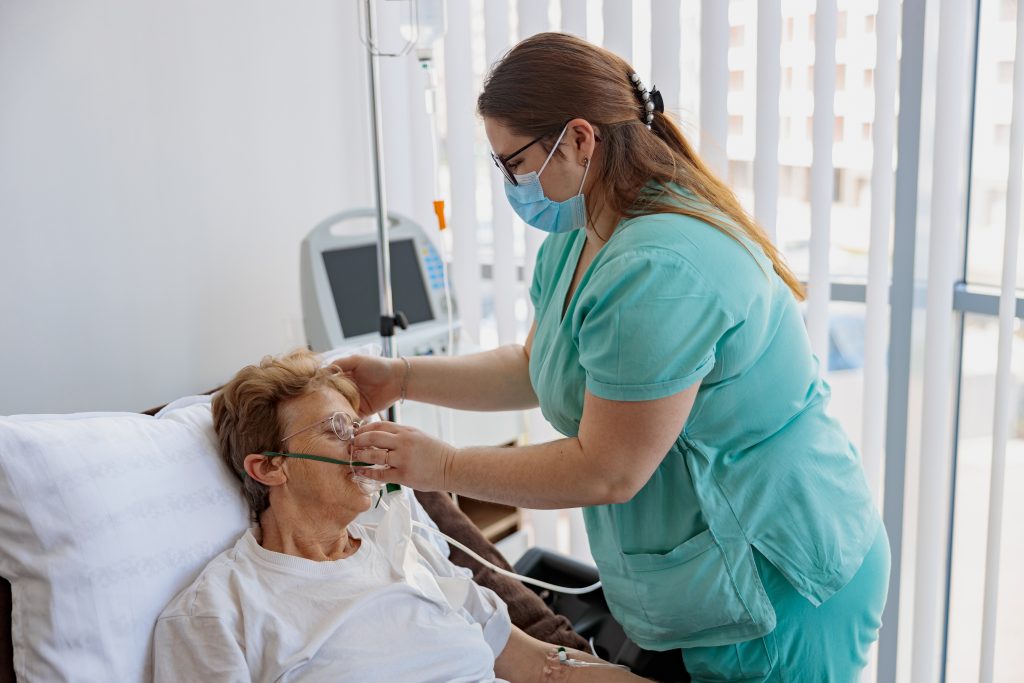
Top ABSN Programs for Hawaii Students

Ranked online and hybrid accelerated BSN programs available to Hawaii residents seeking a fast-track nursing career

By Maria Delgado, RNReviewed by TopNursing.org TeamUpdated June 26, 202625+ min read
Best ABSN Programs for Hawaii: Online & Hybrid Options

Points of interest…

  • No Hawaii school offers a dedicated accelerated BSN; UH Manoa's GEPN is the only in-state second-degree pathway.
  • Online ABSN programs from mainland schools accept Hawaii students, with total costs ranging from about $30,000 to $90,000.
  • Clinical rotations for online ABSN students occur primarily on Oahu at hospitals like Queen's Medical Center.
  • Hawaii is a non-compact state, requiring out-of-state ABSN graduates to obtain RN licensure by endorsement.

ABSN Programs for Hawaii Students: What You Need to Know

An accelerated BSN (ABSN) is a fast-track nursing degree for career changers who already hold a bachelor’s in another field, condensing prelicensure coursework into roughly 12 to 18 months. No Hawaii-based school currently offers a stand-alone ABSN. The closest in-state alternative is the Graduate Entry Program in Nursing (GEPN) at UH Mānoa, which blends a master’s entry with RN licensure.

This gap pushes Hawaii residents toward accredited online and hybrid ABSN programs from mainland universities. Didactic courses can be completed remotely, but in-person labs and clinical rotations remain non-negotiable, and securing clinical slots on Oahu or neighbor islands adds logistical complexity. Even so, Hawaii’s persistent nursing shortage means an RN license earned through any accredited path carries strong hiring demand across the state.

ABSN Programs for Hawaii Students at a Glance

For Hawaii students pursuing an accelerated BSN, the regulatory environment is shaped by a unique non-compact licensure system and specific board requirements. Below is a quick-reference snapshot of the Hawaii Board of Nursing essentials, including compact status, licensure pathways, and renewal rules. A full comparison of in-state graduate-entry options like UH Mānoa’s GEPN is covered later in the article.

FactorWhat Hawaii Students Should Know
Hawaii Nurse Licensure Compact (NLC) ParticipationHawaii is not an active NLC member as of 2025–2026. Nurses cannot obtain a multistate license through Hawaii; a single-state license is required. Even if you hold a multistate license from another compact state, you must still obtain a separate Hawaii license to practice here.
Hawaii Board of Nursing (BON)The board is part of the Hawaii Department of Commerce and Consumer Affairs. It oversees RN licensure, approves nursing education programs, and administers continuing competency requirements.
Licensure by Examination for ABSN GraduatesTo become an RN by exam, you must graduate from a board-approved nursing program, submit an application with a criminal history check, and pass the NCLEX-RN. Out-of-state ABSN graduates must provide evidence that their program was approved by its home state board and is substantially equivalent.
Licensure by Endorsement (Already Licensed RNs)If you hold an active RN license from another state, you must apply for licensure by endorsement and complete a background check. Even if your license is from a Nurse Licensure Compact state, Hawaii does not recognize it automatically.
License Renewal and Continuing CompetencyRN licenses expire on June 30 of odd-numbered years. Renewal requires continuing competency units since 2019. Failure to renew results in forfeiture; you can restore within two years with fingerprinting and competency documentation, but after two years you must reapply as a new applicant.
Clinical Requirements for Online/Out-of-State ABSN ProgramsThe Hawaii Board of Nursing may scrutinize the clinical experience of primarily online programs. Ensure your program includes robust supervised clinical hours that meet Hawaii's standards for licensure recognition.
Program Selection GuidanceChoose an ABSN program that is approved by its home state board of nursing and prepares you for standard RN licensure. Programs lacking sufficient clinical training may face additional hurdles when seeking Hawaii approval.
NCLEX-RN RegistrationYou must register for the NCLEX-RN through the NCSBN and meet Hawaii Board of Nursing eligibility criteria. After passing, your license is issued by the Hawaii BON.

Best Online ABSN Programs for Hawaii Students

For Hawaii students looking for an accelerated path to RN licensure, these online and hybrid ABSN programs accept applications from the islands and offer a blend of remote coursework with required in‑person labs and clinical rotations. While none are based in Hawaii, each school below has a strong track record of preparing career changers for the NCLEX‑RN. Remember that ‘online’ nursing programs still require hands‑on clinical hours and may include short on‑campus residencies.

Factors considered
  • Program format and flexibility
  • Licensure pass rates
  • Graduate earnings potential
  • Institutional graduation rate
  • National availability
Data sources
RankSchoolLocationNet priceBest for
#1
Georgetown University
Washington, DC$40,000 – $45,000/yrCareer changers seeking a prestigious hybrid

Georgetown University’s Accelerated BSN is a rigorous 12‑month hybrid program pairing synchronous online classes with intensive on‑campus labs and over 700 clinical hours at MedStar Health facilities. Designed for second‑degree students, it holds a 96% NCLEX pass rate and follows a holistic care philosophy. Federal data reports a median graduate income of $103,494 and a 95% institutional graduation rate.

Accelerated BSN — Hybrid
  • $1,442 per credit
  • 12‑month program
  • Hybrid format with on‑campus labs
  • 96% NCLEX pass rate
  • Over 700 clinical hours
  • Synchronous online classes
  • Small cohort size
  • Financial aid available

Saint Louis University’s Accelerated BSN was the nation’s first such program and remains a top choice for second‑degree students. The 12‑month hybrid curriculum features rolling admissions, a 9:1 student‑faculty ratio, and modern simulation labs. Graduates earn a median $70,783 with an institutional graduation rate of 80%. Clinical rotations span diverse healthcare settings.

Accelerated BSN — Hybrid
  • $51,940 total tuition
  • 12‑month program
  • Rolling admissions
  • Hybrid online and on‑campus classes
  • Low student‑to‑faculty ratio
  • Prepares for NCLEX‑RN
  • Financial aid available
  • First accelerated BSN in the US

Northeastern University’s 16‑month hybrid ABSN accepts students with any bachelor’s degree and offers three annual start dates. The curriculum blends online learning with nursing labs and clinical rotations at top facilities. Graduates show median earnings of $92,538, and the university’s graduation rate reaches 91%. Scholarships and transfer options add flexibility.

Accelerated BSN — Hybrid
  • 16‑month program
  • Full‑time enrollment
  • 3 start dates per year
  • Blended online learning model
  • Nursing labs at three locations
  • Clinical rotations at top facilities
  • Second‑degree and transfer tracks
  • Scholarships available

Ohio State University’s 5‑semester hybrid ABSN is a public‑university option for non‑nursing degree holders. It requires summer start and provides clinical placements at the Wexner Medical Center. Graduates see median earnings of $60,409, while institutional graduation rate stands at 88%. Out‑of‑state tuition applies for Hawaii residents, but financial aid may offset costs.

Accelerated BSN — Hybrid
  • 5‑semester program
  • 59 total credit hours
  • Starts summer only
  • 3.0 GPA minimum
  • Clinicals at Wexner Medical Center
  • Online and in‑person delivery
  • Financial aid available
  • Top‑ranked nursing program

The College of New Jersey offers a 14‑month hybrid ABSN for second‑degree students, with synchronous and asynchronous online classes. The program includes a high‑fidelity simulation lab and clinical rotations in New Jersey and Pennsylvania. A holistic admissions process and cohort model support students, though working during the program is discouraged. The net price is $27,646.

Accelerated BSN — Hybrid
  • 14‑month program
  • $34,000 total tuition
  • Starts summer
  • TEAS entrance exam required
  • Synchronous and asynchronous online options
  • Clinical sites in NJ and PA
  • Holistic admissions review
  • Financial aid and scholarships available

Felbry College’s online RN to BSN Completion Program is designed for current registered nurses holding an associate degree or diploma. The 100% online, 16‑month accelerated track builds leadership and evidence‑based practice skills. Advanced standing is granted for RNs, and no NCLEX is required after completion. Institutional graduation rate is 91%.

RN to BSN Completion Program — Online
  • 100% online
  • Accelerated 16‑month option
  • Flexible for working nurses
  • No NCLEX required post‑completion
  • Advanced standing for RNs
  • Focus on leadership and safety
  • Enhances evidence‑based practice
  • Preferred 2.5 GPA for admission

Angeles College in Los Angeles provides a hybrid Bachelor of Science in Prelicensure Nursing that can be completed on an accelerated timeline. The program prepares students for the NCLEX‑RN and Public Health Nurse certification, with hands‑on clinical experiences in the LA area. Federal data shows a median graduate income of $49,108 and a net price of $28,639.

Bachelor of Science in Prelicensure Nursing — Hybrid
  • Hybrid learning format
  • Accelerated pathway available
  • Prepares for NCLEX‑RN
  • Public Health Nurse certification eligible
  • Financial aid available
  • Academic support services
  • Practical experience focus
  • Los Angeles location

Baylor University’s Distance ABSN is a 12‑month, primarily online program with only two required visits to the Texas campus. It holds a 96% NCLEX pass rate and includes 720 clinical hours with placement support. However, the program is restricted to Texas residents only, making it unavailable to Hawaii students unless residency requirements change.

Accelerated BSN — Hybrid
  • 12‑month program
  • For Texas residents only
  • 96% NCLEX pass rate
  • 720 clinical hours
  • Two on‑campus visits required
  • Faith‑based curriculum
  • Clinical placement support provided
  • HESI entrance exam required

Unitek College in Fremont, CA, offers a hybrid Bachelor of Science in Nursing that can take two to three years and an LVN to BSN pathway for licensed vocational nurses. Both programs combine online coursework with hands‑on labs and clinical rotations at partner facilities. Small class sizes and personalized coaching are highlighted. Median graduate earnings are $79,550.

Bachelor of Science in Nursing (BSN) Program — Hybrid
  • Hybrid format
  • 2‑3 years completion
  • CCNE‑accredited
  • NCLEX exam preparation
  • Small class sizes
  • Personalized faculty coaching
  • Clinical partnerships with top facilities
  • Financial aid available
  • Hybrid format
  • Complete in as little as 2 years
  • Skip first three semesters with LVN
  • Active LVN license required
  • NCLEX‑RN preparation
  • Hands‑on clinical training
Accelerated Bachelor of Science in Nursing (ABSN) — Online

Online and Hybrid ABSN Options for Hawaii Residents

The promise of online nursing education meets a hard reality in Hawaii: no online ABSN program fully delivers clinical training in the islands. While didactic coursework can be completed remotely through a mix of recorded lectures and live sessions, every accredited ABSN requires in-person labs, simulations, and clinical rotations. Students who assume a program is entirely virtual risk significant disruptions once they discover mandatory on-site components.

What "Online ABSN" Really Means

Online ABSN programs deliver nursing theory and foundational coursework through a digital platform. However, skills labs and simulation training must be completed in person at designated facilities. Clinical rotations are always hands-on, supervised experiences in hospitals, clinics, or community health settings. No state board of nursing approves a fully remote path to initial RN licensure, so the online label refers only to the didactic portion, not the entire program.

Why Residency Restrictions Often Exclude Hawaii Students

Even if a hybrid format sounds appealing, geography creates a second filter. Many nationally advertised online ABSN programs have residency requirements that limit applicants to specific states. For example, Rockhurst University's online ABSN serves only students in Iowa, Kansas, and Missouri and requires a 10-day on-campus residency in Kansas City.1 Edgewood College's online ABSN is restricted to Wisconsin residents and includes three immersion labs in Madison.2 These limitations are common; programs often build clinical partnerships within a regional network and cannot accommodate remote learners from distant states. Hawaii residents should always check the program's eligibility criteria before investing time in an application.

Clinical Placement Logistics and Hawaii's Isolation

The most significant barrier is securing clinical placements in Hawaii. As of 2025-2026, no nationally available hybrid or online ABSN has publicly confirmed the ability to arrange clinical rotations on Oahu or any neighbor island. Programs that accept out-of-state students may still require relocation to their local clinical sites, or they might ask students to find their own preceptors. Given Hawaii's limited number of healthcare facilities and stringent administrative requirements, self-sourcing a clinical spot is extremely difficult. Before enrolling, always request written confirmation from the program about where clinical rotations will take place and who is responsible for securing those hours.

Hybrid Programs and Mainland Travel Costs

Some hybrid ABSN programs offer theoretical coursework online but require periodic campus intensives on the mainland. For Hawaii-based students, this means budgeting for round-trip flights, hotel stays, and weeks away from home each semester. Even a few short residencies can add thousands of dollars to the total cost. Travel fatigue and time-zone differences can also affect academic performance. If a program does accept Hawaii residents and claims to support clinical placements anywhere, verify whether that includes Hawaii specifically, and at what level of assistance.

In Hawaii, the only second-degree nursing pathway that guarantees local clinical rotations is the University of Hawaii at Manoa's Graduate Entry Program in Nursing (GEPN), which is an on-campus, full-time master's entry program, not an ABSN.3 For students determined to pursue an ABSN, the current landscape requires relocation to a U.S. mainland city with an established program. The absence of in-state accelerated BSN programs makes careful vetting of any online or hybrid promise essential.

Did You Know?

Because Hawaii has a relatively small population and only a few nursing schools, no institution offers a stand-alone Accelerated BSN. The Graduate Entry Program in Nursing (GEPN) at UH Mānoa provides a second-degree pathway to RN licensure, and several accredited online ABSN programs welcome Hawaii residents for didactic courses and arrange local clinical rotations.

ABSN Vs. GEPN: Choosing the Right Second-Degree Nursing Pathway in Hawaii

Understanding the Two Pathways

For second-degree seekers in Hawaii, the decision often comes down to two very different routes: an online accelerated BSN (ABSN) offered by mainland universities or the University of Hawaii at Manoa’s Graduate Entry Program in Nursing (GEPN). While both prepare you to sit for the NCLEX-RN and start practicing as a registered nurse, the degree you earn and the experience you have along the way diverge significantly. An online ABSN typically leads to a Bachelor of Science in Nursing, whereas the GEPN culminates in a Master of Science in Nursing (with an option to pursue a DNP). Understanding what each path offers helps you align your choice with your career goals, budget, and willingness to stay in the islands.

Degree, Length, and Cost: A Side-by-Side Look

  • Degree earned: Online ABSN results in a BSN. UH Manoa's GEPN results in an MSN (or DNP, depending on the track).
  • Program length: Most online ABSN programs span 12 to 18 months. UH Manoa's GEPN is a tight 12 months, packing 49 credits into an intensive year.
  • Total credits: Online ABSN credit loads vary widely, often ranging from 50 to 65 credits. The GEPN's 49-credit structure is compact but graduate-level.
  • Cost: Out-of-state online ABSN programs frequently carry price tags of $40,000 to $80,000 or more, with limited aid for non-residents. As a public institution, UH Manoa charges resident tuition for the GEPN, which can be substantially lower, though exact figures should be verified with the school. Additional fees for labs, clinical placements, and materials apply to both pathways.
  • NCLEX eligibility: Both the BSN and the MSN entry pathways make graduates eligible to take the NCLEX-RN and apply for registered nurse licensure.

Clinical Placements and Location Considerations

If staying in Hawaii through your nursing education matters, the GEPN holds a clear advantage. UH Manoa places students in clinical rotations at major healthcare systems across the state, including hospitals and community sites on Oahu and potentially neighbor islands. You build your professional network right where you intend to work. By contrast, most online ABSN programs run clinical rotations near their home campuses or within designated mainland partner sites. Even programs that advertise clinical placement nationwide rarely have deep roots in Hawaii. This can mean months of travel, temporary relocation, or significant delays in securing a slot. The GEPN keeps your clinicals local and integrated.

Career Trajectory: BSN vs. Master's Entry

Both pathways lead to entry-level RN positions, and employers generally do not pay a new graduate more solely because they hold an MSN. However, the master's degree can accelerate movement into roles such as clinical nurse leader, nursing educator, or quality improvement coordinator without requiring additional BSN-to-MSN bridge programs. If you eventually pursue advanced practice as a nurse practitioner, having an MSN may shorten certain doctoral tracks. For those who are certain they want to work at the bedside and have no immediate graduate ambitions, a BSN may feel more straightforward. But if you envision leadership or a specialized non-provider role sooner, the GEPN offers a built-in head start.

Choosing What Fits Your Life

Consider your tolerance for upheaval. An online ABSN might be appealing if you find a program with a start date, cost, and clinical placement path that works for you, but be prepared for logistical hurdles in Hawaii. The GEPN demands an on-campus commitment in Manoa and a fast-paced graduate curriculum, yet allows you to build a career without crossing an ocean. Weigh costs realistically: online programs often quote attractive per-credit rates but can balloon with fees and travel. The GEPN's public-university pricing may be kinder to local students. Your best bet is to map your long-term nursing goals, compare total program expenses, and decide which set of tradeoffs you can live with.

Questions to Ask Yourself

Since no ABSN exists in Hawaii, most students must relocate. Staying local restricts options; moving adds cost and logistics.

UH Manoa's GEPN grants a master's. A BSN is quicker, but the master's may help with career advancement.

Hawaii colleges have limited seats in anatomy and microbiology. If classes are full, online options can keep your timeline on track.

ABSN Admission Requirements and Prerequisites for Hawaii Students

ABSN programs available to Hawaii residents set clear academic guardrails that candidates must meet before applying. These requirements are not merely formalities; they ensure every admitted student enters with the foundational science knowledge and academic readiness to succeed in an accelerated, full-time nursing curriculum.

Prior Degree and GPA Requirements

To apply, you must hold a regionally accredited bachelor's degree in any non-nursing field. Most programs set a cumulative undergraduate GPA minimum of 2.75 to 3.0, though competitive cohorts often enroll candidates with a higher GPA. Some schools also evaluate prerequisite course GPA separately, so a strong performance in science prerequisites can offset a slightly lower overall GPA.

Prerequisite Courses for ABSN Applicants

The list of required prerequisite courses varies by program, but the following courses are almost universally expected for Hawaii students targeting online or out-of-state ABSN options:

  • Anatomy & Physiology I and II (with labs): Almost always required. Many programs stipulate that A&P must have been completed within the last five to seven years.
  • Microbiology (with lab): Required by nearly every program; the lab component is essential. Recency requirements of five to seven years also apply frequently.
  • Chemistry: General, introductory, or organic chemistry is often required, sometimes with a lab. This prerequisite is more variable across programs.
  • Statistics: Many programs require a college-level statistics course; recent completion is preferred but not always mandated.
  • Developmental Psychology / Lifespan Development: Covers human growth from birth through older adulthood. Required by most ABSN programs.
  • Nutrition: Some schools require an introductory nutrition course; this is more program-specific than the others listed here.

Additional courses, such as Sociology or English Composition, may be listed by individual programs, so review each school's catalog carefully.

Completing Prerequisites Locally in Hawaii

Hawaii residents can complete the required lab science courses right at home. Kapiʻolani Community College and Leeward Community College both offer in-person anatomy, physiology, microbiology, and chemistry courses with the hands-on lab components ABSN programs require. For example, Kapiʻolani CC's Human Anatomy and Physiology I Laboratory (PHYL 141L) gives students a full lab experience1 and the credit transfers to institutions such as Oregon State University2, a model that many online ABSN programs recognize. If you need schedule flexibility, accredited online providers like Portage Learning and Straighterline offer self-paced, lab-inclusive options that many programs accept; always verify a program's transfer policies before enrolling.

Application Components and Cohort Timelines

Once prerequisites are underway, you will typically submit official transcripts from every college attended, two or three letters of recommendation (usually from academic or professional references), and a personal statement that explains your choice to pursue nursing as a second career. Many online ABSN programs offer multiple cohort starts each year, spring, summer, and fall, so applicants can plan prerequisite completion around the next available start date. Application deadlines often fall several months before the cohort begins; early preparation and submission improve your chances of securing a seat.

Cost of ABSN Programs for Hawaii Students

Balancing a fast-track nursing degree against its price tag is a central challenge for career changers in Hawaii. With no in-state accelerated BSN program, Hawaii students face the added variable of out-of-state or private school tuition; the lowest total cost option is not always obvious when travel, fees, and lost income during full-time study come into play.

How Much Do Online ABSN Programs Cost?

Tuition for the online and hybrid programs available to Hawaii residents spans a wide range. Among the ranked options, the most affordable path is North Dakota State University’s hybrid ABSN: out-of-state students pay roughly $15,564 in tuition for the entire program. On the higher end, the University of Tulsa’s online ABSN carries a flat tuition of $49,546, though it bundles textbooks and includes a one-week on-campus skills bootcamp. Other programs fall between these extremes, for example, Ohio State University charges $40,022 for non-Ohio residents, Harding University’s hybrid ABSN sits at $25,962, and Fairleigh Dickinson University’s program is $37,468. These figures reflect tuition only; total cost of attendance will be higher.

Understanding In-State vs. Out-of-State Tuition for Hawaii Residents

The tuition amount that appears on a school’s website is rarely what a Hawaii student will pay. Public universities like North Dakota State and Ohio State base their rates on residency; Hawaii students almost always fall into the out-of-state category for these schools, which can double the price compared to in-state peers. Private institutions, including Tulsa, Harding, University of Evansville, and Marian University, typically charge a single tuition rate regardless of residence, which simplifies cost comparisons. When evaluating a program, verify whether the listed price is a flat rate or if out-of-state surcharges apply. This directly impacts affordability and should be factored before applying.

Additional Costs Beyond Tuition

A realistic budget must account for prerequisites, books, uniforms, clinical supplies, immunization tracking, background checks, and NCLEX preparation. Many programs also require one or more intensive on-campus sessions: for Hawaii students, these mean round-trip airfare, lodging, and ground transportation. For instance, Tulsa’s one-week bootcamp in Oklahoma and hybrid labs at Harding in Arkansas add travel expenses that should be estimated early. Some schools include textbooks or NCLEX review in tuition; others bill them separately. It is wise to request a full cost breakdown from each admissions office.

Financial Aid and ROI for Hawaii Students

Accredited ABSN programs qualify for federal student loans, and many schools offer scholarships or payment plans. Federal data shows that median loan debt for graduates at these institutions ranges from about $20,000 to $27,000, and school-wide earnings data suggest early-career salaries above $55,000. Since registered nurse wages in Hawaii are among the highest in the nation, the debt-to-income picture remains favorable. Hawaii students should also explore employer tuition reimbursement through major local healthcare systems like Hawaii Pacific Health, The Queen’s Health Systems, and Kaiser Permanente Hawaii, as well as GI Bill® benefits for military-connected families, given Hawaii’s large active-duty and veteran population.

ABSN Program Costs Vs. Early-Career Earnings

For Hawaii residents considering an online ABSN, comparing program debt against typical early-career earnings helps gauge long-term value. Below are median debt and median earnings for six top-ranked online accelerated nursing programs that accept Hawaii students, based on federal data.

Median debt at completion and median earnings after entry for six online ABSN programs: Unitek College ($10,700 debt, $79,550 earnings), Georgetown University ($15,500 debt, $103,494 earnings), Northeastern University ($24,250 debt, $92,538 earnings), Rockhurst University ($18,250 debt, $67,102 earnings), The College of New Jersey ($23,250 debt, $73,323 earnings), Ohio State University ($19,976 debt, $60,409 earnings).

Clinical Placements and Healthcare Markets in Hawaii

Clinical placements secured by a school’s dedicated team versus sites you must arrange independently: this distinction can make or break your ABSN timeline when you pursue a national online program from Hawaii.

Major Oahu Healthcare Systems That Host Nursing Students

Hawaii’s clinical capacity is concentrated in a handful of large health networks, nearly all on Oahu. These organizations regularly accept nursing students from accredited programs:

  • The Queen’s Health System: The state’s largest private hospital network, with multiple acute-care facilities and specialty centers.
  • Kaiser Permanente Hawaii: An integrated system with a large ambulatory footprint and a hospital on Oahu.
  • Hawaii Pacific Health: Operates Straub Medical Center, Kapiʻolani Medical Center for Women and Children, and Pali Momi Medical Center.
  • Tripler Army Medical Center: The Defense Department’s premier medical facility in the Pacific.
  • Adventist Health Castle Medical Center: A community hospital serving Windward Oahu.
  • Spark M. Matsunaga VA Medical Center: A Veterans Affairs facility that accepts clinical students.

Together, these systems form the backbone of clinical education in Hawaii. The Hawaii Clinical Placement Collaborative coordinates placement access across 8 nursing schools and 11 hospitals1, but that coordination currently flows through Hawaii-based institutions2. For nationally available online ABSN programs, the relationship to this network is indirect at best.

Island Logistics: Where Clinicals Are Most Available

While Oahu is home to the vast majority of clinical placements, students on neighbor islands face a steeper path. Clinical opportunities on Maui, Hawaii Island, and Kauai are limited and often tied to the few local hospitals or clinics. As a result, many nursing students who live outside Oahu must either commute regularly to Oahu or temporarily relocate for the duration of their clinical rotations.

This geographic reality means that before you commit to an online ABSN program, you should map out not just the didactic convenience of remote classes but the physical logistics of completing in-person clinical hours. If you are on a neighbor island, ask programs hard questions about whether they have ever placed a student on that island and what travel or housing costs you should anticipate.

Online ABSN Programs and Hawaii Clinical Placements

Most nationally marketed online or hybrid ABSN programs do not hold standing clinical contracts in Hawaii3. That does not make placement impossible, but it does make it less predictable. Some programs, such as Elmhurst University’s online ABSN, employ a clinical placement team that actively secures sites near the student’s community; however, success in Hawaii depends on site availability and facility willingness to accept an out-of-state school’s student3.

Programs without such dedicated teams may ask students to identify and secure their own clinical sites. This can be a critical enrollment decision factor: choosing a program that offers placement support, even if not guaranteed, shifts a significant administrative burden off the student. Before enrolling, ask specifically whether the program has previously placed ABSN students in Hawaii, how many sites they have used, and what the average time is from placement request to confirmed site.

Military and Federal Healthcare Sites

Hawaii’s large military-connected population makes Tripler Army Medical Center and the VA Medical Center relevant clinical options. Both facilities accept nursing students, though processes for external school approval may differ from civilian hospitals. For students with military affiliation or those living near these federal sites, exploring clinical rotations through Tripler or the VA can widen the placement pool beyond the four major civilian systems.

Nursing Shortage and Job Prospects After Clinicals

Hawaii continues to contend with a significant nursing shortage, which has two practical implications for ABSN students. First, clinical sites are busy, and preceptors may be stretched thin; this can slow clinical placement processing or reduce available slots. Second, and more encouraging, the persistent demand means that graduates who complete their clinicals and earn licensure are entering a market with strong local job prospects. The same hospitals where you complete rotations are often hiring, turning your clinical performance into a long-term career opportunity.

Did You Know?

Searching for an accelerated BSN at Chaminade University or Hawaii Pacific University? As of 2026, neither school offers a dedicated second degree ABSN program. Chaminade provides a traditional BSN track, not designed for career changers with a prior bachelor's. Hawaii Pacific University also does not list an accelerated second degree option. This means Hawaii residents must consider online or out of state ABSN programs that welcome Hawaii students.

FAQs About ABSN Programs for Hawaii Students

Got questions about accelerated BSN pathways for Hawaii students? Below we answer the most common queries about program options, prerequisites, licensing, and more.

Does the University of Hawaii have an accelerated BSN program?
No, the University of Hawaii does not offer an ABSN program. The only second-degree nursing pathway in the state is the Graduate Entry Program in Nursing (GEPN) at UH Manoa, which leads to a Master of Science in Nursing. Students with a non-nursing bachelor's can earn an MSN and RN eligibility, but there is no accelerated bachelor's option at any Hawaii public university.
Are there online ABSN programs available to Hawaii residents?
Yes, many mainland universities offer online or hybrid ABSN programs that accept Hawaii residents. These programs deliver theory coursework online, but all require in-person labs, simulations, and clinical rotations. Clinical placements may be arranged locally or require travel. Before enrolling, confirm that the school can secure clinical sites in Hawaii and that the program meets state licensure requirements.
How long do accelerated BSN programs take to complete?
Most ABSN programs last 12 to 18 months of full-time study, though some can be as short as 11 months or up to 24 months. Online programs available to Hawaii students typically follow the same compressed schedule. The timeline depends on prerequisite completion, cohort schedules, and the program's part-time options. Students should expect intensive coursework with limited breaks during the program.
What is the difference between an ABSN and a GEPN program in Hawaii?
An ABSN is a second bachelor's degree leading to a BSN and RN licensure. Hawaii does not have ABSN programs; instead, the GEPN at UH Manoa is a graduate entry master's that awards an MSN. Both are for career changers, but the GEPN includes graduate-level nursing coursework and typically takes about three years. The ABSN is shorter and focused solely on undergraduate nursing education.
Is Hawaii part of the Nurse Licensure Compact?
No, Hawaii is not a member of the Nurse Licensure Compact (NLC). Nurses with a Hawaii license hold a single-state license only. To practice in another NLC state, they must apply by endorsement. Similarly, nurses from compact states need a Hawaii license to work there. As of 2026, the NLC includes 43 jurisdictions, but Hawaii remains a non-participating state.
Can I work while completing an ABSN program?
ABSN programs are highly demanding, with full-time class schedules, labs, and clinical rotations. Most schools strongly discourage working more than part-time, if at all. For online programs accessed by Hawaii residents, the flexible remote coursework may help, but clinical and lab commitments still require significant time. Students should plan finances carefully and explore scholarship options to reduce work obligations.
What prerequisites are needed for ABSN programs?
Common prerequisites include anatomy and physiology I/II with labs, microbiology with lab, chemistry (general or organic), statistics, and lifespan development or psychology. Some programs also require nutrition or sociology. Specific requirements vary by school, so check each program's list. All prerequisites must be completed before starting the ABSN, often with a minimum GPA of 3.0 or higher.
Are ABSN graduates eligible for the NCLEX-RN in Hawaii?
Yes, graduates of an accredited ABSN program are eligible to sit for the NCLEX-RN and apply for RN licensure in Hawaii, provided the program meets Hawaii Board of Nursing standards. This applies to both in-state GEPN graduates and those completing out-of-state or online ABSN programs. Ensure the school's curriculum and clinical hours align with Hawaii's requirements to avoid licensure delays.

More Online ABSN Programs Available to Hawaii Students

In addition to the top-ranked programs, Hawaii students have access to many other online ABSN programs from across the country. These programs accept out-of-state residents and offer flexible online coursework combined with in-person clinical placements. The following schools provide additional accelerated nursing pathways worth considering.

Assumption University
Assumption University offers a 16-month hybrid Accelerated BSN for students with a prior bachelor's degree. Coursework is delivered online with on-campus clinical labs one to two days weekly, and clinical placements include leading hospitals like UMass Memorial.
  • Post-Bachelor's Accelerated Nursing Track
Worcester, MA · Hybrid
Loyola University Chicago
Loyola's Accelerated BSN is a 16-month intensive program blending online coursework with simulation labs and clinical placements at top Chicago-area facilities. The curriculum emphasizes compassionate care grounded in the Jesuit tradition.
  • Accelerated Bachelor of Science in Nursing (ABSN)
Chicago, IL · Hybrid
Rockhurst University
Rockhurst's Hybrid Accelerated BSN combines 100% online coursework with a 10-day on-campus residency. The program includes over 583 clinical hours and provides 1:1 NCLEX coaching.
  • Accelerated Bachelor of Science in Nursing
Kansas City, MO · Hybrid
Bethel University
Bethel University offers a hybrid, faith-based Post-Baccalaureate Accelerated BSN that can be completed in 15-20 months. The curriculum blends online coursework with in-person skills labs and clinical placements at over 230 healthcare organizations.
  • Post-Baccalaureate Nursing Program
Saint Paul, MN · Hybrid
Regis College
Regis College's Accelerated BSN is a 16-month hybrid program featuring small classes and clinical placements at elite Boston hospitals. NCLEX-style exams are embedded in every clinical course.
  • Accelerated 16-Month BS in Nursing
  • Accelerated 24-Month BS in Nursing
Weston, MA · Hybrid
Lipscomb University
Lipscomb's 16-month hybrid Accelerated BSN is designed for second-degree students. The curriculum integrates nursing science with liberal arts and includes clinical placements in Nashville's healthcare hub.
  • Accelerated Bachelor of Science in Nursing
Nashville, TN · Hybrid
Spring Arbor University
Spring Arbor's Accelerated BSN is an online program for students with a prior bachelor's degree. The curriculum includes microbiology, pathophysiology, pharmacology, and nursing fundamentals, with an NCLEX review course included.
  • Nursing Pre-licensure Track (B.S.N.)
Spring Arbor, MI · Online
Harding University
Harding's Accelerated BSN is a 16-month hybrid program with online coursework, onsite labs, and clinical rotations at top Northwest Arkansas facilities. Three start dates per year are available with no waitlist.
  • Accelerated Bachelor of Science in Nursing
Searcy, AR · Hybrid
Misericordia University
Misericordia's Accelerated BSN near Pittsburgh offers a hybrid format blending online coursework with onsite simulation labs and clinical rotations. The program can be completed in 16 months with three start dates per year.
  • Accelerated Bachelor of Science in Nursing
Dallas, PA · Hybrid
Elmhurst University
Elmhurst's online Accelerated BSN is a 16-month full-time program with live Zoom sessions, two on-campus residencies, and at least 450 clinical hours arranged by the university.
  • Accelerated Bachelor of Science in Nursing
Elmhurst, IL · Online
Pacific Lutheran University
Pacific Lutheran's Accelerated BSN in Lynnwood, Washington, is a 16-month hybrid program with online coursework, hands-on nursing labs, and in-person clinical rotations. Three start dates per year are available.
  • Accelerated Bachelor of Science in Nursing (ABSN)
Tacoma, WA · Hybrid
Concordia University-Wisconsin
Concordia University Wisconsin offers a hybrid Accelerated Second Degree BSN that can be completed in 14 months. The program includes advanced skills and simulation labs with clinical rotations.
  • Accelerated Second Degree BSN
Mequon, WI · Hybrid
University of St Thomas
University of St. Thomas in Houston offers a 12-month hybrid Accelerated BSN with online coursework, skills labs, and clinical placements at top Houston facilities. Three start dates per year are available.
  • Accelerated BSN
Houston, TX · Hybrid
Marian University
Marian University's hybrid Accelerated BSN can be completed in 16 months with asynchronous online classes, on-site labs, and clinical rotations starting in the first semester. Multiple start dates are offered.
  • Accelerated Bachelor of Science in Nursing
Indianapolis, IN · Hybrid
Fairleigh Dickinson University
Fairleigh Dickinson's Accelerated BSN is a 15-month hybrid program for second-degree students, combining online hyflex coursework with in-person clinicals and labs. Rolling admissions with a summer start.
  • Nursing BSN Accelerated
Madison, NJ · Hybrid

Recent Articles

Follow us