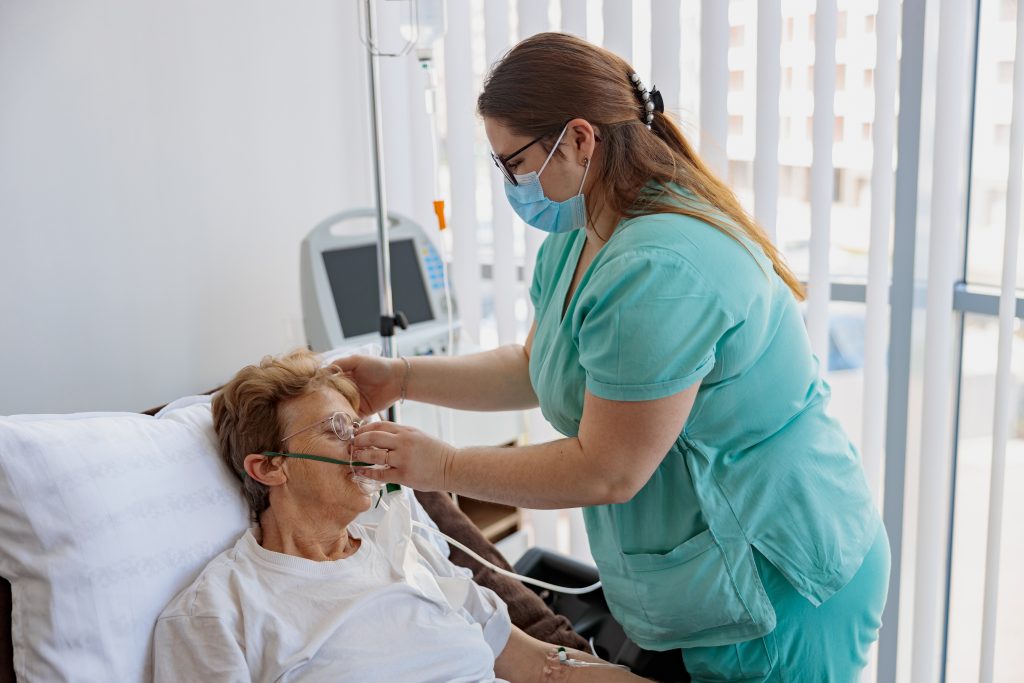
Compare accelerated BSN programs available to Delaware residents by cost, format, and admission requirements.
By Maria Delgado, RNReviewed by TopNursing.org TeamUpdated August 23, 202621 min read
Points of interest…
University of Delaware is the only in-state public ABSN program, charging $16,810 in-state tuition.
Delaware participates in the Nurse Licensure Compact, granting graduates multi-state license portability.
A projected 7% RN surplus by 2026 may create a competitive job market for new graduates.
No ABSN can be completed fully online; all require in-person clinicals at Delaware hospitals.
Delaware hosts a single campus-based accelerated BSN program (the University of Delaware's 16-month track in Newark), but its location puts Philadelphia-area ABSN programs within commuting range. These intensive tracks are designed for adults who hold a non-nursing bachelor's degree and need a BSN in 12 to 18 months for RN licensure.
Nursing employers in Wilmington, Newark, and Dover rely on this pipeline, with ChristianaCare and Bayhealth anchoring clinical rotations. As a compact state, Delaware grants new RNs a multistate license upon NCLEX-RN passage, broadening job options from day one.
ABSN Programs in Delaware at a Glance
Delaware offers a compact, fast-paced ABSN landscape for career changers. The state participates in the Nurse Licensure Compact, granting graduates multistate licensure portability across 43 states. Because of Delaware's small size, nearby programs in Pennsylvania, Maryland, and New Jersey are also practical options for residents.
Best ABSN Programs in Delaware
Delaware’s ABSN options are limited, but the state’s nursing education landscape includes a strong campus-based program at the University of Delaware and an online RN-to-BSN completion pathway at Wilmington University. We’ve ranked available programs based on institutional data and program features, with nearby out-of-state options discussed in a later section for Delaware residents seeking more choices.
NCES-IPEDS federal institutional data — nces.ed.gov
Independent program research
Rank
School
Location
Net price
Best for
#1
University of Delaware
Newark, DE
$15,000 – $20,000/yr
Campus-based ABSN for second-degree students
The University of Delaware, located in Newark near the Wilmington and Philadelphia clinical corridors, offers a full-time 17-month Accelerated BSN designed expressly for career changers who hold a non-nursing bachelor’s degree. The university reports an overall graduation rate of 80.6% (institution-wide, not program-specific) and a net price of $17,799 for in-state students. The School of Nursing is CCNE-accredited and embedded in a research university, with strong ties to Delaware health systems like Beebe Healthcare. Its first-time NCLEX pass rate reached 96.13% in 2024.
121 total credit hours covering key nursing courses
Full-time, on-campus format with extensive clinical practicums
Designed for those who already hold a bachelor's degree
Includes a capstone preceptorship in a real healthcare setting
Prerequisite courses in sciences required for admission
#2
Wilmington University
New Castle, DE
~$16,000/yr (est.)
Working RNs pursuing online BSN completion
Wilmington University in New Castle offers an accelerated online RN to BSN pathway for licensed registered nurses who already hold a bachelor’s degree in another field. This degree-completion program is not a pre-licensure ABSN for newcomers, but it can serve Delaware nurses seeking a faster BSN upgrade. The institution’s overall graduation rate is about 19.8%, reflecting a high share of part-time and adult learners, not nursing specifically. Net price averages $15,644. Small class sizes and a focus on health equity and leadership help working nurses advance while staying employed.
Transfer up to 90 credits from prior nursing education
Includes a community health capstone experience
Focus on leadership, evidence-based practice, and health equity
Courses cover chronic/palliative care and holistic assessment
Designed for licensed RNs with a bachelor's in another field
Questions to Ask Yourself
Are your prerequisites finished or scheduled to finish before the next ABSN cohort starts?
Missed deadlines for prerequisite completion can delay your nursing career by months or even a full year. Check each program's latest transcript review date and plan your courses accordingly.
Are you within commuting distance of a Delaware campus or clinical site?
Delaware's ABSN programs may place you at hospitals and clinics across the state, including Wilmington, Dover, and Newark. A manageable commute supports consistent attendance during demanding clinical rotations.
Have you explored nearby out-of-state ABSN programs that accept Delaware residents?
Delaware offers limited ABSN options, but programs in Maryland, Pennsylvania, and New Jersey often welcome Delaware students. Compare costs, licensure eligibility, and clinical placement locations before committing.
Online and Hybrid ABSN Programs in Delaware
No ABSN program, in Delaware or anywhere else, can be completed entirely online: hands-on clinical rotations, nursing labs, and simulations are mandatory, in-person components of every accelerated nursing program. When schools describe a program as “online” or “hybrid,” they are referring to the delivery of theory and lecture courses, not the hands-on training.
What “Hybrid” Actually Covers in an ABSN
A hybrid ABSN typically delivers didactic coursework (nursing theory, research, leadership) asynchronously or through live remote sessions, while reserving skills practice, simulation labs, and clinical rotations for on-campus or healthcare-site attendance. This structure can reduce commuting during the lecture-heavy phases, but it does not eliminate the need for regular, scheduled in-person commitments. Students should expect to spend several days each week at clinical sites and to attend on-campus intensives for skills validation and high-stakes assessments like simulation check-offs.
Delaware-Based Hybrid Options and Nearby Alternatives
As of 2026, Delaware’s in-state ABSN programs remain primarily campus-based, with no fully hybrid model offered by schools located in the state. That doesn’t leave Delaware residents without flexible options. Nearby universities in Pennsylvania and New Jersey have created hybrid accelerated tracks that welcome students from Delaware. Thomas Jefferson University, for example, runs a hybrid ABSN in Philadelphia that blends online theory courses with in-person labs and clinical placements. Depending on the cohort, clinical rotations may be available at partner facilities in northern Delaware, though availability varies term to term.
Widener University in Chester, PA, offers a campus-based Widener ABSN program, not hybrid, but still a practical choice for some Delaware commuters. The program charges a flat tuition rate of $51,960 for all students regardless of residency1, a factor that can simplify financial planning for out-of-state learners. Still, students whose primary goal is reduced face-to-face classroom time may find a hybrid model like Jefferson’s more aligned with their schedule needs.
How Out-of-State Hybrid Programs Handle Clinicals in Delaware
Some out-of-state programs maintain clinical contracts with Delaware healthcare systems such as ChristianaCare or Bayhealth, enabling them to assign rotations near a student’s home. In other cases, the school expects the student to identify preceptors or sites independently, a process that can be time-consuming and uncertain if local slots are limited. Always ask clinical placement questions before enrolling: Does the program arrange sites in Delaware? Is placement guaranteed, or merely assisted? Have previous Delaware-based students completed their rotations within a manageable commute?
A Practical Pre-Enrollment Checklist
Clinical placement geography: Confirm that you can be placed in Delaware, or, if not, how far you would need to travel.
Required campus visits: Even in a hybrid track, find out how many on-campus lab days and intensives are mandatory each semester.
State authorization: Verify that the out-of-state program is authorized to enroll Delaware residents and that its curriculum meets Delaware Board of Nursing requirements for NCLEX-RN eligibility.
Total cost with travel: Include commuting, lodging for campus visits, and any additional fees for out-of-state clinical placements when comparing program expenses.
Cross-referencing these details before you enroll helps you avoid surprises and ensures the flexibility promised by “hybrid” actually holds up in your local context, especially when comparing top nursing schools in Delaware.
In-State Vs. Nearby Out-Of-State ABSN Programs for Delaware Students
Delaware’s compact geography and central location give aspiring nurses a strategic advantage: they can choose a public in-state accelerated BSN at the University of Delaware or commute to well-regarded accelerated BSN programs in nearby Pennsylvania and Maryland. Each option presents different trade-offs in cost, program length, and NCLEX performance.
University of Delaware ABSN: A Public In-State Choice
The University of Delaware’s ABSN track leverages the school’s strong nursing reputation, with first-time NCLEX pass rates for BSN graduates reaching 96.13 percent in 2024. The program typically spans 12 to 18 months, combining campus-based labs with clinical rotations at Delaware healthcare sites. As a public institution, in-state students benefit from lower tuition, though total program costs still align with the national ABSN range of $25,000 to $40,000. Out-of-state students pay higher rates, which may tip the scales toward nearby private programs.
Widener University (Chester, PA): Minutes from Wilmington
Widener’s accelerated nursing program in Chester, Pennsylvania, sits just over the state line, about a 15-minute drive from downtown Wilmington. Its private-school model eliminates residency distinctions, meaning both Delaware and Pennsylvania residents pay the same tuition. The program is typically completed in 12 to 16 months, and the university’s strong clinical partnerships cover Delaware and southeastern Pennsylvania. Easy access via I-95 makes commuting straightforward for students living in New Castle County.
Holy Family University (Philadelphia): A 14-Month Accelerated Path
Holy Family’s ABSN offers a focused 14-month timeline with 504 clinical hours built into the curriculum. In 2024, the program posted a 91 percent first-time NCLEX pass rate. Located in northeast Philadelphia, the campus is approximately 30 to 40 minutes from Newark and Wilmington via I-95. As a private institution, tuition is uniform for all students, and total program costs generally sit within the national $25,000 to $40,000 range.
Cost and Commute: Weighing In-State vs. Out-of-State
For Delaware residents, the public University of Delaware route can be the most affordable, but out-of-state students may find private options like Widener or Holy Family more cost-effective because they avoid out-of-state surcharges. Commute times are manageable: most programs in Philadelphia or Chester fall within a 40-minute drive of northern Delaware. Maryland options such as Notre Dame of Maryland University or Johns Hopkins in Baltimore are also reachable, typically 60 to 90 minutes, but add travel costs. Without precise program-level cost data, prospective students should request current tuition figures and factor in travel time, clinical placement locations, and any regional discounts or reciprocity agreements.
How Employers View Out-of-State ABSN Degrees
Hiring managers in Delaware focus on BSN attainment, program accreditation, and NCLEX pass rates rather than where a degree was earned. A degree from an accredited Pennsylvania or Maryland ABSN program carries equal weight in Delaware healthcare facilities, so location should not deter you from choosing a program that fits your schedule and budget.
ABSN Admission Requirements in Delaware
Accelerated nursing programs in Delaware attract strong applicant pools, so understanding admission requirements is essential. While specific standards vary by institution, most schools follow a similar framework designed to identify students who can succeed in an intensive, fast-paced curriculum.
Prior Degree Requirements
ABSN tracks are built for career changers, so nearly all programs require a completed bachelor's degree from a regionally accredited institution in any field. Some schools may consider applicants without a prior degree who have extensive college credit, but the typical expectation is a conferred bachelor's. Applicants currently finishing their first degree can often apply, with the understanding that the degree must be conferred before the ABSN program begins.
GPA Considerations
A competitive application usually includes a cumulative undergraduate GPA of 2.75 to 3.0 on a 4.0 scale. Many programs place additional weight on prerequisite science grades, expecting a higher threshold (often 3.0 or above) for courses like anatomy, physiology, and microbiology. When programs calculate a separate prerequisite GPA, that number can be more decisive than the cumulative figure. If your cumulative GPA falls slightly below the minimum, strong recent science coursework or a graduate-level performance may help.
Application Timeline and Process
Delaware ABSN programs typically offer fall, spring, and occasionally summer start dates, with deadlines three to six months ahead. Prerequisites are usually required to be complete by the program's start, though many schools mandate that science courses be finished within the last five to seven years. The application package generally includes official transcripts from every institution attended, a personal statement, and two or three letters of recommendation. Some programs also incorporate a faculty or admissions committee interview, conducted in person or online.
Additional Testing and Experience
Beyond transcripts and recommendations, some Delaware ABSN programs require a standardized entrance exam such as the TEAS or HESI A2, which evaluate reading, math, science, and English skills. A few programs may ask for the CASPer test to assess personal and professional attributes. While not universally required, direct patient care experience (for example, work as a certified nursing assistant or volunteer hours) can strengthen an application, particularly at schools that emphasize healthcare exposure. Check each program's details, as testing and experience requirements show the widest variation.
ABSN Prerequisites in Delaware
Before applying to an accelerated BSN program in Delaware, you must complete a set of prerequisite courses. These typically include science courses with labs and may need to be finished within a specific number of years to ensure knowledge is current.
Prerequisite
Commonly Required?
Notes
Anatomy & Physiology I/II
Yes
Must include lab component; often required to be completed within 5-7 years
Microbiology
Yes
Lab typically required; recent completion may be expected
Chemistry
Often
General, organic, or introductory chemistry; may need lab; time limits vary
Statistics
Often
May need to be taken within the last 5-10 years
Nutrition
Sometimes
Varies by program; may be waived if prior coursework included
Lifespan/Developmental Psychology
Often
May be psychology-based; recency requirements vary
Intro Psychology
Often
Typically required; recent completion may be needed
Sociology
Sometimes
Not universally required; check individual program
Delaware may buck the national trend: the American Society of Registered Nurses projects a 7% surplus of registered nurses in the state by 2026. While many regions face critical shortages, Delaware's workforce data suggests a different challenge for new graduates entering the local job market.
Cost of ABSN Programs in Delaware
The University of Delaware’s accelerated BSN program carries in-state tuition of $16,810 per year, while the institution-wide net price sits at $17,799, but ABSN-specific costs can run higher due to intensive prerequisites, lab fees, and full-time enrollment.
Tuition and Net Price: A Snapshot
Actual ABSN program costs in Delaware vary by school type and residency status. The institutional net price figures below come from the U.S. Department of Education’s College Scorecard and represent averages for all undergraduates, not program-specific totals. Use them as a benchmark, not a final price tag.
University of Delaware (public, campus-based Accelerated BSN): In-state tuition $16,810; out-of-state $41,400. Institution-wide net price average $17,799.
Wilmington University (private, online RN-to-BSN Pathway for licensed RNs with a prior bachelor’s): Tuition $12,630 for both in-state and out-of-state students. Institution-wide net price average $15,644.
Wilmington’s program is a degree-completion pathway for current registered nurses, not a pre-licensure ABSN for career changers. Prospective students seeking an initial RN license should focus on the University of Delaware’s full-time, in-person option.
Beyond Tuition: Fees, Supplies, and Prerequisites
Total cost stretches well beyond the sticker price. Common add-ons include:
- Program and technology fees, lab consumables, and simulation center charges.
- Books, uniforms, stethoscopes, and other clinical supplies.
- NCLEX-RN preparation courses and exam registration fees.
- Background checks, drug screenings, and immunization tracking.
- Prerequisite coursework: anatomy, physiology, microbiology, and chemistry often require separate tuition and lab fees if completed at a community college or university before the ABSN starts.
Students should request a full program budget sheet from each school and budget an additional $3,000 to $6,000 above standard tuition for these items.
Financial Aid and Scholarships for Second-Degree Nursing Students in Delaware
Several state and federal programs target second-degree nursing students who may not qualify for certain first-time undergraduate grants.
Delaware Health Care Student Loan Program: Awards $2,500 to $15,000 per year with 0% interest while enrolled and, after graduation, 0% continues if you work in an approved Delaware healthcare position. Otherwise, the rate rises to 6.5%. Applicants must be U.S. citizens or permanent residents with at least one year of Delaware residency and enrolled in an approved nursing program at a Delaware institution.12
Delaware Nursing Incentive Program Scholarship: Provides $5,000 per year with a one-year work commitment for each award year received.3 This service payback can reduce out-of-pocket expense for graduates who stay in-state.
AmeriHealth Caritas Delaware First State Scholarship: Four awards of $5,000 each are available annually.4
Nurse Corps Scholarship Program: Covers tuition, fees, and other educational costs plus a monthly stipend. In exchange, graduates serve at a Critical Shortage Facility for a required number of years. Applications are typically due by September 30 for the following academic year.5
Institutional aid: The University of Delaware awards Helene Fuld Health Trust Scholarships for disadvantaged or underrepresented nursing students.3 Delaware State University offers full-tuition nursing scholarships.6
The Delaware Higher Education Office (DHEO) sets a May 15 deadline for the upcoming academic year’s state financial aid programs, and the FAFSA deadline matches this date.78 Meeting these deadlines is critical for maximizing aid.
Public vs. Private and In-State vs. Out-of-State Comparison
For a pre-licensure ABSN, the cost difference between public and private is stark. The University of Delaware’s in-state rate of $16,810 is far below its out-of-state rate of $41,400. Delaware residents with a prior bachelor’s degree gain a significant financial advantage. Neighboring-state students may want to explore reciprocity agreements or institutional scholarships that can narrow that gap, but they should budget for out-of-state tuition as the default.
Private options like Wilmington University charge the same tuition regardless of residency, but its RN-to-BSN focus makes it useful only for already-licensed nurses seeking a second bachelor’s. When evaluating cost, verify that the program leads to initial RN licensure and that clinical placements are guaranteed, as extra travel and housing expenses can inflate the bottom line.
Clinical Placements and Healthcare Markets in Delaware
Clinical training capacity often determines how many students an ABSN program can admit, and Delaware’s compact geography concentrates this experience within a few high-volume healthcare networks. For accelerated nursing students who need to complete hundreds of clinical hours in roughly 12 to 18 months, reliable access to diverse patient-care settings is not a luxury, it’s a requirement.
Major Healthcare Systems and Clinical Partners
In Delaware, nursing students frequently train at large regional systems such as ChristianaCare, which operates hospitals in Wilmington and Newark and offers exposure to emergency, critical care, medical-surgical, and specialty units. Bayhealth, with campuses in Dover and Milford, provides clinical opportunities in a more central and southern setting. Beebe Healthcare in Sussex County extends clinical reach to coastal communities, and Nemours Children’s Hospital adds pediatric training. These systems, along with Veterans Affairs facilities and federally qualified health centers, form the backbone of clinical education for ABSN students in the state.
How Clinical Placements Are Arranged
Most ABSN programs in Delaware handle clinical placement coordination directly. Students do not need to find their own preceptors. Schools maintain contracts with partner sites, and clinical faculty or coordinators assign students to rotations that align with course objectives. Because cohort sizes are limited by site availability, prospective students should ask each program about its current clinical partnerships, the geographic range of sites, and how commuting between campus and clinical locations is managed. In a small state like Delaware, travel distances are often manageable, but some rotations may require early morning or weekend shifts.
Clinical Diversity and Learning Environments
ABSN clinical rotations in Delaware expose students to a range of care settings beyond large hospitals. Many programs include rotations at community health centers, skilled nursing facilities, home health agencies, and public health departments. This variety helps students develop the adaptability needed for modern nursing practice. Simulation labs on campus also supplement clinical hours, but in-person patient care remains the cornerstone of learning.
Healthcare Employment and Workforce Context
Delaware’s healthcare industry is a major employer, and nursing demand remains consistent across acute care, outpatient, and community settings. The Delaware Health Care Commission and the Department of Health and Social Services publish workforce reports that can help students understand where job growth is concentrated. For ABSN graduates, clinical placements often serve as a pipeline to employment. Many students receive job offers from the sites where they rotated. Staying informed about the healthcare market through these state resources can help students target their clinical interests and future job searches.
FAQs About ABSN Programs in Delaware
Find quick answers to the most common questions about accelerated nursing programs in Delaware, from admission requirements to NCLEX eligibility.
Yes. The University of Delaware offers an Accelerated BSN, also called the Second Degree Accelerated Option, designed for students with a prior bachelor’s degree. This 17-month campus-based program includes intensive coursework, labs, and clinical rotations, leading to a BSN and NCLEX eligibility.
Most ABSN programs in Delaware can be completed in 12 to 18 months of full-time study. For example, the University of Delaware’s accelerated track spans 17 months. Program length depends on prerequisite completion and the school’s credit-hour structure.
No fully online ABSN programs exist in Delaware. Some schools may offer hybrid formats with online theory courses, but all require in-person labs, simulations, and clinical rotations at approved healthcare facilities. Students should verify clinical placement logistics before enrolling.
Common prerequisites include anatomy and physiology (with labs), microbiology, chemistry, statistics, and human growth and development. Some schools also require nutrition and psychology courses. Specific requirements vary by program; always check with the admissions office for a current list.
Most Delaware ABSN programs require a minimum cumulative GPA of 3.0 on a 4.0 scale, though some may accept slightly lower GPAs with strong science grades. Competitive applicants often have higher GPAs. Check individual program standards for exact cutoffs.
Yes. Delaware joined the Nurse Licensure Compact (NLC) in 2019. This allows registered nurses licensed in another compact state to practice in Delaware without obtaining a new license, and vice versa, making it easier to work across state lines.
Absolutely. Graduates of an accredited ABSN program are eligible to sit for the NCLEX-RN exam, just like traditional BSN graduates. After passing, they can apply for RN licensure through the Delaware Board of Nursing.
Public universities like the University of Delaware typically offer the most affordable ABSN tuition, especially for in-state students. Private schools may be higher. Costs include tuition, fees, books, and clinical supplies. Financial aid, scholarships, and hospital partnerships can help reduce expenses. Check with financial aid offices.