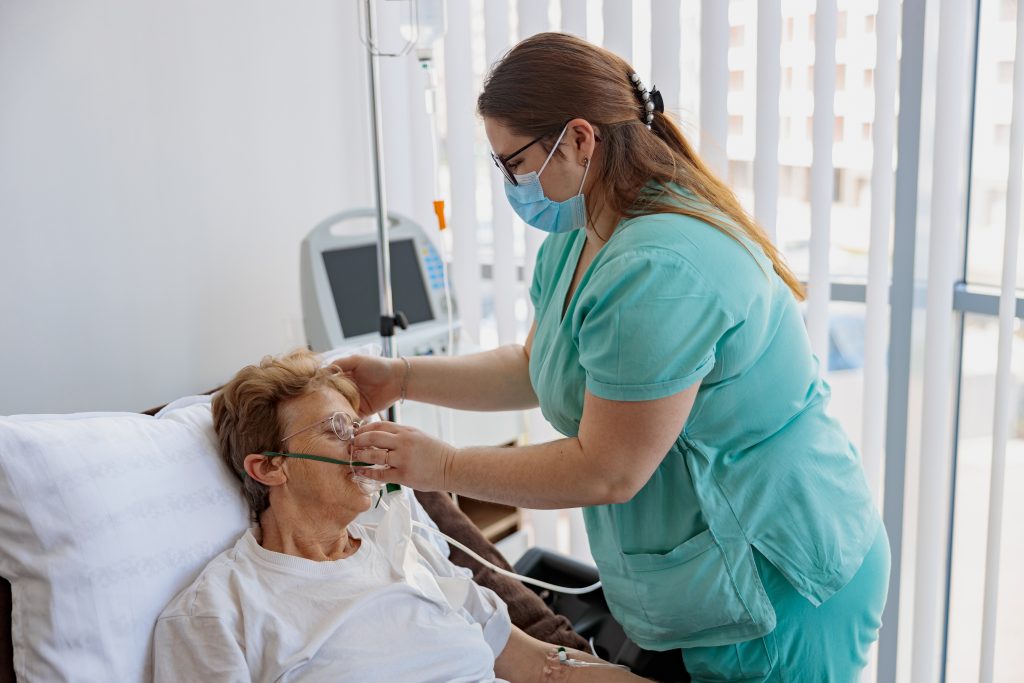
Compare costs, formats, and outcomes for Alabama's accelerated BSN programs designed for non-nursing degree holders.
By Hannah Pierce, BSNReviewed by TopNursing.org TeamUpdated August 29, 202623 min read
Points of interest…
UAB's ABSN program reported a 97 percent first-time NCLEX pass rate in 2025.
Public in-state ABSN tuition in Alabama runs about $10,000 to $12,000 per year.
Birmingham ABSN students train at UAB Hospital, the nation's third-largest public hospital.
Alabama is a Nurse Licensure Compact state, allowing licensed nurses to practice across state lines.
How quickly can someone with a non-nursing bachelor's degree become a registered nurse in Alabama? At most accredited programs in the state, the answer is 12 to 16 months of full-time study, with a handful stretching closer to 18 months depending on prerequisite sequencing and clinical scheduling.
Accelerated BSN programs compress traditional nursing coursework into consecutive terms, paired with skills labs, high-fidelity simulation, and clinical rotations at hospitals across Birmingham, Huntsville, Mobile, and Tuscaloosa. The format is demanding by design: most programs treat the curriculum as a commitment of 50-plus hours per week and recommend against outside employment.
Alabama's RN workforce leans heavily toward acute-care hospital settings, and major systems like UAB Health System, Huntsville Hospital, and USA Health concentrate the bulk of new-graduate hiring.
ABSN Programs in Alabama at a Glance
Career changers in Alabama face a familiar tradeoff: move quickly into nursing through an accelerated BSN program, or stretch coursework over a longer timeline to keep working. The snapshot below sketches what an accelerated BSN program in the state typically looks like before you weigh that decision against your own finances, family, and geography.
Quick Snapshot
Typical program length: 12 to 16 months of full-time study
Common formats: Campus-based and hybrid; fully online ABSN options are rare because of clinical and lab requirements
Prior degree required: Yes, a non-nursing bachelor's degree from a regionally accredited institution
Common prerequisites: Anatomy and physiology I/II, microbiology, chemistry, statistics, psychology, and lifespan development
Major ABSN markets: Birmingham, Huntsville, Mobile, Montgomery, and Tuscaloosa
State board: Alabama Board of Nursing
Compact status: Full eNLC member
NCLEX source: NCSBN, administered after Alabama Board of Nursing approval
Compact Status and Multistate Licensure
Alabama has been a full member of the enhanced Nurse Licensure Compact (eNLC) since January 1, 20201, and remains one of 43 participating jurisdictions in 20262. For new graduates, that means if Alabama is your primary state of residence, you can apply through the Alabama Board of Nursing for a multistate license1 that lets you practice in person or via telehealth in any other compact state without applying for a separate license in each one. Renewals run on a two-year cycle in odd-numbered years.
A few caveats: APRN roles require separate approval1, and if you later move and declare another compact state as your primary residence, your Alabama multistate privilege ends1 and you must transfer your license to the new home state.
Best ABSN Programs in Alabama
Alabama offers several accelerated BSN pathways for career changers with a prior bachelor’s degree. These intensive programs blend coursework, labs, and clinical rotations to prepare graduates for RN licensure. Below, we compare the top ABSN options in the state based on format, NCLEX pass rates, and unique program features.
Factors considered
NCLEX-RN pass rates
Program delivery and flexibility
Institution graduation and retention rates
Earnings and debt data
Unique program features
Data sources
NCES-IPEDS federal institutional data — nces.ed.gov
The University of Alabama in Huntsville provides an Accelerated BSN Academic Practice Partnership (ABSN-APP) for second-degree students. This three-semester campus program integrates rigorous coursework with an apprenticeship model, featuring one-on-one clinical mentoring. Through an employer collaboration, students receive tuition coverage, paid clinical hours, and guaranteed job placement upon graduation. In 2024, the institution's nursing graduates achieved a 100% NCLEX-RN pass rate.
Complete in as few as three semesters of full-time study.
Tuition covered by participating employer through Last Dollar scholarship.
Guaranteed job placement with a regional healthcare partner upon graduation.
One-on-one clinical mentoring through the apprenticeship model.
Paid clinical hours during the program.
Small cohort of approximately 20 students ensures personalized support.
Application window opens March 1 for the following year's start.
#2
University of South Alabama
Mobile, AL
$18,000/yr (net price)
Degree holders needing year-round starts
The University of South Alabama's Accelerated BSN Pathway is an intensive campus-based program completed in three semesters. It admits students in both January and July, with a curriculum that includes extensive clinical rotations in the Mobile area. Admission is competitive and requires a prior bachelor's degree, a 3.0 GPA, and completion of prerequisite coursework. In 2024, the institution's nursing graduates achieved a 98.36% NCLEX pass rate.
Minimum 3.0 GPA and prior bachelor's degree required.
Clinical rotations scheduled on both weekends and weekdays.
On-campus housing available for students.
Mandatory first-day attendance to begin the fast-paced sequence.
Application requires completion of 26 prerequisite credits.
#3
University of North Alabama
Florence, AL
$12,000 – $22,000/yr
Place-bound students seeking hybrid format
The University of North Alabama's Accelerated BSN is a 15-month low-residency hybrid program combining online coursework with weekend clinicals in Northwest Alabama. Designed for second-degree holders, it offers in-state tuition rates of $340 per credit hour and features a Student Nurse Apprenticeship Program that provides paid clinical experience and tuition support. UNA's nursing graduates achieved a 99.09% NCLEX pass rate in 2024.
Complete in as few as 15 months of full-time study.
Online didactic coursework paired with in-person weekend clinicals.
Clinical rotations concentrated in Northwest Alabama.
Student Nurse Apprenticeship offers paid clinical hours and tuition support.
In-state tuition of $340 per credit hour; out-of-state rate $680.
New Start Scholarship available for qualifying students.
Curriculum comprises 60 credit hours and starts each summer.
#4
University of Mobile
Mobile, AL
$22,000/yr
The University of Mobile's Accelerated BSN is a campus-based program that integrates clinical experiences in hospitals and psychiatric centers with a Christian perspective on healthcare. The program emphasizes NCLEX preparation and uses augmented-reality simulation labs. While official state board NCLEX data is not separately reported for this program, the school reports a 100% pass rate for its graduates.
Nursing education grounded in a Christian worldview.
Institution reports a 100% NCLEX pass rate for its graduates.
Accelerated format designed for individuals with a prior bachelor's degree.
Prepares students for the NCLEX-RN and careers in diverse settings.
Questions to Ask Yourself
Have you already completed your prerequisite science courses, or will you need an extra semester before you can apply?
Many Alabama ABSN programs require Anatomy and Physiology, Microbiology, and Chemistry before the first day of class. An incomplete prerequisite list can push your start date back by a full cohort cycle, sometimes six months or more.
Are you within commuting distance of a campus in Birmingham, Huntsville, Florence, or Mobile?
Most Alabama ABSN programs require regular in-person labs, simulations, and clinical rotations. If you live far from a program site, you will need to assess relocation costs or look closely at any hybrid format options.
Can you realistically stop working full-time for 12 to 18 months?
Accelerated BSN programs are structured as full-time commitments, and most students find outside employment difficult to sustain. Knowing your financial runway before you apply helps you choose a program with a tuition structure and timeline you can actually complete.
Online and Hybrid ABSN Programs in Alabama
Most ABSN programs in Alabama deliver the majority of their coursework through in-person instruction, and students should not assume that any program labeled "online" or "hybrid" eliminates the need for a significant on-campus and clinical presence. Nursing education at the accelerated level requires hands-on skill development in labs, simulation centers, and clinical rotations at healthcare facilities, all of which must be completed face to face regardless of how didactic courses are structured.
What "Hybrid" Really Means for Alabama ABSN Students
When an Alabama nursing school describes its ABSN track as hybrid, this typically means that some theory-based lectures, readings, and assessments are available through an online learning platform. Skills labs, simulation hours, and all clinical rotations still take place at designated sites. The proportion of online content varies from one institution to the next, and schools may adjust their delivery format from one admissions cycle to another. Always check each school's official ABSN program page for the most current information on delivery format, cohort schedules, and whether out-of-state applicants are eligible.
Confirming Approved Programs and Delivery Modes
The Alabama Board of Nursing maintains oversight of all pre-licensure nursing programs offered within the state. If you are uncertain whether a particular ABSN program is approved or want to verify its delivery mode, contacting the Board directly or consulting state nursing associations is a reliable first step. Program catalogs and admissions offices are the best sources for details on clinical site availability, residency requirements, and any online components.
Exploring Hybrid ABSN Options in Neighboring States
Alabama residents who want a hybrid format with a larger online component may find additional options by looking at ABSN programs in neighboring states such as Tennessee, Georgia, Mississippi, and Florida. Several well-known nursing schools in these states operate hybrid accelerated tracks that enroll students from across the Southeast. Clinical rotations for these programs may be arranged near the student's home, but this is never guaranteed. Before applying, verify directly with each school's admissions office that Alabama residents are accepted into the hybrid track and that clinical placements can be secured within a reasonable distance of where you live.
Tips for Evaluating Online and Hybrid Claims
Review the school catalog: Look for the specific credit-hour breakdown between online coursework and in-person requirements.
Ask about clinical placement geography: Some programs arrange placements for you, while others expect students to identify their own preceptors or sites.
Confirm accreditation and board approval: Any program you consider should be approved by the relevant state board of nursing and accredited by CCNE or ACEN.
Check residency policies each cycle: Out-of-state eligibility and tuition rates can change, so confirm these details before every application window.
Broad labor market data from sources like BLS.gov can help you understand nursing workforce trends, but for specific program delivery details and admissions policies, rely on school catalogs and direct communication with admissions offices. Taking these steps before you apply ensures you choose a format that fits your location, schedule, and learning preferences.
How Much Do ABSN Programs Cost in Alabama?
The cost of an ABSN program in Alabama varies widely depending on whether you choose a public or private university. Public schools offer significantly lower in-state rates, with annual tuition and fees ranging from approximately $10,000 to $12,000. Out-of-state students at public schools face rates closer to private school tuition, and private institutions charge a flat rate regardless of residency. The figures below represent institution-wide undergraduate tuition and fees, not total program cost; actual ABSN expenses may differ, especially for programs with per-credit pricing.
Financial Aid, Scholarships, and Employer Partnerships for Alabama ABSN Students
Understanding Your Financial Aid Options
Financing an accelerated BSN program in Alabama requires careful planning. Most ABSN programs are intensive full-time commitments, leaving little room for outside employment. Fortunately, a combination of federal aid, state scholarships, and employer-sponsored tuition assistance can help reduce out-of-pocket costs. Start by completing the Free Application for Federal Student Aid (FAFSA), which is the gateway to federal loans, work-study opportunities, and need-based grants. ABSN students who already hold a bachelor's degree may have limited eligibility for certain federal grants, but they can still borrow through the Direct Loan program. Beyond federal aid, many Alabama nursing schools administer their own institutional scholarships and payment plans. Contact the financial aid office of each program you are considering to inquire about awards designated specifically for second-degree or accelerated nursing students.
State-Based Scholarships and Workforce Grants
Alabama offers several pathways to financial support for nursing students. While ABSN-specific scholarships are less common than traditional undergraduate awards, you may qualify for broader nursing workforce grants administered by state agencies. For example, the Alabama Commission on Higher Education (ACHE) sometimes coordinates nursing scholarship programs, and county health departments occasionally sponsor tuition assistance for students who commit to serving in medically underserved areas. Check with the Alabama Board of Nursing or the Alabama Department of Public Health for current listings, as funding cycles and eligibility criteria can shift year to year. Additionally, some programs offer a limited number of merit-based scholarships directly to ABSN enrollees, so it pays to ask early.
Employer Partnerships and Tuition Reimbursement
One of the most overlooked sources of ABSN funding is direct employer support. Major healthcare systems in Alabama, including regional hospital networks, may offer tuition reimbursement or forgivable loan programs. These arrangements typically require a signed commitment to work for the sponsoring organization for a set period after graduation. Some agreements even cover the full cost of the program in exchange for a multi-year service obligation. If you are currently employed at a hospital or clinic, ask your human resources department about educational benefits. Even if no formal partnership exists with your school, many employers contribute toward nursing degrees as part of employee development. When exploring program options, ask the ABSN admissions office whether they maintain active agreements with local healthcare employers. These relationships can open doors to financial support that is not widely advertised.
Federal Loan Repayment and Forgiveness Programs
After graduation, federal programs like the NURSE Corps Loan Repayment Program (administered through HRSA.gov) may help pay down qualifying student loans in exchange for working in high-need communities. While this funding is not specific to Alabama, registered nurses in rural or underserved parts of the state are often eligible. Review the HRSA website and the Bureau of Labor Statistics (BLS.gov) data on registered nurse employment trends to better understand where demand is highest, and where loan repayment incentives are most likely to be available.
Final Recommendations
Given that ABSN program costs vary widely in Alabama, a proactive approach is essential. Do not rely solely on online price lists. Instead, schedule a meeting with a financial aid counselor at each target school, request a breakdown of all fees, and specifically ask about partner reimbursement programs. By combining careful research with direct outreach, you can significantly lower the financial burden of your accelerated nursing education.
ABSN Admission Requirements in Alabama
Alabama ABSN programs set a clear baseline: applicants must hold a bachelor's degree from a regionally accredited institution in any non-nursing field before they can be considered.
Prior Degree and GPA Requirements
The prior degree requirement is non-negotiable across Alabama nursing programs. What varies is how each school weighs your academic record. Samford University, for example, requires a minimum cumulative GPA of 2.75, while also evaluating science coursework separately, with a science GPA floor of 2.3.1 Both thresholds must be met, so a strong overall record does not automatically compensate for weaker performance in science prerequisites. Many programs across the country set minimums in the 2.75 to 3.0 range, and admitted cohorts typically skew higher, so treat published minimums as a floor, not a target.
Standardized Testing and Entrance Exams
Samford's Second Degree BSN program requires the ATI TEAS (Test of Essential Academic Skills). Applicants must score at least 72% overall, and the exam can be attempted up to three times within a calendar year.1 This is a meaningful hurdle for applicants who have been out of academic science for several years, so early preparation is advisable. International applicants whose first language is not English should also note the TOEFL requirements: a paper score of 550, a computer-based score of 213, or an internet-based score of 80.1
Application Components
Beyond transcripts and test scores, most Alabama ABSN programs ask for several supporting materials. Typical requirements include:
Official transcripts: From every regionally accredited institution attended, covering both the prior bachelor's degree and any prerequisite coursework.
Letters of recommendation: Usually two or three from academic or professional references who can speak to your ability to succeed in a rigorous clinical program.
Personal statement: An essay explaining your motivation for pursuing nursing as a second career, and how your background prepares you for the demands of accelerated study.
Background check: Required before clinical placement and often completed as part of the acceptance process.
Interview: Some programs extend an interview invitation to competitive candidates before making final offers.
Application Deadlines and Cohort Dates
Timing matters in ABSN admissions because cohorts are small and fill quickly. Samford University's Second Degree BSN program uses a June 1 application deadline for a fall cohort start.1 Applicants should confirm prerequisite completion well ahead of that date, since Samford enforces a seven-year age limit on prerequisite courses1, meaning older science credits may need to be retaken. If you are planning for a 2026 or 2027 entry, begin your prerequisites and gather recommendation letters at least six to twelve months before the deadline to stay on track.
ABSN Prerequisites in Alabama
Most prerequisite coursework is similar across Alabama ABSN programs, but variations in chemistry type, lab requirements, and recency windows mean students should check each school's specific policy before enrolling in general-education science courses.
Prerequisite Comparison Table
The table below summarizes required prerequisite courses for Alabama ABSN programs. Where data was unavailable at the time of writing, schools are noted as "Likely required" based on national ABSN norms.
Prerequisite
Commonly Required?
School-Specific Notes
**Anatomy & Physiology I & II**
Yes
Samford: Required with labs, must be completed within 7 years, minimum grade C. South Alabama: Required with labs, minimum grade C. UAH and UNA: Likely required; confirm lab and recency requirements directly with the school.
**Microbiology**
Yes
Samford: Required with lab, must be completed within 7 years. South Alabama: Required with lab, minimum grade C. UAH and UNA: Likely required; confirm recency and lab policies.
**Chemistry**
Yes
Samford: Required with lab, must be completed within 7 years. South Alabama: Required with lab, minimum grade C. UAH and UNA: Likely required. Some programs accept general chemistry, while others may require organic chemistry. Verify which version your target school prefers.
**Statistics**
Yes
Samford: Not explicitly listed in recent materials; applicants should confirm directly. South Alabama: Required, minimum grade C. UAH and UNA: Likely required. Some programs require completion within 5-7 years.
**General Psychology**
Yes
South Alabama: Required (PSY 120), minimum grade C. UAH and UNA: Possibly required in place of developmental psychology. Samford: Not specified in most recent materials.
**Developmental Psychology**
Sometimes
Samford: Not specified as a standalone prerequisite. South Alabama: Not required (General Psychology is listed instead). UAH and UNA: May require either general or developmental psychology; check with admissions.
**Biology with Lab**
No
South Alabama: Required (BLY 101 with lab), minimum grade C. Not required at Samford, UAH, or UNA, where A&P and microbiology typically satisfy biology content.
**Nutrition**
No
Samford: Not required as a prerequisite. South Alabama: Not required. UAH and UNA: May require or embed in curriculum; confirm with each school.
Lab, Recency, and Minimum Grade Requirements
Alabama ABSN programs often require lab components for science courses, recency windows (typically 5 to 7 years), and minimum grades (usually C or higher). Samford University's second degree BSN program explicitly lists a 7-year recency requirement for anatomy, physiology, microbiology, and chemistry. The University of South Alabama's accelerated BSN bulletin requires minimum grades of C across nearly all prerequisites but does not publish a universal recency cutoff. UAH and UNA applicants should confirm these policies during the application process.
Planning Your Prerequisite Timeline
Because ABSN cohorts begin once or twice per year and prerequisite courses must be completed before the start date, applicants should map out a 12- to 18-month prerequisite completion plan if starting from scratch. Students who completed science courses more than 7 years ago may need to retake them, which can delay admission by one or more semesters. Contact each program's admissions office early to confirm whether your existing transcripts satisfy current requirements and whether any courses can be taken concurrently with the application review process.
Clinical Placements and Major Healthcare Markets in Alabama
UAB Health System anchors the third-largest public hospital in the United States2, which means Birmingham-area ABSN students rotate through one of the highest-acuity teaching environments in the Southeast. Where you train shapes what you can do as a new graduate, and Alabama's clinical landscape varies sharply by region.
Birmingham: The State's Dominant Nursing Market
Birmingham is Alabama's largest healthcare employer hub, with UAB Medicine serving as the primary clinical partner for the UAB School of Nursing. Through the formal UAB Nursing Partnership, students rotate across more than 85 practice sites3, with structured exposure to trauma, critical care, pediatric, and adult health units. UAB also operates a VA Nursing Academic Partnership3, giving students access to rotations through veteran care settings that many programs cannot offer. For students seeking high-volume, specialty-rich clinical experience, Birmingham is hard to beat.
Huntsville, Mobile, and the Shoals
In north Alabama, the UAH Accelerated BSN program places students at Huntsville Hospital Health System and Crestwood Medical Center, both major regional employers serving the Tennessee Valley. Mobile students typically rotate through USA Health (the academic system tied to the University of South Alabama) and Mobile Infirmary, the city's two dominant hospital networks. In the Florence and Shoals area, University of North Alabama students draw on regional hospitals and outpatient settings serving a smaller but stable healthcare market.
Rural Placements and Commuting Realities
Outside the major metros, clinical rotations often require significant driving. Students at programs serving central or south Alabama may commute an hour or more to reach community hospitals, critical access facilities, or rural health clinics. Most ABSN programs in Alabama arrange placements directly rather than asking students to find their own, but cohort housing in rotation cities is typically the student's responsibility. Rural experience is undervalued: graduates who have rotated through small hospitals tend to develop broader skill sets earlier, which travel nursing recruiters and rural health systems actively reward.
How Site Availability Affects Cohorts
Clinical capacity is the quiet variable behind cohort size and start dates. When UAB announced a new summer 2026 cohort4, the expansion was explicitly tied to clinical site capacity at partner hospitals. If a program delays a start date or caps enrollment unexpectedly, the constraint is almost always placement availability, not classroom space.
In 2025, the University of Alabama at Birmingham's ABSN program reported a 97% first-time NCLEX-RN pass rate, far above the national average of 87% for BSN graduates.
FAQs About ABSN Programs in Alabama
If you're considering an accelerated nursing path in Alabama, you likely have questions about program availability, requirements, and outcomes. Below, we address the most common questions students ask about ABSN programs in Alabama, drawing on current information from schools and the Alabama Board of Nursing.
Yes, several universities in Alabama offer accelerated BSN tracks for students who already hold a non-nursing bachelor's degree. Notable programs include those at the University of Alabama at Birmingham, the University of South Alabama, and Auburn University at Montgomery, among others. Each program has distinct start dates, lengths, and prerequisites, so researching individual schools is essential to find the right fit.
Most ABSN programs in Alabama can be completed in 12 to 18 months of full-time study. For example, the University of South Alabama's accelerated BSN track is often finished in 12 months post-prerequisites, while UAB's program spans about 15 months. The exact timeline depends on the program structure, prerequisite completion, and the start date of your cohort.
Fully online ABSN programs are not common in Alabama because the clinical training and hands-on labs must be done in person at approved healthcare sites. Some programs may offer a hybrid format where didactic coursework is delivered online, but you will still need to attend campus for labs, simulations, and clinical rotations. Always verify the delivery method with the program.
Most Alabama ABSN programs require a minimum cumulative GPA of 3.0 on a 4.0 scale, and some also have specific science GPA requirements for prerequisite courses like anatomy and physiology. Admission is competitive, so a GPA above the minimum, along with strong entrance exam scores and healthcare experience, can improve your chances of acceptance.
Public universities, such as the University of Alabama at Birmingham and the University of South Alabama, generally offer the most affordable ABSN options for in-state residents. Total program costs can range from about $25,000 to $50,000 depending on residency status and fees. Private institutions tend to be higher, but financial aid and scholarships can help offset costs.
ABSN programs are rigorous and full-time, often requiring 40 or more hours per week between classes, labs, and clinical rotations. Many schools strongly discourage employment during the program. While a few students manage part-time work, it is extremely difficult to balance. Plan to secure financial support or loans to minimize the need to work during the intensive program.
Yes, Alabama is a participating state in the Nurse Licensure Compact (NLC). This allows registered nurses who hold a multistate license issued by Alabama to practice in other compact states without obtaining additional licenses. It provides career mobility and simplifies the licensing process for ABSN graduates who plan to work across state lines after passing the NCLEX-RN.
Completing an ABSN program in Alabama qualifies you as a baccalaureate-prepared registered nurse, making you eligible to apply for graduate nursing programs. Many Alabama universities, including UAB and USA, offer MSN, DNP, and PhD tracks in specialties such as nurse practitioner, nurse anesthesia, and nursing leadership, with bridge options for those holding a non-nursing bachelor's.