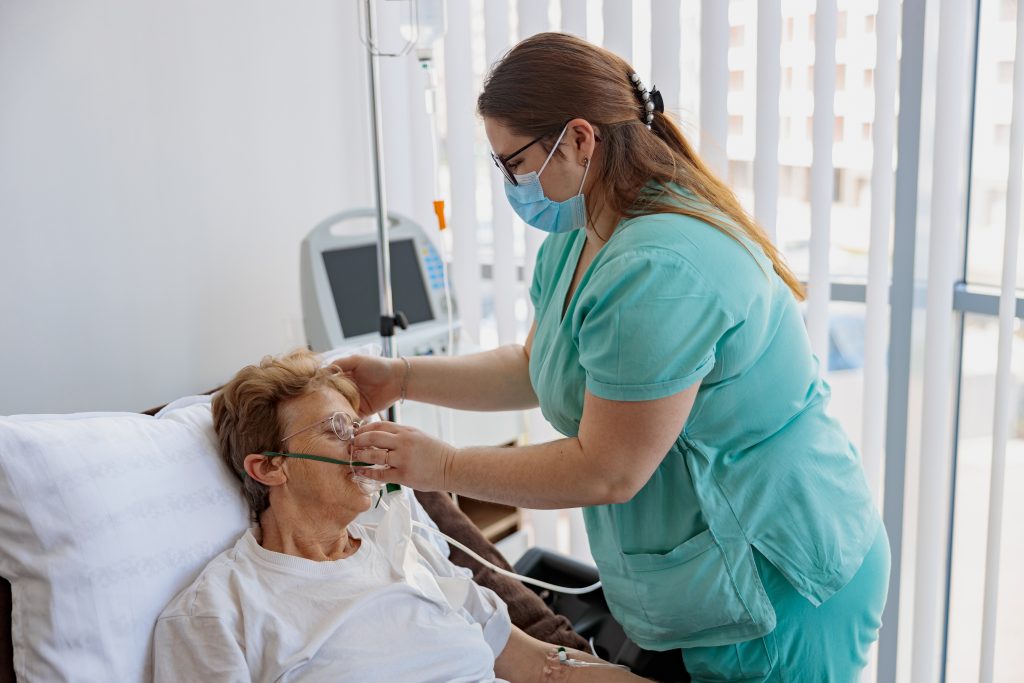
Top RN to BSN Programs in New York for 2026

Compare costs, completion times, and online options across every ranked New York RN-to-BSN program.

By Hannah Pierce, BSNReviewed by TopNursing.org TeamUpdated May 29, 202625+ min read
Top RN to BSN Programs in New York (2026 Rankings)

Points of interest…

  • New York RNs earn a mean annual wage of $104,570, surpassing the national median.
  • Most RN to BSN programs require 30-40 credits and can be finished in 12-18 months full-time.
  • CUNY colleges offer some of the most affordable per-credit rates for RN to BSN students.
  • Employer tuition reimbursement and union funds significantly cut out-of-pocket costs for many nurses.

New York’s BSN-in-10 law, which requires registered nurses to earn a bachelor’s degree within ten years of initial licensure, continues to reshape hiring practices across the state. Three public university systems (SUNY, CUNY, and a few private institutions) now offer 29 accredited RN to BSN tracks at top nursing schools in New York, with online, hybrid, and on-campus formats at tuition rates that start at $7,235 for in-state CUNY options and climb higher for out-of-state students. Employers in major hospital networks increasingly prefer BSN-prepared nurses, a shift reflected in hiring data. Registered nurses in New York earn a mean annual wage of $104,570, well above the national median, and the BSN premium is even steeper in metro areas. For RNs in the state, the BSN is no longer optional; it’s a professional necessity that pays for itself.

2026 Best RN to BSN Programs in New York

The 2026 list of best RN to BSN programs in New York highlights schools with low net cost and strong financial aid records. We weighted each program by net price, institution-wide graduation rate, and median earnings ten years after entry when available.

Factors considered
  • Net price after aid
  • Graduation rate (institution-wide)
  • Post-graduation earnings
  • Program flexibility
  • Student loan debt levels
Data sources
RankSchoolLocationNet priceBest for
#1
CUNY Hunter College
New York, NY$3,000/yrNYC-based RNs seeking affordable hybrid option

CUNY Hunter College offers an RN-to-BS program through its Hunter-Bellevue School of Nursing, blending fully online nursing courses with in-person general education. A 45-hour clinical placement in New York City community sites gives hands-on experience. With a net price around $2,984 and strong post-graduation earnings, it stands out for career-focused affordability.

Nursing (RN to BSN) — Hybrid
  • CCNE-accredited curriculum with fully online nursing coursework
  • 120 total credit hours, blending online nursing and in-person general education
  • 45-hour clinical placement at NYC community sites
  • Full-time and part-time pacing options to fit working nurses
  • Fall and spring start dates with a minimum 3.2 GPA for admission
  • Prepares for roles in management, public health, and specialty care
  • Credit for prior learning and transfer evaluation at orientation

CUNY Lehman College provides an RN to BS Nursing program that can be completed fully online or on campus. The 37.5-credit nursing major, within a 120-credit degree, requires a New York RN license. A net price of about $3,148 and high Pell participation make it one of the most budget-friendly options in the state.

Nursing (RN to BSN) — Online
  • 37.5-credit nursing major within a 120-credit bachelor's degree
  • Fully online or traditional in-person format for flexibility
  • Requires a current New York State RN license for admission
  • Rolling admissions with fall and spring start options
  • Prerequisites: math, chemistry, and human growth and development
  • Prepares for advanced roles and graduate nursing education
  • Affordable CUNY tuition with strong financial aid participation

The CUNY Graduate School and University Center, through CUNY School of Professional Studies, delivers a fully online RN to BS in Nursing. The curriculum covers health assessment, nursing research, and global health, and it emphasizes leadership. Graduates see strong median earnings, and the program's high completion rates reflect robust student support.

Nursing (RN to BSN) — Online
  • Fully online delivery for working RNs, with CCNE accreditation
  • Curriculum covers health assessment, nursing research, and global health
  • High program completion rates signal strong student support
  • Requires associate degree in nursing and active RN licensure
  • 3.0 minimum GPA; prior learning assessment and articulation agreements available
  • Prepares graduates for leadership roles and graduate studies
  • Dedicated CUNY faculty with focus on informatics and culturally diverse care
  • Online application with personal essay; international students accepted

College of Staten Island CUNY offers a hybrid RN to BS in Nursing program with ACEN accreditation. In-person and online sections accommodate full-time and part-time students, and the curriculum emphasizes health promotion, leadership, and community health. A net price of $5,579 and a 92% admission rate make it accessible for many RNs.

Bachelor of Science (BS) in Nursing (RN to BS) — Hybrid
  • ACEN-accredited program with flexible full-time and part-time schedules
  • Hybrid format: in-person and online sections to fit your needs
  • Minimum 2.5 GPA; early and regular admission timelines
  • Curriculum emphasizes leadership, community health, and research
  • Elective focus areas and faculty advisor assigned for support
  • Clinical, simulation, and laboratory experiences throughout
  • Prepares RNs for expanded roles in diverse healthcare settings

Farmingdale State College provides a CCNE-accredited, fully online RN to BS Completion program. The 121-credit curriculum covers community health, leadership, and evidence-based practice, including a senior leadership practicum. With a net price around $10,867 and strong earnings outcomes, it balances cost and career return.

Nursing RN to BS Completion — Online
  • CCNE-accredited fully online RN to BS completion program
  • 121 total credits, including a senior leadership practicum
  • Courses cover community health, leadership, health promotion, evidence-based practice
  • Clinical experiences in diverse healthcare settings built into the curriculum
  • Experienced faculty provide mentorship and real-world insights
  • Graduates pursue roles in acute care, community health, and administration

Empire State University delivers a 100% online RN to BSN program designed for working nurses. At $295 per credit and 124 total credits, it accepts prior learning credit. A summer 2026 start and an April 10 application deadline offer a clear timeline. The median graduate debt is $18,730, and it prepares for leadership and case management roles.

Bachelor of Science in Nursing (RN to BSN) — Online
  • CCNE-accredited, 100% online program for licensed RNs
  • $295 per credit with 124 total credits required
  • Prior learning credit accepted, potentially accelerating your degree
  • Summer 2026 start; apply by April 10 for next cohort
  • 135 clinical hours plus a leadership capstone course
  • Prepares for Charge Nurse, Nurse Manager, and Case Manager roles
  • Dedicated faculty advisors support working nurses throughout

Upstate Medical University offers a fully online RN to Bachelor of Science program with CCNE accreditation. Asynchronous coursework and part-time or full-time options let students balance work and life. While net price data is unavailable, program graduates report among the highest median earnings in this ranking, at $92,257 ten years after entry.

RN to Bachelor of Science in Nursing — Online
  • CCNE-accredited fully online RN to Bachelor of Science program
  • Asynchronous format with part-time and full-time options
  • Designed for RNs with an associate degree or nursing diploma
  • Curriculum builds a strong foundation for graduate nursing study
  • Flexible schedule accommodates working professionals' lives
  • Explore diverse nursing specialties and discover new practice areas
  • Prepares for expanded clinical and leadership roles

Stony Brook University's Registered Nurse to Baccalaureate Program combines distance learning with on-site requirements. The 60-credit curriculum covers role development, nursing research, informatics, and population health, culminating in a leadership practicum. A 75.6% graduation rate (institution-wide) and median earnings of $74,502 signal strong student outcomes.

Registered Nurse to Baccalaureate Program (RNBP) — Hybrid
  • 60-credit curriculum delivered via distance learning with on-site elements
  • Minimum 2.5 GPA; RN license required within six months of admission
  • Accepts up to 8 transfer credits for eligible prior coursework
  • Covers role development, nursing research, informatics, and ethics
  • Population health nursing and a capstone leadership practicum
  • Honors opportunities: Dean's List and Degrees with Distinction
  • Prepares for advanced roles in leadership, community health, and policy

SUNY Polytechnic Institute provides a fully online RN to BS Nursing Program with synchronous and asynchronous options. Students can transfer up to 76 credits and complete practicums in hospitals, schools, and community agencies. A net price of $14,164 and median earnings of $64,355 make it a solid mid-range choice with strong faculty mentorship.

RN to BS Nursing Program — Online
  • Fully online coursework with synchronous and asynchronous options
  • Transfer up to 76 credits from prior nursing education
  • Fall and spring starts; full-time or part-time pacing available
  • Practicum experiences in hospitals, schools, and community agencies
  • Sigma Theta Tau honor society membership for high achievers
  • Articulation agreements with RN programs and dedicated faculty mentors
  • Prepares for leadership, care management, and community health roles

SUNY College of Technology at Delhi offers an ACEN-accredited online RN-to-BSN program with seven-week terms and five start dates per year. The curriculum includes practicums completed in your own community, and up to 12 credits can be earned for prior RN work experience. A net price of $17,225 and median earnings of $51,629 reflect typical outcomes for regional public colleges.

Nursing: Online RN-to-BSN — Online
  • ACEN-accredited online RN-to-BSN program with flexible pacing
  • Seven-week terms and five start dates per year for convenience
  • 2.6 minimum GPA; prerequisite courses required for admission
  • Credit for prior RN work experience (up to 12 credits) available
  • Precepted practicum completed in your own community
  • Dedicated academic advisor supports you from registration to graduation
  • Prepares for Charge Nurse, Nurse Manager, and Public Health Nurse roles

How Much Do RN to BSN Programs Cost in New York?

RN to BSN tuition in New York varies widely between public and private institutions. The CUNY system offers some of the most affordable per-credit rates, while additional fees and delivery formats can affect the total cost. Always check the latest tuition pages or contact financial aid offices for a personalized estimate.

InstitutionPer-Credit Cost (2025-2026)Delivery ModeAdditional Fees
CUNY School of Professional Studies$305OnlineN/A
Lehman College (CUNY)$305N/A$98.15 student activity fee per term

Fastest RN to BSN Programs in New York

Most RN-to-BSN programs in New York require 30 to 40 credits beyond the associate degree, with full-time students typically finishing in 12 to 18 months and part-time students in about 24 months. Several schools, however, advertise expedited pathways that can cut the timeline to a single year.

Accelerated Completion Tracks

D'Youville University's online RN-to-BS program can be completed in 12 months of full-time study. The curriculum adds 30 to 33 nursing credits to the existing associate degree, building toward the 120-credit bachelor's. Other SUNY campuses and private colleges have structured their RN-to-BSN programs to allow motivated nurses to finish quickly, often by offering multiple start dates per year and compact, 7- or 8-week course terms. While not every program explicitly markets a 12-month finish, schools like SUNY Delhi and SUNY Polytechnic are frequently cited by nurses for flexible pacing that can approach that timeframe when prior credits align perfectly.

Transfer Credit and Prior Learning

SUNY's system-wide transfer policies are a major accelerator. Many SUNY institutions guarantee that an Associate in Applied Science (AAS) in Nursing from a New York community college satisfies all lower-division general education requirements, leaving only the nursing core and a handful of upper-division courses. Schools may also award credit for prior certifications, military medical training, or portfolio-assessed competencies. Generous credit acceptance directly reduces the number of terms needed, so applicants who complete all non-nursing coursework beforehand can sometimes finish the BSN portion in as few as two semesters.

Speed vs. Sustainability

A six- or twelve-month pace is intense, especially for nurses working rotating shifts or overnights. Course loads often rise to three or four classes per term, and clinical projects or community health requirements may demand additional hours outside the classroom. Before enrolling in the fastest track, it is worth comparing the weekly time commitment with your work schedule and family obligations. Some nurses opt for a slightly longer, part-time route to maintain manageability, graduate without burnout, and keep their clinical performance strong.

Online vs. On-Campus RN to BSN Options in New York

Choosing between a fully online and a hybrid RN to BSN program involves trade-offs in flexibility, clinical requirements, and cost. Online programs like those at CUNY Lehman and SUNY Polytechnic cater to working nurses with asynchronous schedules, while hybrid options at Hunter and Stony Brook blend remote coursework with in-person experiences. The table below compares key factors to help you decide which format aligns with your career and lifestyle needs.

Fully Online Programs

Flexibility for Shift Workers Clinical and Practicum Requirements Networking Opportunities Example Program Costs (Net Price, In-State) Geographic Access

Hybrid Programs (Online and In-Person)

Asynchronous coursework allows studying anytime; ideal for nurses on rotating shifts. Often completed at your workplace or a local site; e.g., Excelsior capstone project, SUNY Delhi virtual simulation. Primarily virtual interaction; limited face-to-face peer and faculty connections. CUNY Lehman College: $3,148 per year; SUNY Polytechnic Institute: $14,164 per year. Enables upstate nurses to earn credentials from NYC-area schools without relocating.

Employer Tuition Benefits and Scholarships for New York RNs

Most New York RNs can cut their BSN tuition significantly by combining employer tuition reimbursement, union education funds, and state scholarship programs. The key is knowing where to look and how to apply, because benefits vary widely across hospitals, contracts, and membership status.

Employer Tuition Reimbursement Policies

New York's largest healthcare employers, including Northwell Health, NewYork-Presbyterian, Mount Sinai Health System, and NYC Health + Hospitals, offer tuition assistance for RN-to-BSN students. However, the specifics, including dollar caps and eligibility criteria, depend on your role, employment status, and collective bargaining agreements. The only way to get accurate, current details is to contact your HR or benefits department directly. Request a written summary of the reimbursement policy and ask about any service commitments or grade requirements. Some hospitals list partnership tuition discounts on dedicated employee education portals, so check those as well.

Union Education Benefits for RNs

If you belong to a nursing union, you have an additional, often overlooked, source of tuition support. The New York State Nurses Association (NYSNA) and 1199SEIU United Healthcare Workers East operate robust education funds that can cover a portion of BSN tuition, books, or fees. These funds are typically separate from employer-provided reimbursement, so you can stack them. Visit the NYSNA member portal or call the 1199SEIU benefits office to learn about eligibility, application deadlines, and required documentation. For 1199SEIU members, the Training and Upgrading Fund is particularly active in supporting RN-to-BSN advancement. Attend union benefit meetings or webinars to get the most current program details.

State Scholarship Opportunities

Beyond employer and union aid, New York State offers targeted scholarships for nursing education worth investigating. The New York State Higher Education Services Corporation (HESC) administers the Nursing Faculty Loan Forgiveness Incentive Program and the Scholarship for Academic Excellence. While the Nursing Faculty program is geared toward those planning to teach, the Academic Excellence Scholarship is open to high-achieving students across all majors, including nursing. Check HESC's website for application windows and eligibility requirements. Some CUNY and SUNY nursing schools also advertise institutional scholarships on their financial aid pages that align with employer partnerships.

Action Steps to Maximize Your Funding

  • Request written benefit summaries: Ask your HR department for a detailed tuition reimbursement policy. Keep a record of what is covered, the maximum annual amount, and any post-completion work obligations.
  • Contact your union: Even if you think you know your benefits, call the NYSNA or 1199SEIU education funds to confirm current offerings. Member portals may also list upcoming deadlines.
  • Attend union benefit meetings: These sessions often reveal updates, new partnerships, or application tips that aren't posted online.
  • Cross-reference school partnerships: Visit the websites of CUNY and SUNY nursing programs; many list reduced tuition rates for employees of specific hospital systems. Confirm with both the school and your employer.
  • Apply for state scholarships: Review HESC nursing scholarship programs and submit your FAFSA early, as some awards have limited funding.

Admission Requirements for New York RN to BSN Programs

New York RN to BSN programs typically set a minimum GPA between 2.5 and 3.0, though some, like CUNY Hunter College, require a 3.2. Beyond the GPA, all programs require an active, unencumbered New York RN license and a qualifying associate degree or diploma in nursing from an accredited institution. Let’s break down the core expectations.

Standard Admission Requirements

  • Active RN license: You must hold a current New York State registered nurse license, or be eligible to obtain one by the program start date.
  • Nursing credential: A completed ADN or nursing diploma from a regionally or nationally accredited program.
  • Minimum GPA: Most programs ask for a cumulative GPA of 2.5–3.0. Examples include the College of Staten Island (2.5), Stony Brook University (2.5), SUNY Delhi (2.6), and CUNY SPS (3.0). Hunter College is an outlier at 3.2.
  • Prerequisite coursework: Common prerequisites include microbiology, anatomy and physiology, chemistry, English composition, and statistics. Many programs allow you to complete missing prerequisites during your first semester.
  • Additional materials: Personal statements, professional references, and proof of immunizations are often part of the application.

How Competitive Are the Programs?

Since applicants are already licensed RNs, RN to BSN programs are generally not highly selective. However, meeting the posted GPA cutoff and submitting complete prerequisite coursework are essential. It is worth noting that institutional acceptance rates, which range from about 49% at Stony Brook to over 92% at the College of Staten Island, reflect the entire college, not the specific RN to BSN cohort. In practice, if you hold a 2.5+ GPA, have a clean license, and have finished the required prerequisites, you stand a very good chance of admission.

Transfer Credits and Articulation

Efficient credit transfer is a cornerstone of New York’s public college systems.

  • SUNY system: The SUNY Nursing Transfer Path guarantees at least 30 nursing credits will transfer toward a BSN for graduates of SUNY associate programs. General education credits also transfer as a block. However, the exact maximum and automatic articulation vary by campus. For instance, SUNY Delhi accepts 60–80 transfer credits, with a ceiling of 30 upper-division credits and 15 upper-division nursing credits. Empire State University allows up to 93 transfer credits, with a 31-credit residency requirement.
  • CUNY system: CUNY School of Professional Studies awards 36 credits for a hospital diploma and requires 30 credits in residence. It maintains articulation agreements with Borough of Manhattan, Bronx, Hostos, Kingsborough, and Queensborough community colleges, smoothing the path for ADN holders.
  • Typical limits: Across New York, RN to BSN students can expect to transfer between 60 and 90 credits, leaving about 30 credits of upper-division nursing coursework to complete at the bachelor’s-granting institution.

Check with an advisor early to map out which of your credits will apply; this can shave months off your timeline.

Salary and Career Outcomes After Earning a BSN in New York

Registered nurse salaries in New York vary considerably by location. The state’s mean annual wage for RNs is $104,570, well above the national median of $93,600, but within New York, metro areas like New York-Newark-Jersey City pay substantially more than upstate regions. While a BSN often leads to higher earnings and greater job security, the exact premium depends on the employer, specialty, and experience, and the high cost of living in downstate areas can offset some of the wage advantage.

NY Metro AreaRegistered Nurses EmployedMedian Annual Wage
New York-Newark-Jersey City, NY-NJ195,470$113,490
Buffalo-Cheektowaga, NY13,870$95,380
Rochester, NY12,510$95,010
Albany-Schenectady-Troy, NY10,020$92,470

RN to BSN to MSN: Advancement Pathways in New York

What comes after the BSN, and can you fast-track your way to an advanced practice role in New York? The BSN is a launchpad, not a finish line, and many RN to BSN programs in New York are designed with graduate education and registered nurse advancement in mind.

Bridge programs that connect BSN to MSN

Several schools in the rankings embed a clear path to a master's degree. St. John Fisher University offers an RN to BSN to M.S. Fast-Track built for working nurses who want to earn both credentials without pausing their careers. Molloy University's fully online RN to BS in Nursing explicitly serves as a bridge to graduate nursing programs. SUNY Downstate Health Sciences University notes that its program prepares for graduate nursing study, and SUNY Upstate Medical University's RN to Bachelor of Science builds a foundation for advanced practice roles.

Earning a BSN opens doors to nurse practitioner, clinical nurse specialist, nurse educator, and nurse leadership positions, all of which require a graduate degree in New York. Many employers now prefer or incentivize BSN and MSN credentials, and the BSN is the prerequisite for most MSN and DNP tracks.

Stacking credentials without stopping

For nurses who want to move directly from an associate degree to a master's, accelerated BSN-to-DNP or BSN-to-MSN options exist at several New York universities. While these programs typically require a BSN for entry, the RN to BSN to MSN pathways at institutions like St. John Fisher let you complete both degrees in a condensed timeline. Some schools also offer dual admission agreements, guaranteeing a spot in the MSN program once you finish the BSN requirements.

The earnings trajectory: BSN and beyond

Earnings data from the U.S. Department of Education's College Scorecard shows a clear financial upside for nurses who complete their BSN at top New York schools. Ten years after entry, median earnings reach $109,601 for SUNY Downstate Health Sciences University alumni, $92,257 for SUNY Upstate Medical University, and $77,789 for Molloy University. These figures underscore the return on a BSN investment. Advancing to a master's or doctoral level typically pushes earning potential even higher, with nurse practitioners nationally earning a median of $126,260 (BLS, May 2024). In New York, that trajectory is often steeper due to high demand and cost of living.

How Do You Choose the Right RN to BSN Program in New York?

The 'easiest' RN to BSN program isn't about academic shortcuts, it's the one that best fits your budget, schedule, and career goals. Follow this five-step process to find your ideal match.

5-step framework to choose an RN to BSN program in New York, covering budget, format, transfer credits, timeline, and accreditation.

Frequently Asked Questions About RN to BSN Programs in New York

Here are answers to common questions about RN to BSN programs in New York, covering costs, time commitments, and career outcomes.

What is the cheapest RN to BSN program in New York?
Several CUNY schools, such as Lehman College and SUNY Delhi, offer among the most affordable RN to BSN tuition rates for New York residents, often under $5,000 per semester for full-time study. Online options through public universities can further reduce costs by eliminating campus fees. Always verify current in-state tuition and any additional program fees for the most accurate comparison.
Can you complete an RN to BSN fully online in New York?
Yes. Many New York schools, including SUNY Plattsburgh and Utica College, provide fully online RN to BSN programs with no campus visits required. Clinical or practicum hours, when needed, can typically be arranged at your workplace or a local facility. This flexibility allows working nurses to balance job and family commitments while advancing their education.
How long does it take to complete an RN to BSN program in New York?
Most programs take 12 to 24 months of full-time study, but accelerated options can be finished in as few as 9 months. Part-time tracks may extend to three years. The exact timeline depends on transfer credits, prerequisite completion, and whether you enroll in a four-semester or self-paced online format.
How much more do BSN nurses make than ADN nurses in New York?
While the Bureau of Labor Statistics does not separate RN earnings by degree level nationally, industry surveys indicate BSN-prepared nurses in New York earn roughly 5-15% more than ADN nurses. In metropolitan areas like New York City, the annual difference may exceed $10,000, especially in hospitals that implement differentiated pay scales for baccalaureate education.
What is the easiest RN to BSN program in New York?
Ease is subjective, but programs with no clinical requirements, generous transfer credit policies, and self-paced online formats are often considered simpler. Schools like St. Joseph's University and Excelsior College design their RN to BSN pathways specifically for working adults, offering multiple start dates and rolling admissions to reduce barriers.
Are RN to BSN programs in New York competitive to get into?
Most programs are not highly competitive if you hold an active RN license and meet minimum GPA requirements, typically 2.5-3.0. Acceptance rates are higher than for pre-licensure BSN programs. Some CUNY and SUNY schools may have limited seats, so applying early with a strong nursing employment record can be advantageous.

More RN to BSN Programs in New York to Consider

Beyond the top-ranked programs, New York is home to numerous other RN to BSN pathways that cater to different schedules, budgets, and learning preferences. The following list highlights 15 additional schools across the state, from Western New York to the Hudson Valley, each offering distinct advantages for working nurses.

Western New York

SUNY Brockport
SUNY Brockport's online RN-to-BSN Fast-Track program is designed for registered nurses with an associate degree, offering flexible completion and a curriculum covering community health, evidence-based practice, and leadership. Clinical experiences can be completed in your own community or abroad.
  • Nursing RN-to-BSN Fast-Track (BSN)
Brockport, NY · Online
University at Buffalo
UB’s asynchronous online RN to BSN offers 1- or 2-year tracks, requiring 32 credits. The CCNE-accredited program emphasizes leadership, evidence-based practice, and health policy, with no required login times.
  • RN to BSN
Buffalo, NY · Online
Trocaire College
Trocaire’s online RN to BS in Nursing is among the most affordable in Western New York, with a per-credit rate of $410 under the Healthcare Heroes Scholarship. The program requires just 30 credits and is ACEN accredited.
  • Online RN to BS in Nursing Program
Buffalo, NY · Online
Daemen University
Daemen’s hybrid RN to BS program combines online coursework with community-based learning experiences. It requires 120 credits, with no entrance exam, and prepares nurses for leadership and community health roles.
  • Bachelor of Science in Nursing (RN – BS Program)
Amherst, NY · Hybrid
Niagara University
Niagara University’s on-campus RN to B.S. program builds on an associate degree foundation, with a leadership capstone project. Many courses are available online, and the program is rooted in Vincentian values of compassionate care.
  • R.N. to B.S. Program
Niagara University, NY · On-Campus
Bryant & Stratton College-Online
Bryant & Stratton’s online RN to BSN offers both synchronous and asynchronous options, with live remote classes and 135 clinical hours. The 40-month program focuses on two courses at a time and has no application fee.
  • RN to BSN
Orchard Park, NY · Online
Roberts Wesleyan University
Roberts Wesleyan’s fully online RN to BS in Nursing program can be completed in 12-24 months with just 36 credits. A 45% tuition discount brings the total program cost to approximately $12,593, and CCNE accreditation ensures quality.
  • R.N. to B.S. in Nursing
Rochester, NY · Online

New York City

SUNY Downstate Health Sciences University
SUNY Downstate’s online RN to BS is a three-semester program with a community health clinical component completed locally. It requires 125 credits and prepares nurses for graduate study and leadership.
  • RN to BS in Nursing
Brooklyn, NY · Online
St. Francis College
St. Francis College offers a CCNE-accredited on-campus RN to BSN with rolling admissions and accepts up to 92 transfer credits. The program emphasizes cultural competency and features state-of-the-art simulation labs.
  • Registered Nurse to Bachelor of Science in Nursing, R.N. to B.S.N.
Brooklyn, NY · On-Campus

Hudson Valley

Mercy University
Mercy’s fully online RN to B.S. program offers full- or part-time tracks, with up to 75 transfer credits accepted. The CCNE-accredited curriculum includes 135 clinical hours and a 2.8 GPA minimum.
  • RN to B.S. Degree Completion Program
Dobbs Ferry, NY · Online

Capital Region

Maria College of Albany
Maria College’s asynchronous online RN-BS completion program requires 90 clinical hours and is ACEN accredited. With fall and spring starts, it offers both full- and part-time study and includes membership in Sigma Theta Tau.
  • RN-BS Degree in Nursing Completion
Albany, NY · Online

North Country

SUNY College of Technology at Canton
SUNY Canton’s 100% online RN-BS is ACEN accredited and features asynchronous delivery. It provides a seamless transition from an associate degree and boasts high graduate employment rates within six months.
  • RN-BS Nursing Program
Canton, NY · Online
SUNY College at Plattsburgh
SUNY Plattsburgh’s online RN-to-B.S. is CCNE accredited and can be completed in as little as two years. A clinical coordinator helps arrange local experiences, and the program is known for affordability and value.
  • RN-to-B.S. Nursing Program
  • R.N.-to-B.S.-in-Nursing Program
Plattsburgh, NY · Online

Central New York

SUNY Morrisville
SUNY Morrisville’s online RN to B.S. program is ACEN accredited and requires 120 credits, with 157.5 practicum hours in community and family health. Morrisville AAS graduates can transfer seamlessly.
  • Nursing, BS
Morrisville, NY · Online
Utica University
Utica’s CCNE-accredited online RN to BSN can be completed in as few as 20 months at $295 per credit. The program accepts up to 90 transfer credits and offers small class sizes with no residency requirement.
  • RN to BSN
Utica, NY · Online

Recent Articles