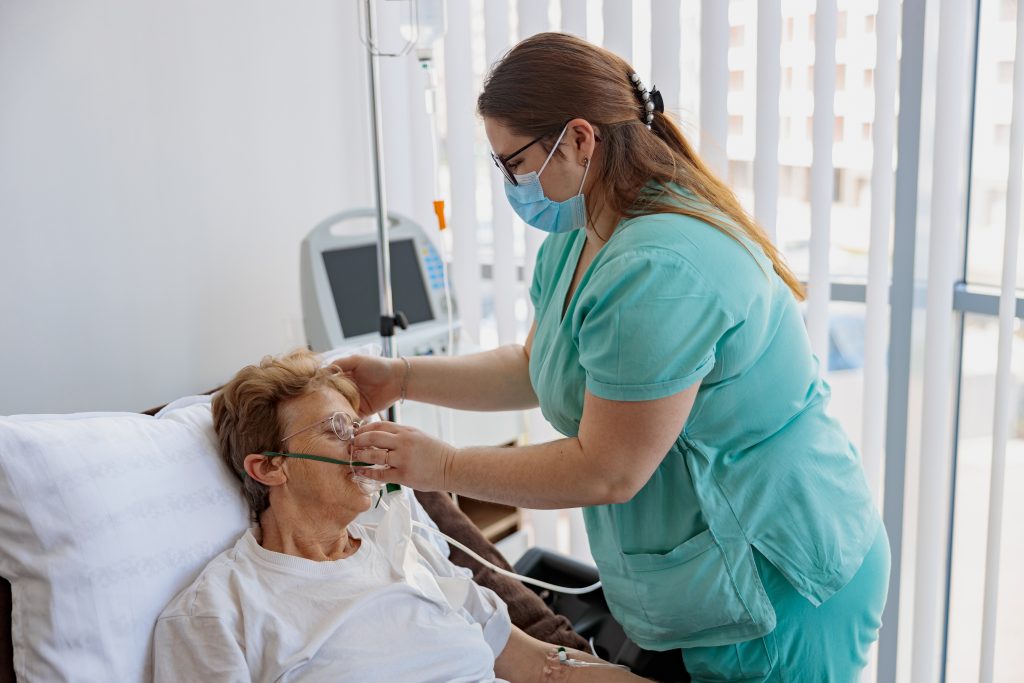
Compare tuition, NCLEX pass rates, program length, and career outcomes at every accredited Nebraska LPN school.
By Hannah Pierce, BSNReviewed by TopNursing.org TeamUpdated September 25, 202618 min read
Points of interest…
LPN program tuition in Nebraska ranges from under $3,400 at community colleges to over $18,000 at private schools.
Nebraska LPN graduates achieved an 89.24% first-time NCLEX-PN pass rate in 2024, based on state board data.
Licensed practical nurses in Nebraska earn a median $60,740 annually, with top earners exceeding $64,870.
Full-time LPN programs in Nebraska take about 12 months, with part-time tracks extending up to 24 months.
A 12-month practical nursing certificate lands you on the floor a full year ahead of associate-degree RN programs, making it one of the fastest lpn programs available, but the median annual wage for Nebraska LPNs sits roughly $20,000 below that of registered nurses.
Choosing the right LPN program means weighing tuition costs that range from under $3,500 at public community colleges to nearly $19,000 at private institutions, assessing NCLEX-PN pass rates that can vary by over 15 percentage points, and mapping out how your first job in Omaha or Scottsbluff shapes your long-term career.
With Nebraska’s first-time NCLEX-PN pass rates holding steady near 89% statewide, the margin between a strong start and a costly retake often comes down to the program’s clinical training quality, not just its sticker price.
2026 Best LPN Programs in Nebraska
The rankings below are weighted toward affordability, combining net price data with financial aid metrics to surface programs that offer strong value. We also considered graduation rates, median graduate debt, and earnings potential to help you find an LPN program that balances cost and quality.
Factors considered
Net price and financial aid
Graduation and retention rates
Median student debt
Earnings after graduation
Program-specific findings
Data sources
NCES-IPEDS federal institutional data — nces.ed.gov
Mid-Plains Community College in North Platte offers a selective, cohort-based Practical Nursing program built on a concept-based curriculum. Students gain hands-on skills through state-of-the-art simulations and clinicals with regional healthcare partners. The program uses a ranked point system for admission, accepting ACT or Accuplacer scores, and requires active status on the Nebraska Nursing Assistant Registry. Graduates are eligible for NCLEX-PN and have a direct advanced-placement pathway into MPCC's Associate Degree Nursing program.
Selective cohort admission using a ranked point system
Concept-based curriculum with hands-on clinicals
State-of-the-art simulation labs
Requires active Nebraska CNA status for admission
ACT 21 or equivalent Accuplacer scores accepted
Direct bridge to MPCC Associate Degree Nursing program
Eligible to take NCLEX-PN exam upon graduation
Approved by Nebraska State Board of Nursing
#2
Central Community College
Grand Island, NE
$7,000/yr
Central Nebraska job-seeking students
Central Community College's Practical Nursing diploma is delivered in a two-semester, campus-based format across Grand Island, Columbus, and Kearney. Admission is lottery-based and requires a CNA certification. The program blends a concept-based curriculum with small-group learning and simulation, boasting a 90% job placement rate within six months of graduation. It also provides a seamless path into the Associate Degree in Nursing.
Lottery-based admission with CNA certification prerequisite
90% job placement within six months of graduation
Two-semester, campus-based program at multiple locations
Starts fall; apply by February 6, 2026
Prepares for NCLEX-PN licensure exam
Seamless pathway to Associate Degree in Nursing
Approved by Nebraska State Board of Nursing
Small-group learning with state-of-the-art simulation labs
#3
Metropolitan Community College Area
Omaha, NE
~$5,000/yr (est.)
Omaha metro working adults
Metropolitan Community College's Practical Nursing Certificate of Achievement in Omaha is a one-year program designed to quickly prepare you for the NCLEX-PN. The workforce-aligned curriculum emphasizes hands-on patient care and vital signs monitoring, with dedicated academic advising and Success Navigator support. Graduates can enter Omaha-area hospitals, clinics, and long-term care, or continue seamlessly into MCC's Associate Degree in Nursing.
One-year certificate program for quick entry into nursing
Workforce-aligned curriculum serving Omaha metro healthcare
Hands-on clinical experience in patient care and care planning
Direct pathway to MCC Associate Degree in Nursing
Academic advising and Success Navigator support
Prepares graduates for NCLEX-PN exam
Accredited by Nebraska Board of Nursing
#4
Western Nebraska Community College
Scottsbluff, NE
~$5,000/yr (est.)
Western Nebraska Community College's Practical Nursing diploma is offered at all three campuses (Scottsbluff, Alliance, Sidney), providing broad access across the region. The ACEN-accredited program features flexible clinical scheduling (days, evenings, weekends) and a curriculum focused on holistic care and evidence-based practice. It serves as a stackable credential toward WNCC's ADN, making it a strong foundation for rural western Nebraska learners.
ACEN-accredited program with three campus locations
Flexible clinical schedules including days, evenings, weekends
Stackable credential that leads to WNCC Associate Degree in Nursing
Hands-on training in holistic patient care and safe procedures
Prepares for NCLEX-PN licensure exam
Approved by Nebraska State Board of Nursing
#5
Northeast Community College
Norfolk, NE
$5,000 – $10,000/yr
Northeast Community College's Practical Nursing program in Norfolk is known for its competitive, limited-enrollment cohort (about 60 students) and NCLEX-PN pass rates exceeding national averages. The curriculum can be customized into one-, two-, or multi-year plans with full- or part-time options. Clinical experiences take place in local hospitals and state-of-the-art simulation labs, and admission requires TEAS and CNA certification.
Limited enrollment with approximately 60 students per year
NCLEX-PN pass rates exceeding national averages
Customizable plan of study (one, two, or multiple years)
Full-time and part-time options available
State-of-the-art simulation labs and local hospital clinicals
Requires TEAS exam and CNA certification
Prepares for NCLEX-PN licensure exam
Approved by Nebraska State Board of Nursing
#6
Southeast Community College Area
Lincoln, NE
$9,000/yr (net price)
Southeast Community College's Practical Nursing diploma is a low-cost, multi-site option with locations in Beatrice, Lincoln, and Falls City. The program integrates clinicals every term, totaling 270 hours, and can be completed full-time in two terms or part-time in four. With a total estimated cost around $7,573 and fall/spring start dates, it offers an affordable, structured path to NCLEX-PN eligibility for southeast Nebraska residents.
270 hours of clinical rotations starting first term
Offered at Beatrice, Lincoln, and Falls City locations
Full-time (2 terms) or part-time (4 terms) tracks
Fall and spring start dates available
Prepares for NCLEX-PN licensure exam
Hands-on clinical learning integrated every term
#7
Nebraska Methodist College
Omaha, NE
~$22,000/yr (est.)
Nebraska Methodist College in Omaha delivers a hybrid one-year Practical Nursing Certificate that blends online coursework with in-person labs. Affiliated with Methodist Health System, the program offers employer tuition reimbursement and a clear LPN-to-BSN pathway. Students train in a high-fidelity Nursing Arts Center, receive one-on-one job coaching, and participate in service-learning projects, making it a strong fit for working adults in the Omaha area.
ACEN-accredited hybrid program blending online and on-campus learning
One-year program; apply by July 10, 2026 for fall start
39 credit hours at $350 per credit
Employer tuition reimbursement for Methodist Health System employees
Direct pathway to Nebraska Methodist College LPN-to-BSN
State-of-the-art Nursing Arts Center with high-fidelity manikins
One-on-one job coaching and service-learning projects
Requires CNA certification and 2.3 GPA minimum
LPN Program Costs & Tuition Comparison in Nebraska
LPN program costs in Nebraska range from under $3,400 at community colleges to over $18,000 at private institutions. However, many students pay less than the sticker price once grants and scholarships are factored in, the net price column below shows the average amount paid after aid. Median graduate debt also varies, with public college graduates typically borrowing under $11,000.
School
In-State Tuition
Out-of-State Tuition
Net Price
Median Graduate Debt
Metropolitan Community College Area
$3,375
$4,950
$4,982
$8,217
Mid-Plains Community College
$3,600
$4,530
$5,235
$9,995
Western Nebraska Community College
$3,840
$4,410
$5,474
$9,000
Central Community College
$3,360
$4,800
$7,024
$7,992
Northeast Community College
$3,840
$5,130
$8,544
$11,000
Southeast Community College Area
$3,444
$4,032
$9,171
$11,000
Nebraska Methodist College
$18,934
$18,934
$21,863
$23,417
Questions to Ask Yourself
Can you commit to a full-time, 12-month program, or do you need evening or weekend options?
Nebraska LPN programs are often daytime and rigorous. If you're working, verify part-time or evening tracks to avoid stretching yourself too thin.
Is the nearest program within commuting distance, or should you explore hybrid formats?
If you live outside Omaha or Lincoln, a hybrid program with online theory and nearby clinicals can save significant driving time and costs.
Have you taken a recent TEAS practice test to gauge where you stand?
Many programs use TEAS scores for admissions. A practice run now highlights gaps, giving you time to study and strengthen your application.
Admission Requirements for Nebraska LPN Programs
Admission to an LPN program in Nebraska starts with a clear set of requirements, but the details vary by school. Understanding the common baseline and program-specific criteria will help you prepare a strong application.
Common Baseline Requirements
Most Nebraska LPN programs share several foundational prerequisites:
Education: A high school diploma or GED is mandatory for all applicants. You will need to submit official transcripts.
Entrance Exam: Many schools require scores from an entrance exam such as the TEAS. Others, like Mid-Plains Community College, accept ACT or Accuplacer scores, with a minimum ACT composite of 21 and subscores of 19.
Background Check and Drug Screening: A criminal background check is standard, and many programs also require a drug screening before clinical rotations begin. These must be completed through approved vendors.
Immunizations and Health Records: Up-to-date immunizations (including MMR, varicella, TB test, and hepatitis B series) are required. Some programs also require a current flu shot.
CPR Certification: Proof of current BLS CPR certification from the American Heart Association is often needed before starting clinical work.
Program-Specific Requirements
Beyond the basics, each school adds its own layer of criteria:
GPA and Prerequisite Grades: Central Community College requires a minimum grade of B in all prerequisite courses, while Metropolitan Community College sets the bar at C. Mid-Plains Community College expects a C+ or higher in prerequisite classes such as anatomy and math.
CNA Registry: Mid-Plains Community College stands out by requiring applicants to maintain active status on the Nebraska Nursing Assistant Registry. This ensures students have practical patient care experience before entering the program.
Additional Materials: Some programs, like the one at College of Saint Mary, require official transcripts and may request letters of recommendation or a personal statement. Always review the specific application checklist on the school's website.
Application Deadlines and Competitive Selection
Nebraska's community colleges typically use a competitive admission process rather than a first-come, first-served model. Applications are scored based on exam scores, GPA, prerequisite grades, and sometimes healthcare experience.
Mid-Plains Community College: In recent cycles, the application deadline for the August cohort was January 15, with admission decisions sent by March 1. Future intakes are expected to follow a similar timeline, but confirm directly with the college for upcoming dates.
Other schools: Deadlines can range from early spring to late summer for fall starts. Some programs may accept applications on a rolling basis until seats are filled, while others have strict cutoff dates.
Meeting the minimum requirements does not guarantee enrollment. Applicants are ranked, and only the highest-scoring individuals are offered spots. Submitting a complete application early and excelling in prerequisites can improve your chances.
How Long Does It Take to Become an LPN in Nebraska?
Most full-time LPN programs in Nebraska take around 12 months to complete, requiring 38-41 credit hours of coursework and clinical training. Part-time options may extend to 18-24 months. Students gain hands-on experience through clinical placements arranged by the school at local hospitals, long-term care facilities, and clinics.
Online & Hybrid LPN Programs in Nebraska
Nebraska’s practical nursing programs have responded to student demand for flexibility, but state requirements mean that no LPN program in the state is fully online. Didactic coursework can be completed online in a few hybrid programs, while all clinical hours must be completed in person at local healthcare facilities.
How hybrid learning works in Nebraska LPN programs
Two of the top-ranked schools on this list offer a hybrid delivery model. Southeast Community College’s practical nursing program combines online theory with in-person clinicals at its Beatrice and Lincoln locations; the Milford and Falls City sites deliver theory courses entirely online. Nebraska Methodist College in Omaha provides a one-year hybrid certificate that pairs online didactic classes with hands-on skill practice in its Nursing Arts Center and clinical rotations at partner sites. All other ranked programs, including Central Community College, Mid-Plains Community College, Metropolitan Community College, Western Nebraska Community College, and Northeast Community College, currently run campus-based courses, though some accommodate evening or weekend schedules.
Evening, weekend, and part-time tracks for working students
Several programs offer built-in flexibility for students balancing jobs or family responsibilities. Southeast Community College allows part-time study and has limited evening observation hours, though most clinicals occur during daytime. Metropolitan Community College runs a designated spring-start evening cohort, making it a strong option for Omaha-area students who need to attend class after work. Western Nebraska Community College’s practical nursing clinical rotations can include day, evening, and weekend shifts, offering some scheduling variety. Northeast Community College and Central Community College both advertise full-time and part-time pathways, though part-time seats may be limited. Mid-Plains Community College and others maintain a traditional daytime format.
What to expect from clinical placements
Hybrid students must still be within manageable driving distance of assigned clinical sites, online theory does not remove the need for regular in-person attendance. Clinical schedules often run early morning to afternoon, with some programs including occasional evening or weekend rotations. Before enrolling, confirm whether your preferred campus’s clinical placements are compatible with your transportation and work schedule.
NCLEX-PN Pass Rates & Accreditation for Nebraska LPN Programs
Why NCLEX-PN Pass Rates Matter
The NCLEX-PN pass rate is a direct indicator of how well a practical nursing program prepares students for the licensure exam. First-attempt pass rates, published annually by the Nebraska Board of Nursing, show the percentage of graduates who succeed on their initial try. Because retaking the exam means additional fees, potential income loss, and the stress of re-study, a high first-time pass rate saves you time and money. Top-performing programs consistently align their curriculum with the test framework, ensuring graduates are ready for everything from safe-patient care to professional ethics. When reviewing programs, look beyond a single year; strong multi-year trends indicate a stable, effective education model.
Accreditation: A Seal of Quality
Accreditation is the backbone of program excellence. The Accreditation Commission for Education in Nursing (ACEN) is the primary national accreditor for practical nursing programs. ACEN accreditation signals that a school meets rigorous, evidence-based standards for curriculum, faculty expertise, student support, and clinical placements. This matters for more than just peace of mind: many employers favor ACEN-accredited graduates, and earning a degree from an accredited program is often a prerequisite for RN bridge programs or advanced nursing degrees. While the Nebraska Board of Nursing approves programs to operate within the state, ACEN accreditation provides an extra layer of external validation and a commitment to ongoing improvement.
Western Nebraska Community College Practical Nursing
Western Nebraska Community College’s Practical Nursing program exemplifies the outcomes you should expect. In the 2023-2024 reporting period, every graduate passed the NCLEX-PN on the first attempt, a 100% pass rate1. This accomplishment reflects focused faculty mentoring, in-depth clinical rotations, and a curriculum that leaves no skill unchecked. The program holds continuing accreditation from ACEN1, meaning it successfully completed a comprehensive review and meets all standards for quality nursing education. Continuing accreditation status confirms that the program is in good standing and actively engaged in self-assessment and curriculum updates, so students can trust they are receiving an education built on industry best practices.
How to Research Program Outcomes
You do not need to rely on promotional materials alone. The Nebraska Board of Nursing posts up-to-date NCLEX-PN pass rates for every approved practical nursing program, making it easy to compare performance side by side. Many programs also publish their own outcome data, though it’s wise to cross-reference with the board’s official reports. For accreditation verification, the ACEN online directory lists all currently accredited programs and their status. Before applying, take a few minutes to look up both the pass rate history and accreditation status of any Nebraska nursing school on your list. This quick check ensures you invest your time and tuition in a program that is proven to deliver results and recognized by the wider nursing community.
Did you know? For the 2024 exam year, first-time test-takers from Nebraska LPN programs earned an 89.24% pass rate on the NCLEX-PN, based on the latest data from the Nebraska Board of Nursing. The board publishes these outcomes annually, giving prospective students a clear performance benchmark.
LPN Salary & Job Outlook in Nebraska
Licensed practical nurses in Nebraska earn a median annual wage of $60,740, with the middle half of earners making between $52,620 and $64,870. The state is home to 4,820 LPNs. For context, registered nurses earn a median of $81,020, while nursing instructors earn $79,120. All figures are state-level estimates from the Bureau of Labor Statistics.
Occupation
Total Employment
Mean Annual Wage
25th Percentile Wage
Median Annual Wage
75th Percentile Wage
Licensed Practical and Licensed Vocational Nurses
4,820
$60,240
$52,620
$60,740
$64,870
Nursing Instructors and Teachers, Postsecondary
360
$83,670
$62,760
$79,120
$95,360
Registered Nurses
24,180
$82,890
$76,430
$81,020
$93,140
LPN Career Advancement Pathways
Becoming an LPN is just the first step: Nebraska offers multiple structured pathways that let you build on your license to become an RN or move into specialized roles. Taking advantage of these options early can shorten your overall timeline and reduce tuition costs.
Bridge from LPN to RN
LPN-to-RN bridge programs are the most direct route into registered nursing. In Nebraska, several community colleges , including Southeast Community College, Central Community College, and Metropolitan Community College , regularly offer bridge tracks. Because program details such as duration, credit transfer policies, and prerequisite coursework can change annually, contact the nursing or admissions office directly for the most current information. Typical bridge programs accept prior LPN coursework and clinical experience, allowing you to complete an associate degree in nursing (ADN) in as few as three semesters. The Nebraska Board of Nursing (nebraska.gov) maintains the official list of approved bridge programs, alongside application steps and background check requirements. Start there to ensure any program you consider meets state licensure standards.
License Renewal and Continuing Education
Nebraska LPN licenses renew every two years. To stay current, you must complete 20 contact hours of approved continuing education (CE) and pass a jurisprudence exam that covers state nursing laws and rules. The Nebraska Board of Nursing website is the authoritative source for approved CE and current jurisprudence exam details. Many employers and professional associations offer free or low-cost CE opportunities, so plan ahead to avoid a last-minute scramble.
Tracking Local Demand and Wages
The Bureau of Labor Statistics (BLS) provides national projections for LPN job outlook, but Nebraska-specific data is far more relevant for your career planning. Use NEworks.nebraska.gov to see live local demand, employer listings, and wage trends across different regions of the state. This helps you identify which cities or specialties may offer stronger opportunities after you complete an LPN-to-RN transition or when choosing your first LPN role.
Frequently Asked Questions About Nebraska LPN Programs
Still have questions? Here are clear, concise answers to the most common inquiries about LPN training in Nebraska, from program duration and costs to NCLEX pass rates and career outlook.
Most full-time LPN programs in Nebraska take 12 to 18 months to complete. Part-time and evening options can extend the timeline. The curriculum includes classroom instruction, lab skills, and supervised clinical rotations. After graduation, you must pass the NCLEX-PN exam to earn licensure.
According to the Bureau of Labor Statistics, the annual mean wage for LPNs in Nebraska is approximately $49,000 to $52,000, though pay varies by experience, setting, and location. Entry-level positions typically start lower, while specialized roles or overtime can increase earnings. Check state-specific BLS data for the most current figures.
Admission typically requires a high school diploma or GED, a minimum GPA (often 2.0 to 2.5), and completed prerequisites like biology, math, and English. Many programs expect a passing score on entrance exams (TEAS or HESI) and may request a background check, drug screening, and proof of immunizations.
Fully online LPN programs are rare due to required hands-on clinical hours. However, several Nebraska schools offer hybrid options where lecture-based coursework is completed online while labs and clinicals take place at local healthcare facilities. This blend provides flexibility for working students.
NCLEX-PN pass rates fluctuate each year, and the Nebraska Board of Nursing publishes annual performance reports. Historically, programs like Southeast Community College and Central Community College have maintained strong pass rates, often exceeding 90%. Always verify current data directly with schools.
Tuition for LPN programs in Nebraska varies widely. Community colleges may charge $3,000 to $7,000 for in-state students, while private vocational schools can range from $10,000 to $15,000 or more. Additional fees for books, supplies, uniforms, and licensing exams should be budgeted separately.