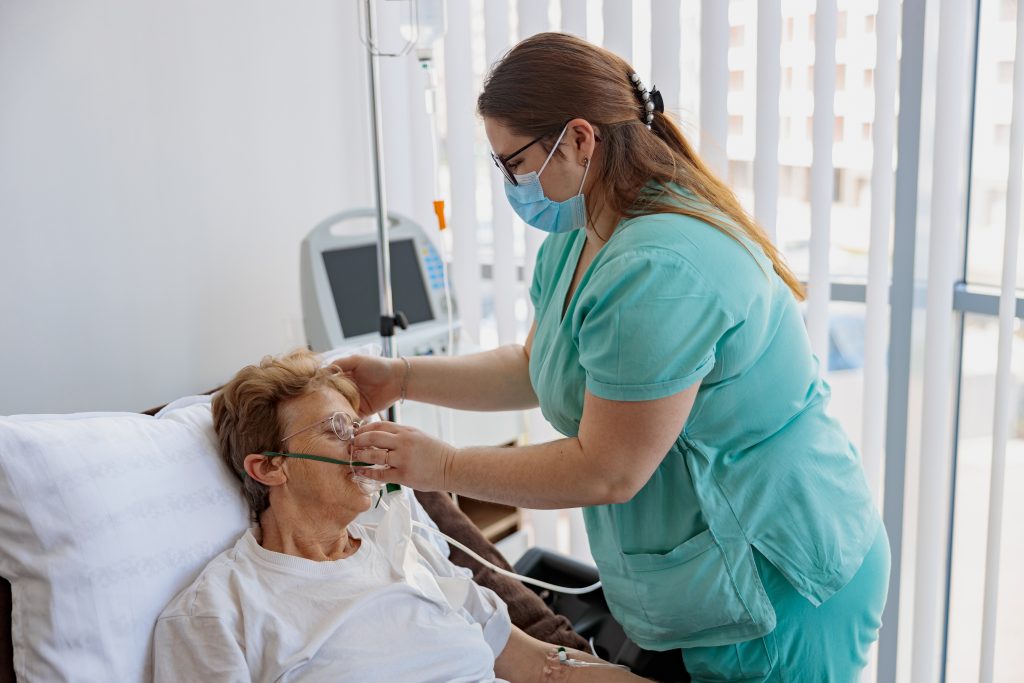
Top ABSN Programs in Indiana for Career Changers

Compare Indiana's accelerated BSN programs by cost, format, duration, and NCLEX outcomes — all in one place.

By Maria Delgado, RNReviewed by TopNursing.org TeamUpdated June 26, 202624 min read
Best ABSN Programs in Indiana: Accelerated BSN Options

Points of interest…

  • Accelerated BSN programs in Indiana span 12 to 18 months for students who hold a prior bachelor's degree.
  • In 2025, first-time NCLEX pass rates at some Indiana ABSN programs reached 100 percent.
  • Indiana's hybrid ABSN tracks combine remote coursework with mandatory in-person labs and clinicals.
  • A 5 percent nursing workforce deficit across Indiana in 2026 is intensifying demand for new RNs.

Can you become a registered nurse in Indiana in just 12 to 18 months if you already hold a bachelor’s degree? Accelerated BSN programs make it possible. These second-degree pathways compress nursing education into an intensive timeline, combining coursework, skills labs, and clinical rotations at Indiana hospitals.

With a 5% nursing workforce deficit projected in 2026, healthcare employers across Indianapolis, Fort Wayne, and South Bend are actively recruiting new RNs. Indiana’s ABSN options span campus, hybrid, and limited-online formats, but every program includes in-person clinical training arranged at major health systems.

Below, you’ll find ranked programs, cost comparisons, and admission requirements. Most tracks require full-time commitment and discourage outside employment, so securing finances in advance is critical.

ABSN Programs in Indiana at a Glance

This quick-reference table outlines key details about accelerated BSN programs in Indiana, from typical length and format to licensure and compact status. Use it to get oriented before exploring individual programs.

FactorWhat to Know in Indiana
Typical Program Length12 to 18 months, depending on the school and curriculum intensity.
Common FormatsCampus-based, hybrid, and limited online coursework; all require in-person labs and clinical rotations.
Prior Degree Required?Usually a non-nursing bachelor's degree from an accredited institution.
Common PrerequisitesAnatomy and Physiology, Microbiology, Chemistry, Statistics, and Psychology; specific courses vary by program.
Major ABSN MarketsIndianapolis, Fort Wayne, Evansville, South Bend, and other metro areas.
State Board of NursingIndiana State Board of Nursing, under the Indiana Professional Licensing Agency.
NCLEX Data SourceNational Council of State Boards of Nursing (NCSBN) and the Indiana State Board of Nursing.
NLC Compact StatusIndiana is an active Nurse Licensure Compact state as of 2026.
Multistate License EligibilityAvailable only if Indiana is your primary state of residence and you meet all compact requirements.
Relocation RulesIf you move to another compact state, apply for licensure in the new primary state of residence within the required timeframe.

Best ABSN Programs in Indiana

Indiana offers diverse accelerated BSN options for second-degree students seeking a fast track to registered nursing. The programs below stand out for accreditation status, student outcomes, clinical partnerships, and value.

Factors considered
  • Program accreditation status
  • NCLEX-RN first-time pass rates
  • Institutional graduation rates
  • Net price affordability
  • Clinical placement quality
Data sources
RankSchoolLocationNet priceBest for
#1
Purdue University
West Lafayette, IN$15,000/yrHigh-ROI public university path

Purdue University’s accelerated nursing track is a full-time, four-semester program for career changers with a prior bachelor’s degree. The curriculum emphasizes clinical leadership, evidence-based practice, and innovative teaching strategies, with a strong foundation in pathopharmacology and population health. Graduates are prepared for the NCLEX and may pursue advanced nursing degrees. Purdue’s public-university structure offers competitive tuition and high graduate earnings.

Accelerated BSN — On-Campus
  • 4-Semester program
  • 59 total credit hours
  • Full-time enrollment
  • Prepares for NCLEX
  • Emphasis on clinical leadership and evidence-based practice
  • Innovative evidence-based teaching strategies
  • Pathway to graduate nursing education

Valparaiso University offers a 15-month, CCNE-accredited accelerated BSN designed for transfer and second-degree students. The program boasts a 97% first-time NCLEX pass rate and includes clinical placements at elite healthcare systems like Mayo Clinic and Northwestern Medicine. Small class sizes and a focus on diverse RN roles prepare graduates for a wide range of nursing careers.

Accelerated BSN Program — On-Campus
  • 15-Month program
  • Starts summer
  • 97% first-time NCLEX pass rate
  • Clinical placements at Mayo Clinic
  • For transfer and second-degree students
  • CCNE accredited
  • U.S. News top BSN program

Marian University’s hybrid accelerated BSN allows students to complete coursework online with on-site labs and clinicals starting in the first semester. The 16-month program, with three start dates per year, offers flexibility and is available at Indianapolis and Nashville locations. Clinical placements are primarily through Ascension St. Vincent, and a transfer path from Marian’s associate degree streamlines prerequisites.

Accelerated BSN — Hybrid
  • 16-Month hybrid program
  • Three start dates per year
  • Asynchronous online classes
  • Clinicals begin first semester
  • Indianapolis and Nashville locations
  • CCNE accredited
  • Prepares for NCLEX-RN
  • Transfer admissions path available

The University of Evansville’s 16-month hybrid ABSN integrates high-fidelity simulation with 930 clinical hours at Ascension St. Vincent and Deaconess. With a 100% first-time NCLEX pass rate and interprofessional team training, the program emphasizes mentorship and clinical judgment. Small cohorts and personalized attention support a rigorous, second-degree pathway.

Accelerated BSN — Hybrid
  • 16-Month hybrid program
  • 100% first-time NCLEX pass rate
  • 930 clinical hours
  • Clinical rotations at Ascension and Deaconess
  • High-fidelity simulation labs
  • Interprofessional team collaboration
  • Mentorship from faculty and preceptors
  • Starts spring and fall

Huntington University’s accelerated BSN is a 13-month, full-time campus program in Fort Wayne, developed in partnership with Parkview Health and Indiana Tech. Students benefit from a guaranteed job offer and full tuition reimbursement through Parkview’s ABSN Scholars Program. The program reports a 100% job placement rate over the past decade and is CCNE accredited.

Accelerated BSN — On-Campus
  • 13-Month accelerated format
  • 100% job placement rate
  • Partnership with Parkview Health
  • Full-tuition scholarship available
  • Guaranteed job upon graduation
  • Classes held in Fort Wayne
  • State-of-the-art facilities

Ball State University’s accelerated second-degree nursing program is a 19-month, cohort-based campus experience in Muncie. With a 94% NCLEX pass rate and simulation labs, the program prepares students for diverse clinical settings. As a public institution, Ball State offers a competitive net price and strong graduate outcomes.

Accelerated BSN — On-Campus
  • 19-Month program
  • Cohort-based
  • Starts fall and spring
  • 94% first-time NCLEX pass rate
  • Prepares for NCLEX-RN
  • For second-degree students
  • Small cohort sizes

Indiana University Indianapolis offers a four-semester, full-time accelerated BSN for prior bachelor’s degree holders. The program features rolling admissions, competitive entry with a 3.0 prerequisite GPA requirement, and clinical placements across the IU Health network. Graduates benefit from the school’s strong reputation and affordable public tuition.

Accelerated BSN — On-Campus
  • Four semesters, full-time
  • Rolling admissions
  • Starts fall and spring
  • 2.7 minimum overall GPA
  • Prerequisites valid 7 years
  • Competitive admissions process
  • Requires prior bachelor’s degree
  • Prepares for NCLEX-RN

The University of Indianapolis’ in-person accelerated BSN is a 15-month, CCNE-accredited program with a permanent Indiana address requirement. A 1:1 clinical placement model, non-expiring prerequisites, and a dedicated student success advisor set it apart. The program starts once annually in May and includes 570 clinical hours.

Accelerated BSN In-Person Track — On-Campus
  • 15-Month program
  • CCNE accredited
  • Single start date in May
  • 570 clinical hours
  • 1:1 clinical placement model
  • Student success advisor
  • Permanent Indiana address required
  • Prerequisites do not expire

Anderson University’s five-semester hybrid ABSN combines online coursework with in-person clinicals at Community Hospital and St. Vincent. Designed for second-degree seekers, the program emphasizes critical thinking and emotional intelligence. It features a holistic admissions process with interviews and starts each summer.

Accelerated BSN — Hybrid
  • Five-semester hybrid program
  • Starts summer
  • Cohort-based structure
  • Clinicals at Community Hospital and St. Vincent
  • Designed for prior bachelor’s holders
  • Mix of online and face-to-face courses
  • Capstone project required
  • Prepares for NCLEX

Marian University’s Ancilla campus offers a 16-month accelerated second degree BSN available both on campus and online. The program is designed for non-nursing bachelor’s holders and provides a rigorous, full-time pathway to RN licensure. The online track combines interactive e-learning with hands-on labs and clinicals.

Accelerated BSN (Campus) — On-Campus
  • 16-Month program duration
  • Full-time study format
  • For non-nursing bachelor’s degree holders
  • Rigorous, accessible learning
  • 16-Month program duration
  • Online nursing theory coursework
  • Hands-on skills and simulation labs
  • Clinical rotations at healthcare facilities
  • Full-time, rigorous format
  • For non-nursing bachelor’s degree holders
  • Combines online and on-site learning
  • Interactive e-Learning platform

Manchester University’s 16-month, campus-based ABSN features a 100% first-time NCLEX pass rate and 100% job placement within two months. A partnership with Parkview Health offers tuition forgiveness, and small cohorts receive dedicated faculty mentorship. The program includes 756 clinical hours and simulation training.

Accelerated BSN (ABSN) — On-Campus
  • 16-Month program
  • CCNE accredited
  • 100% first-time NCLEX pass rate
  • 100% job placement rate
  • 756 clinical hours
  • Parkview partnership with tuition forgiveness
  • State-of-the-art simulation labs
  • Dedicated faculty advisor

Purdue University Northwest’s accelerated BSN is a four-semester, ACEN-accredited program with a designated NLN Center of Excellence. Clinical practica begin in the first semester, and the school reports a 97% job placement rate. As a public university, it offers one of the lowest net prices in the state for qualifying students.

Accelerated Bachelor's Second Degree — On-Campus
  • Four-semester program
  • Starts fall
  • 97% job placement rate
  • ACEN and NLN COE accredited
  • Clinical practicum from first semester
  • Designated NLN Center of Nursing Excellence
  • Prepares for advanced nursing degrees
  • High licensure pass rate

Indiana Wesleyan University’s campus-based ABSN for prior degree holders integrates faith and nursing practice across 64 credit hours. With a TEAS exam requirement and a 2.8 minimum GPA, the program attracts career changers seeking a Christian-focused education. Military benefits and employer reimbursement are accepted.

BSN Transition to Nursing — On-Campus
  • Faith-integrated nursing curriculum
  • 64 credit hours
  • TEAS exam required
  • 2.8 minimum GPA
  • Military benefits accepted
  • Employer reimbursement supported
  • For prior bachelor’s degree holders
  • Accredited nursing program

Indiana Institute of Technology’s 13-month accelerated BSN is delivered in partnership with Huntington University and Parkview Health. The full-time, in-person program offers full tuition funding and a guaranteed job through Parkview’s ABSN Scholars Program. It boasts a 100% job placement rate and CCNE accreditation.

Accelerated BSN — On-Campus
  • 13-Month program
  • CCNE accredited
  • 100% job placement rate
  • Clinical work at Parkview Health
  • Full tuition funding available
  • Guaranteed job upon graduation
  • Taught by Huntington University nursing faculty
  • State-of-the-art facilities

Vincennes University offers a hybrid LPN to BSN pathway that can be completed in as little as three years with one on-campus day per week. Designed for working LPNs, the program prepares graduates for RN licensure and leadership roles in settings like telehealth and case management. It is not a traditional second-degree ABSN but an accelerated bridge for existing nurses.

Nursing LPN to BSN Hybrid Degree, B.S. — Hybrid
  • 3-Year LPN to BSN hybrid
  • One day on campus per week
  • Starts fall and spring
  • Flexible for working students
  • Prepares for RN licensure
  • Leadership-focused curriculum
  • Career options in telehealth
  • Remote work possibilities

Questions to Ask Yourself

Missing courses such as anatomy, physiology, or microbiology can push your start date out by a semester or more, so map your transcript against each program’s requirements early.

ABSN programs demand 40-plus hours per week in class, lab, and clinicals, making outside employment very difficult. A financial plan that covers living expenses without a paycheck is essential.

Clinical rotations are often clustered in Indianapolis, Fort Wayne, Evansville, or South Bend. Living near your preferred health system can reduce commute stress and open more placement options.

Online and Hybrid ABSN Programs in Indiana

No accelerated BSN programs in Indiana are fully online, but several schools now offer hybrid tracks that blend remote coursework with required in-person lab and clinical experiences. Understanding what “hybrid” means before enrolling can save you a costly mistake.

Hybrid ABSN Programs: What They Actually Mean

The data shows four Indiana nursing programs classified as hybrid: Marian University in Indianapolis, University of Evansville, Anderson University, and Vincennes University. In practice, hybrid typically means nursing theory classes are delivered asynchronously online, while skills labs, simulation exercises, and all clinical rotations happen on campus or at approved healthcare sites in Indiana.

  • Marian University (Indianapolis): Offers a 16-month hybrid ABSN with online coursework and in-person labs and clinicals starting the first semester. Students attend clinical rotations at facilities in Indianapolis and Nashville.
  • University of Evansville: Lists a 16-month hybrid ABSN with online theory courses, but students must complete 930 clinical hours in person at local sites like Ascension and Deaconess.
  • Anderson University: Describes its 20-month ABSN as a “mix of face-to-face and online courses.” Clinicals take place at Community Hospital and St. Vincent in the Anderson area.
  • Vincennes University: The hybrid LPN-to-BSN pathway is not a traditional second-degree ABSN but does allow working students to attend campus just one day per week, with clinical placements in Indiana.

Fully Online? Not Possible for Nursing Licensure

Any program claiming to be a fully online ABSN should be viewed with extreme skepticism. Indiana Board of Nursing regulations and CCNE/ACEN accreditation standards mandate in-person skills validation and supervised clinical hours. No school in Indiana, or elsewhere, can deliver a licensure-eligible prelicensure BSN entirely remotely. Even hybrid programs require you to physically attend lab intensives on campus and travel to assigned clinical sites.

Out-of-State Students and Clinical Placement Realities

Most Indiana hybrid ABSN programs expect students to live within commuting distance of the school’s clinical partners. If you reside outside Indiana, you may need to relocate for the duration of the program. Some schools may help arrange clinical placements closer to your home if you live in Indiana, but out-of-state requests are rarely accommodated.

Because Indiana’s hybrid ABSN options are limited, career changers may also consider nationally available hybrid programs in neighboring states like Illinois or Ohio that often accept Indiana residents. However, those programs still require on-site labs and clinical rotations, so proximity and licensing requirements should be carefully weighed. Always confirm with the program where clinicals will occur before you commit.

Cost of ABSN Programs in Indiana

Prospective ABSN students in Indiana can tap into a variety of scholarships to lower their education costs. The table below lists nursing scholarships from state organizations, universities, and national programs that accept applications from Indiana residents. Always verify current details with the funding source, as amounts and deadlines change.

Scholarship NameAward AmountEligibilityApplication Deadline
Indiana Center for Nursing Scholarship (Purdue Global)$909 (2025-2026)Indiana residency, commit to work in Indiana post-graduation, GPA at least 3.0; apply through participating schoolN/A
IU School of Nursing Scholarships$500-$10,000Varies; multiple scholarships for IU nursing studentsmid-December to Feb 1 and Sept 1 to mid-September
St. Elizabeth School of Nursing ScholarshipsTotal pool $264,000N/AN/A
Indiana Health Care Foundation Scholarship$1,000-$5,000N/AN/A
HRSA Nurse Corps ScholarshipTuition, fees, education costs, monthly stipendService commitment in a critical shortage facilityClosed for 2026 cycle (notification Sept 30, 2026)
AACN NurseThink Scholarship$5,000N/AOffered twice a year; see AACN website

ABSN Admission Requirements in Indiana

Gaining admission to an accelerated BSN program in Indiana requires careful planning, as each school sets its own standards for prior degrees, grades, and prerequisites. Applicants who understand these requirements early can avoid last-minute surprises and build a competitive application.

Prior Degree Requirements

Every ABSN program in Indiana is designed for students who already hold a bachelor's degree from a regionally accredited institution. The degree can be in any field, from biology to business, because the accelerated curriculum builds nursing knowledge on top of existing general education. Admissions teams typically verify degree conferral before a student can start nursing courses, so incomplete transcripts or degrees in progress at the application deadline may delay or disqualify an application. A few schools, such as the University of Indianapolis, also require applicants to have a permanent Indiana address, a factor worth confirming if you plan to relocate for the program.1

GPA Requirements

ABSN programs look at both cumulative and prerequisite GPAs, and the minimums vary across Indiana.

  • Cumulative GPA: Most schools set a floor between 2.75 and 3.0. Indiana Tech requires a 2.75 cumulative GPA4, while IU Fort Wayne2 and IU Indianapolis3 use a 2.7 minimum. University of Indianapolis uses a 2.8 minimum.1 Some programs may consider applicants slightly below the stated minimum if other elements, such as an upward grade trend or strong test scores, stand out, but competitive cohorts often exceed these baselines.
  • Science and prerequisite GPA: IU Fort Wayne2 and IU Indianapolis3 both specify a 3.0 minimum across prerequisite courses, with extra weight on Anatomy and Physiology, Microbiology, and Chemistry. Meeting the minimum does not guarantee admission; many admitted students present GPAs of 3.3 or higher.

Prerequisite Courses

Nearly all ABSN programs in Indiana require a common set of science and social science courses completed with a grade of C or better. Some schools will not accept prerequisites older than five to seven years, particularly for the sciences, so review each program's recency policies before applying.

  • Anatomy & Physiology I and II: Commonly required, usually with labs.
  • Microbiology: Commonly required, typically with a lab.
  • Chemistry: Often required; general, organic, or intro chemistry varies.
  • Statistics: Often required; IU Fort Wayne asks for 300/400-level statistics.2
  • Nutrition: Sometimes required; fewer schools list this, but it can appear as a nursing prerequisite.
  • Psychology: Often required; introductory psychology is a frequent prerequisite.
  • Lifespan Development: Often required; may be called human growth and development or developmental psychology.
  • Sociology: Sometimes required; introductory sociology is less common but still appears in a few program lists.

Application Timeline

Indiana ABSN programs run on different calendars, so timing your application correctly is critical.

  • Fixed deadlines: IU Fort Wayne uses an April 15 deadline for its accelerated track2, while IU Indianapolis sets a June 15 deadline.3 Missing these dates means waiting another year.
  • Rolling admissions: Some schools, including University of Indianapolis and Indiana Tech, may review applications on a rolling basis. Even then, seats fill quickly, and submitting materials six to twelve months before the intended start date improves your odds.
  • Cohort starts: Most programs begin once or twice per year. Applicants should check whether a summer, fall, or spring start aligns with prerequisite completion and transcript review. Transcripts must be submitted well in advance of the deadline, often at least four weeks.
  • Additional materials: Many ABSN programs require letters of recommendation, typically from academic or professional references who can speak to your ability to handle rigorous coursework. The University of Indianapolis also requires the HESI A2 entrance exam1, so plan for test preparation and score submission before the deadline.

Because requirements shift between admission cycles, always verify the most current criteria on each nursing program's official website. Contacting an admissions counselor early, ideally twelve months before you hope to start, can clarify prerequisite equivalencies, deadline exceptions, and how to strengthen your application.

Did You Know?

Indiana ABSN programs demand a full-time, year-round commitment with rigorous class, lab, and clinical hours. Most schools strongly discourage or outright prohibit outside employment. Before enrolling, it is essential to secure adequate funding for tuition, fees, and living expenses; working during the program is usually not feasible.

NCLEX Pass Rates and Graduate Outcomes for Indiana ABSN Programs

In 2025, first-time NCLEX-RN pass rates for some Indiana ABSN programs reached 100%1, far exceeding the national first-time average of 87.6%2. Although that figure sets a high bar, it's important to note that many nursing schools report pass rate data for all BSN graduates, not separately for their accelerated cohorts. This section breaks down what Indiana NCLEX data shows and what else to consider when evaluating graduate outcomes.

How Indiana ABSN Programs Compare to the National Average

The national first-time NCLEX-RN pass rate for 2025 was 87.6%2, a slight increase from prior years. Several Indiana nursing schools with ABSN tracks posted results well above that benchmark. University of Southern Indiana announced a 100% pass rate for its December 2025 nursing graduates1, and Indiana Wesleyan University also reported a 100% NCLEX pass rate for its program3. Indiana University School of Nursing, which offers an accelerated BSN option, recorded an 88.3% first-time pass rate in 2023 , right in line with the most recent national figure.

Other schools with ABSN programs show a wider spread. Ball State University saw an 84.2% first-time rate (2023), Indiana State University 81.3%, and Goshen College 73.9%. Huntington University posted 70.5% for the same reporting period. These rates come from Indiana Professional Licensing Agency summaries4, which group all BSN and diploma graduates together. That means a perfect score at one school may reflect strong outcomes across both traditional and accelerated students, while a lower figure does not necessarily mean an ABSN-track problem.

What Graduate Outcome Data Shows Beyond the Exam

Passing the NCLEX is the gateway to licensure, but not the full picture of how graduates fare. The most recent federal College Scorecard data does not yet break out program-level earnings or employment percentages for these specific accelerated tracks. When aggregated institutional data is available, it groups all baccalaureate graduates, which can mask the experience of second-degree nursing students.

Where figures are reported, early-career employment rates among BSN graduates in Indiana tend to be high, reflecting strong demand for registered nurses. However, median earnings data at the ABSN-program level is not published, so prospective students should ask each school directly for its graduate placement rates, average starting salaries, and the percentage of alumni working in Indiana healthcare settings within 6, 12 months of graduation. Some programs may also share first-year NCLEX pass rates broken out specifically for their accelerated cohorts , information that provides a clearer benchmark than school-wide averages.

Key Cautions When Reading Pass Rate Numbers

Most pass rate data available publicly covers multiple years and all prelicensure BSN pathways. A school that reports 100% for one graduating class may have a smaller ABSN cohort, while a larger traditional BSN group can pull a composite rate down or up. Additionally, NCSBN and state board reports often lag by one to two years. When comparing figures, check whether the statistic is a first-time pass rate (which matters most for new graduates) and which calendar year or testing cycle it covers. Asking a program directly for the most recent ABSN-specific NCLEX results and graduate employment survey data will give you the most useful comparison points for your decision.

Clinical Placements and Major Healthcare Markets in Indiana

Where Indiana ABSN Students Complete Clinicals

Indiana's largest healthcare employers anchor clinical training across the state, and your placement experience will vary by region. The four major clinical metros host the majority of pre-licensure rotations.

  • Indianapolis, Carmel, and Anderson: Indiana University Health, Ascension St. Vincent, Community Health Network, Eskenazi Health, and Franciscan Health Indianapolis dominate the market. BLS data shows registered nurses here earned a median annual wage of $89,290 (2023)1.
  • Fort Wayne: Parkview Health, the Lutheran Health Network, and a smaller IU Health presence provide the clinical backbone. The RN median wage is $82,880 (2023)1.
  • South Bend and Mishawaka: Beacon Health System and Ascension St. Vincent drive placements, with RNs earning a median of $95,030 (2023)1, the highest among Indiana's large metros.
  • Evansville: Deaconess Health System and Ascension St. Vincent Evansville serve the southwestern region. The median RN wage here is $61,030 (2023), reflecting a lower cost of living but also a smaller healthcare footprint.

Rural and Commuter Considerations

Not all clinical sites sit inside city limits. Students in ABSN programs may be assigned to community hospitals, critical access facilities, or primary care clinics in towns well outside major metros. These rural rotations can add significant commuting time and sometimes demand temporary housing arrangements. Discuss your tolerance for travel with the program coordinator early, because site assignments often depend on available preceptors and facility capacity, not personal preference.

Who Arranges Clinical Sites?

Most ABSN programs in Indiana take responsibility for organizing clinical placements. The school's clinical coordination team matches students with partner facilities that have active affiliation agreements, ensuring that preceptors and units are approved for student training. In rare cases, a program may ask students to help identify a potential site, especially for a specialty rotation, but self-secured placements are the exception rather than the rule. Confirm each program's policy during the interview process so you understand exactly what support you will receive for securing the required clinical hours.

According to the American Association of Colleges of Nursing, Indiana faced a 5% nursing workforce deficit in 2026, intensifying the urgent need for new registered nurses across the state.

FAQs About ABSN Programs in Indiana

Looking for quick answers about accelerated BSN programs in Indiana? We've compiled the most common questions to help you navigate your options, from program lengths and costs to licensure details. Read on for straightforward guidance tailored to Indiana's nursing education landscape.

Are there ABSN programs in Indiana?
Yes, several universities in Indiana offer accelerated BSN programs for students who already hold a non-nursing bachelor's degree. Notable options include Indiana University, Purdue University Northwest, and the University of Indianapolis. These programs provide an intensive pathway to becoming a registered nurse in about 12 to 18 months, combining coursework, labs, and clinical rotations.
How long do ABSN programs in Indiana take?
ABSN programs in Indiana typically range from 12 to 18 months, depending on the school and whether you attend full-time. Some programs may be completed in four consecutive semesters, including summer. The curriculum is rigorous and requires a full-time commitment, with no extended breaks between terms to expedite your entry into nursing.
Are there online ABSN programs in Indiana?
There are hybrid ABSN programs in Indiana that offer online didactic coursework, but all require in-person labs, simulations, and clinical rotations at local healthcare facilities. Fully online ABSN programs are not available because nursing education mandates hands-on training. If you need flexibility, hybrid options can reduce campus visits while maintaining clinical requirements.
What GPA do I need for ABSN programs in Indiana?
Most Indiana ABSN programs require a minimum cumulative GPA of 3.0, but competitive candidates often have higher GPAs. Some programs may consider a lower GPA if prerequisite courses are strong. Always check each school's specific requirements, as they can vary slightly. Meeting the minimum does not guarantee admission due to limited cohort sizes.
What are the cheapest ABSN programs in Indiana?
The most affordable ABSN programs in Indiana are typically at public universities, such as Indiana University campuses, where in-state tuition applies. Private schools like Marian University cost more. Additionally, scholarships, hospital partnerships, and nurse corps programs may offset expenses. Total program cost can range from $30,000 to $70,000, so researching financial aid is essential.
Can I work while completing an ABSN program in Indiana?
Working during an Indiana ABSN program is challenging due to the accelerated pace and demanding schedule. Most programs advise against employment, especially full-time. Some students manage part-time or per diem work, but it requires strong time management. Clinical rotations and intensive study leave little room for outside jobs, so plan finances accordingly.
Do Indiana ABSN programs require a bachelor's degree?
Yes, all Indiana ABSN programs are designed for students who already hold a bachelor's degree in a non-nursing field from a regionally accredited institution. This prior degree typically allows you to bypass general education requirements and focus on nursing coursework. If you do not have a previous degree, traditional BSN programs may be a better fit.
Is Indiana part of the Nurse Licensure Compact?
Indiana is part of the Nurse Licensure Compact (NLC), which allows registered nurses to hold a multistate license. After completing an Indiana ABSN program and passing the NCLEX-RN, you can apply for a license that enables practice in other compact states without additional licensing requirements. This broadens your employment opportunities across state lines.

Recent Articles

Follow us