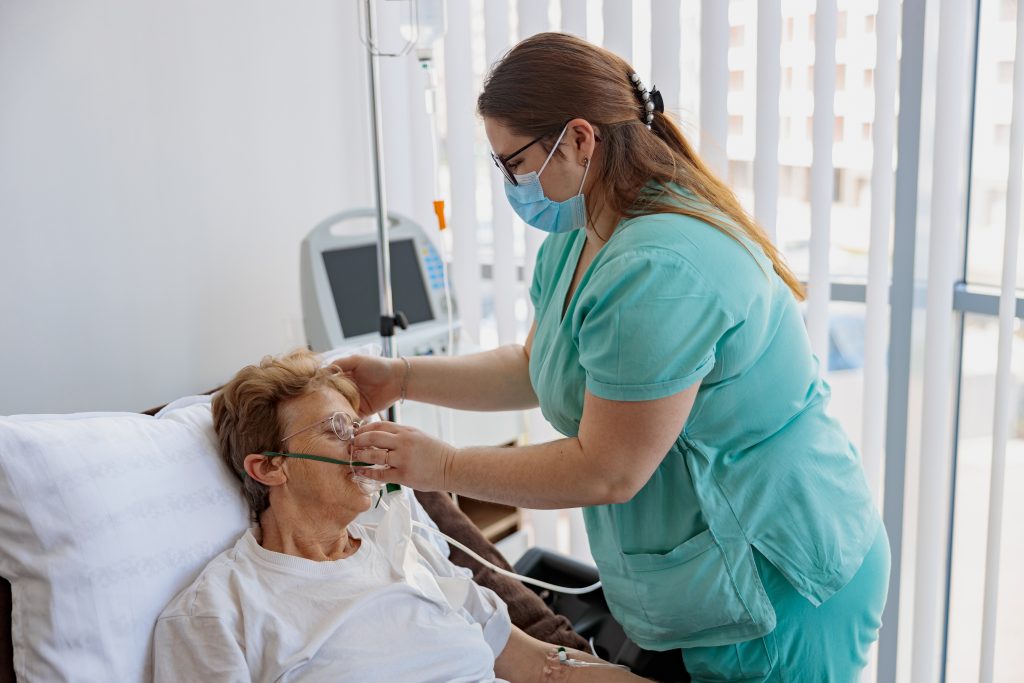
Compare costs, formats, and outcomes for every approved CNA training program across the state.
By Hannah Pierce, BSNReviewed by TopNursing.org TeamUpdated August 14, 202622 min read
Points of interest…
Free CNA training in North Dakota is available through employers, workforce agencies, and state programs covering tuition and fees.
Nursing assistants in Grand Forks and Bismarck earn higher median wages than those in Fargo or Minot.
North Dakota requires 45 in-person clinical hours, so only hybrid programs combine online and on-site learning.
Most candidates complete the entire certification process, from training to state registry, in 4 to 12 weeks.
North Dakota's healthcare facilities are straining under a nursing shortage that affects every setting, from urban hospitals in Fargo to rural long-term care communities. Certified Nursing Assistants are the hands-on workforce that keeps daily patient care running, and demand is projected to stay high through the decade.
CNA certification in North Dakota costs far less than in neighboring states: programs at community and technical colleges charge under $700 for non-credit training, and employer-sponsored options can make it free. The real barrier isn't tuition; it's navigating program formats, clinical schedules, and the state competency exam.
In a state where a single failed exam attempt can delay employment by weeks, program quality matters as much as price. Six ranked programs across the state illustrate which options deliver the best balance of cost, support, and exam readiness.
2026 Best CNA Programs in North Dakota
North Dakota's CNA programs combine low tuition with strong ties to regional healthcare employers, making certification an attainable first step into nursing. Our 2026 ranking weighs affordability, federal outcomes data, and program features to identify the best options across the state. Each entry includes school-level net price and graduate earnings where available, alongside key details about the CNA program.
NCES-IPEDS federal institutional data — nces.ed.gov
Rank
School
Location
Net price
Best for
#1
Williston State College
Williston, ND
$5,000 – $10,000/yr
Northwest ND residents seeking scholarships
Williston State College leads with a net price of $5,932 and a compact, blended CNA pathway through TrainND Northwest. The college serves a predominantly Pell-eligible student body (59%) and reports median earnings of $44,017 for graduates a decade out. Its new 42,000-square-foot healthcare facility and foundation scholarships for area residents reinforce a focus on western North Dakota's acute and long-term care workforce needs.
Blended online self-paced theory with a 2-week in-person labs and clinicals.
Total cost $1,200 plus $200 state testing fee.
28 hours of lab time and 24 hours of clinical experience required.
Prepares for skilled care facilities, acute care, and home healthcare settings.
Certificate of Completion awarded upon finishing all sections.
Quarterly start dates for online portion; clinicals at long-term care facilities.
HIPAA exam required; scrubs must be worn during clinicals.
Training conducted at TrainND Northwest in Williston.
#2
Lake Region State College
Devils Lake, ND
$14,000/yr
Rural ND students needing hybrid access
Lake Region State College, with a net price of $13,577 and a solid 52.4% graduation rate, delivers CNA training via multiple pathways and sites across the state. A 59.5% Pell share signals wide accessibility, and median earnings reach $49,502. The college partners with regional employers to meet high demand for CNAs in north-central and northeastern North Dakota, offering both hybrid and classroom formats.
80-hour face-to-face training at the Devils Lake campus.
Non-credit workforce training focused on immediate employment.
Combines classroom theory and hands-on skills labs.
Includes 16 hours of clinical practice in local facilities.
Prepares for the state CNA exam, with a $250 exam fee.
Minimum age 15 years; felony disclosure required at enrollment.
WIOA funding and financial assistance available for eligible students.
Monthly state testing sessions for prompt certification after completion.
#3
North Dakota State College of Science
Wahpeton, ND
$6,000 – $7,000/yr
Self-paced students needing statewide reach
North Dakota State College of Science offers a net price of $11,261 and the highest graduation rate in the ranking (54.7%), with median earnings of $50,513. Its 52.4% Pell share and 79% retention rate point to strong student support. NDSCS uses Workforce Affairs to extend CNA training statewide through hybrid and self-paced formats, serving as an entry point to the college's broader health programs within the ND University System.
75-hour North Dakota Department of Health approved program.
Hybrid and self-paced formats: online theory with in-person skills and clinicals.
Course fees range $650-$750, with a separate $250 state exam fee.
16 hours of hands-on skills training included in the program.
Textbook and workbook provided; practice exams built into the curriculum.
Scholarships may be available through Job Service North Dakota and other agencies.
Prepares for the state certification exam upon successful completion.
100% attendance and a 75% passing score required for all components.
#4
Bismarck State College
Bismarck, ND
$10,000 – $15,000/yr
Bismarck State College, with a net price of $10,270 and a 47.2% graduation rate, serves the capital region's healthcare labor shortage with a flexible 76-hour CNA program. The school's Pell share is 43.8%, and graduates see median earnings of $54,277, the highest in this ranking. Monthly start dates, veteran priority seating, and options for non-credit or for-credit enrollment make it accessible to working adults and employer-sponsored trainees.
76-hour program with classroom, practical, and clinical components.
Non-credit cost starting at $689; for-credit option also available.
Monthly start dates in Bismarck for flexible scheduling.
Online hybrid format with self-paced theory and on-campus labs/clinicals.
Physical ability to lift 50 pounds and a TB test required before clinicals.
Priority seating and dedicated support services for veterans.
ESL student assistance and enhanced academic support available.
Prepares for roles in nursing facilities, acute care, and home health.
#5
Nueta Hidatsa Sahnish College
New Town, ND
~$10,000/yr (est.)
Nueta Hidatsa Sahnish College is a tribal college in New Town with an 8-week CNA program that prioritizes Native American students. The net price is $9,971, and the institution-wide graduation rate is 7.3%, reflecting its open-access, community-serving mission. Pell Grant share data is not available. Extensive wraparound supports include childcare, mileage, and stipends to help students overcome rural barriers and enter the local healthcare workforce.
8-week campus-based program at the New Town campus.
Tuition $900 per semester; books and fees $250 per semester.
Extensive wraparound support: childcare, mileage, and monthly stipends.
Supply packs provided; career preparation and technical assistance included.
Eligibility for financial supports requires a tribal ID and current class schedule.
Focused on high-demand job skills for immediate workforce entry in the region.
Designed for Native American students in the Fort Berthold reservation area.
Advocacy and referral services available for all program participants.
#6
Valley City State University
Valley City, ND
$12,000/yr (net price)
Valley City State University offers a 2-credit CNA course as a stackable entry into healthcare for rural eastern North Dakota. The net price is $11,890, the graduation rate is 53.3%, and Pell recipients make up 46.7% of students. Median earnings are $52,725, though program-specific earnings are not yet available. The program's university context allows for seamless transfer into NDUS nursing pathways, appealing to students planning further education.
Positions graduates for employment in skilled nursing facilities and home health.
Stackable credential that articulates into NDUS nursing pathways.
Designed to serve rural eastern North Dakota communities.
Small class sizes within the university's healthcare career focus.
How to Become a CNA in North Dakota
The path to becoming a Certified Nursing Assistant in North Dakota follows a straightforward sequence of training, testing, and registry listing. Most candidates complete the process in 4-12 weeks, depending on program format. Below is a step-by-step overview of the requirements.
CNA Program Cost Comparison in North Dakota
The table below compares estimated costs for the ranked CNA programs using net price data from the U.S. Department of Education. Net price represents the institution-wide average annual cost after grants and scholarships, not an exact quote for the CNA program, which is often shorter and less expensive. Supplies, uniforms, and background check fees are not included in the total because they vary widely; contact programs directly for an all-in cost.
Free and Employer-Sponsored CNA Training in North Dakota
Many aspiring CNAs can enter the field without paying a dime, if they know where to look. North Dakota employers, workforce agencies, and state programs offer several routes that cover tuition, testing, and even pay wages during training. The most common model is employer-sponsored training, where a facility invests in your education in exchange for a post-certification work commitment.
Employer-Sponsored Programs: Train and Get Paid
Large healthcare systems and long-term care facilities frequently hire aspiring CNAs as trainees and cover the full cost of the certification process. Sanford Health and Good Samaritan Society run a Nursing Assistant Training Program that fully covers training, state testing, and registry fees at no cost to the student. While specifics vary by location, these programs typically ask for a work commitment of at least six to twelve months at the sponsoring facility after you earn your certification.
Missouri Slope in Bismarck takes the employer-sponsored model a step further with its Nurse Aide Training Class. Not only is the program free, but trainees earn $22 per hour during the course, before even passing the state exam. The facility also offers a $5,000 sign-on bonus for new hires. Classes start monthly, making it a fast and lucrative entry point into healthcare.
Workforce Grants and WIOA Funding
If employer sponsorship is not an immediate option, Job Service North Dakota administers federal Workforce Innovation and Opportunity Act (WIOA) funds that can pay for CNA training. Eligible residents, often dislocated workers, low-income adults, or youth, may receive full coverage of tuition, books, fees, and supplies. The program connects you with approved training providers and may also cover supportive services like transportation or child care. To check eligibility, contact your local Job Service office.
What to Expect from Free Programs
Free training almost always comes with strings attached. The most common trade-off is a mandatory employment period at the sponsoring facility. This can range from a few months to a year, and leaving early sometimes triggers a repayment obligation. That said, the commitment also guarantees you a job right out of your course and often includes benefits from day one.
Facility-based programs, those operated by nursing homes or hospitals, may limit enrollment to individuals they intend to hire immediately. North Dakota Health and Human Services maintains a list of both facility-based and independent CNA programs, which can help you identify open classes near you. For anyone who can accept the employment commitment, these free routes offer a zero-debt launch into a stable career.
Questions to Ask Yourself
Can you commit to a work agreement at a sponsoring facility?
Many employers in North Dakota cover CNA training costs if you commit to work for them afterward, usually for six to twelve months. This trade-off saves money but can lock you in.
Do you need evening, weekend, or accelerated scheduling?
If your schedule requires evenings or weekends, check which programs actually offer those times. Not every school runs all formats, and missing a term can delay your certification.
Are you planning to stay in North Dakota long-term?
If you plan to move to Minnesota, South Dakota, or Montana, know that transferring your CNA certification may involve extra paperwork or fees. Choosing a program that addresses multi-state practice can simplify a future move.
Online and Hybrid CNA Programs in North Dakota
Fully online CNA certification is not an option in North Dakota because state regulations require at least 45 hours of hands-on clinical training in a patient-care setting. However, many top-ranked programs now offer a hybrid structure that moves the required classroom hours online, letting you complete lecture material at your own pace while reserving on-campus time for labs and clinical rotations.
What Hybrid CNA Training Actually Looks Like
Every approved North Dakota program must deliver a minimum of 75 total training hours: 30 classroom hours, 45 clinical hours, and 16 hours of pre-contact instruction before any student enters a clinical site. Hybrid programs simply deliver the 30 classroom hours through a learning management system like Blackboard or a self-paced online portal. Then you attend scheduled, in-person sessions for lab skills practice and supervised clinical hours at a long-term care facility or hospital. The state's minimum clinical requirement never goes away, so even programs described as "online" still mean you will spend several days working directly with patients.
North Dakota Programs with Online or Hybrid Tracks
Several schools featured in our 2026 ranking provide hybrid flexibility. Lake Region State College's TrainND Northeast program is officially listed as hybrid, combining online theory with face-to-face clinicals in the Devils Lake and Grand Forks region. North Dakota State College of Science promotes both hybrid and self-paced formats, pricing the course between $650 and $750. Bismarck State College highlights an online hybrid option for its CNA course, with self-paced online theory and monthly start dates. Williston State College, though labeled a campus program, actually blends self-paced online instruction with a two-week clinical block that includes 28 lab hours and 24 clinical hours. Outside the formal ranking, Sanford Health's in-house training program requires 58 hours of online coursework followed by 24 hours of hands-on practice, and the North Dakota Long Term Care Association runs a statewide CNAonline hybrid program using the AHCA curriculum.
Evening, Weekend, and Accelerated Formats
For working adults, schedule matters as much as location. Bismarck State College stands out by offering an evening hybrid track that runs four weeks, Monday through Thursday from 6 to 10 p.m., and a separate evening face-to-face section on the same schedule. TrainND Northeast delivers its hybrid course in about six weeks, and several community colleges run accelerated sessions that wrap up in under eight weeks. While dedicated weekend-only CNA programs are rare in the state, shorter evening sequences let you fit training around a day job.
Who Benefits Most from Hybrid CNA Training
Hybrid programs work especially well for two groups of students. Rural North Dakota residents who cannot commute to a campus daily can handle online lectures from home and then travel for a condensed clinical block at a facility in a larger town. Working parents and full-time employees can time-shift the classroom piece to evenings or weekends, preserving their daytime hours for work or family. Before enrolling, confirm the exact clinical schedule, some programs require daytime weekday availability even when the lecture portion is fully online, and check whether the clinical site is within a manageable drive.
CNA Salary and Job Outlook in North Dakota
Below are the latest BLS wage data for nursing assistants in North Dakota's major metro areas. These figures highlight regional pay variation, with Grand Forks and Bismarck offering higher median wages than Fargo or Minot. Strong demand for CNAs in the state continues, fueled by an aging rural population, widespread staffing shortages in long-term care facilities, and above-average projected job growth for the occupation.
Metro Area
Employment
Annual Mean Wage
25th Percentile
Median Annual Wage
75th Percentile
Fargo, ND-MN
2,230
$40,970
$34,900
$39,130
$46,880
Bismarck, ND
1,470
$43,150
$36,890
$44,890
$47,300
Grand Forks, ND-MN
940
$42,770
$36,990
$45,120
$47,390
Minot, ND
390
$39,940
$35,490
$37,450
$45,190
CNA Certification Exam and North Dakota Registry
The Two-Part Exam
North Dakota's CNA certification relies on a single nationally recognized competency exam administered by a designated testing vendor, often Headmaster or D&S Diversified Technologies. The test is divided into a written (or oral) knowledge section and a hands-on skills demonstration. The knowledge portion typically contains around 70 multiple-choice questions covering legal and ethical responsibilities, infection control, basic nursing skills, and resident rights. You have 90 minutes to complete it. For those who prefer an oral version, many testing sites accommodate that request with advance notice. The skills portion requires you to perform five randomly selected tasks, such as handwashing, transferring a resident, or measuring vital signs, in front of a nurse evaluator within about 30 minutes. You must pass the written section with a score of at least 70% and demonstrate each skill without any critical step that could cause resident harm. Retaking a failed section is allowed, but specific waiting periods and fees apply; check with your testing center for the latest scheduling policy.
Registering for the Test
After finishing an approved training program, you will receive instructions from your instructor or program coordinator on how to sign up for the exam. Registration is usually completed online through the testing vendor’s portal. On test day, bring two forms of unexpired identification (one with a photo), your testing authorization letter or confirmation number, and a wristwatch with a sweeping second hand to use during vitals measurement. Plain, non-electronic watches are essential, smartwatches are not permitted in the testing room. Wear comfortable, closed-toe shoes and scrubs appropriate for a clinical setting; you will be moving and positioning mannequins or simulated patients during the skills check. Arrive 15 to 20 minutes early to check in and review the testing environment.
Maintaining Your Active Status
Passing the exam places you on the North Dakota Nurse Aide Registry, a public list maintained by the North Dakota Department of Health. To keep your certification active, you must renew it every two years. The renewal requirement is straightforward: you need at least eight hours of paid work as a CNA, or in a role that uses nursing-related duties, within the 24-month period leading up to your expiration date. There is no continuing education mandate for renewal in North Dakota, though some employers may set their own training expectations. If you let your status lapse beyond the renewal window, you might have to retake the competency exam, so it is wise to track your work hours and watch for reminders from the registry. A small processing fee may apply upon renewal, but the state does not currently charge for initial placement or renewal.
Reciprocity with Neighboring States
North Dakota has a streamlined reciprocity path for out-of-state CNAs. If you hold an active, good-standing certification from another state, you can apply for listing on the North Dakota Registry without retaking the exam. The process requires completing a simple application and providing proof of your current CNA status, often just a copy of your out-of-state registry card or a verification letter. There is no fee for this endorsement. The same ease applies if you are moving to South Dakota or Montana: both states accept a North Dakota CNA certification with minimal paperwork and no retesting, usually just a transfer application and verification of active status. Minnesota, however, takes a different approach. A North Dakota CNA seeking work in Minnesota must pass the Minnesota competency exam, even if currently certified and working in North Dakota.2 This requirement catches many border commuters off guard, so if you plan to work across the Red River, factor in extra test-prep time.
Pass Rates by Training Provider
The North Dakota Board of Nursing does not publish exam pass rates broken down by individual training program. This lack of public data makes it hard to compare programs on that metric alone. If pass rates are important to your decision, ask each program directly, reputable schools can share their recent class outcomes. A program with consistently high first-time pass rates often reflects strong instruction and supportive lab practice. Without official figures, relying on word of mouth and graduate reviews can also give you a sense of how well a program prepares its students for test day.
Career Advancement: CNA to LPN and RN Pathways
The nursing career ladder in North Dakota offers a clear path from entry-level patient care to licensed professional roles, with each step bringing greater responsibility, autonomy, and earning potential.
From CNA to LPN: A 12-Month Step
Many certified nursing assistants choose to become licensed practical nurses, a move that typically requires about 12 months of full-time study.1 LPN programs cover medication administration, wound care, and supervisory skills. Several North Dakota schools that host CNA programs also run LPN programs in North Dakota, allowing students to stay within a familiar system and potentially receive credit for prior healthcare experience.
Advancing to Registered Nurse
CNAs can pursue the RN credential through multiple pathways. The quickest route for those with experience is an accelerated or bridge program, which can take 12 to 24 months. The traditional Associate Degree in Nursing (ADN) generally spans 30 to 36 months, while a Bachelor of Science in Nursing (BSN) takes about four years.2 Many of the same institutions offering CNA and LPN training in the state also provide ADN and BSN degrees, streamlining the transition.
Comparing Earnings at Each Level
Salary growth motivates the climb. Nationally, nursing assistants earn a median annual wage of $36,220.3 For LPNs, the national median is $46,240, and for RNs it jumps to $71,730.1 While state-specific figures may vary, the upward trend is consistent: each completed credential unlocks a significant pay increase.
Employer Tuition Assistance
Returning to school is more feasible when employers help cover costs. Many hospitals and long-term care facilities nationally offer tuition reimbursement or assistance to CNAs who commit to earning an LPN or RN license.4 In North Dakota, checking with human resources departments can reveal available benefits like upfront tuition payment, flexible scheduling, or loan forgiveness in exchange for a service commitment.
Frequently Asked Questions About CNA Programs in North Dakota
Prospective nursing assistants often have similar questions about training requirements, costs, and career pathways. Here are clear answers to the most common inquiries about CNA programs in North Dakota.
To become a CNA in North Dakota, complete a state-approved training program (minimum 75 hours), pass the competency exam, and list on the state nurse aide registry. The process is outlined step by step in the 'How to Become a CNA in North Dakota' guide, covering eligibility, coursework, and exam scheduling.
CNA program costs in North Dakota typically range from $400 to $1,200, depending on the institution. The 'CNA Program Cost Comparison in North Dakota' section provides a side-by-side look at tuition, fees, and included materials for top-rated programs, helping you budget effectively.
Yes, many nursing homes and healthcare employers offer sponsored or free CNA training in exchange for a work commitment. Workforce development grants also cover costs for eligible students. Details on finding these opportunities are discussed in the 'Free and Employer-Sponsored CNA Training in North Dakota' section.
Most CNA programs in North Dakota take 4 to 12 weeks to complete, depending on schedule intensity. After finishing the required 75 hours of training, you must schedule and pass the state exam. The total timeline from enrollment to certification is often around 2 to 3 months.
Some programs offer hybrid formats where theory coursework is online, but hands-on clinical hours must be completed in person at a local facility. The 'Online and Hybrid CNA Programs in North Dakota' section explains available options and how to find accredited programs that meet state requirements.
North Dakota's CNA certification is recognized through interstate reciprocity agreements. If you move, you can typically transfer your registration by applying to the new state's nurse aide registry and meeting any additional requirements. The 'CNA Certification Exam and North Dakota Registry' section details the reciprocity process.