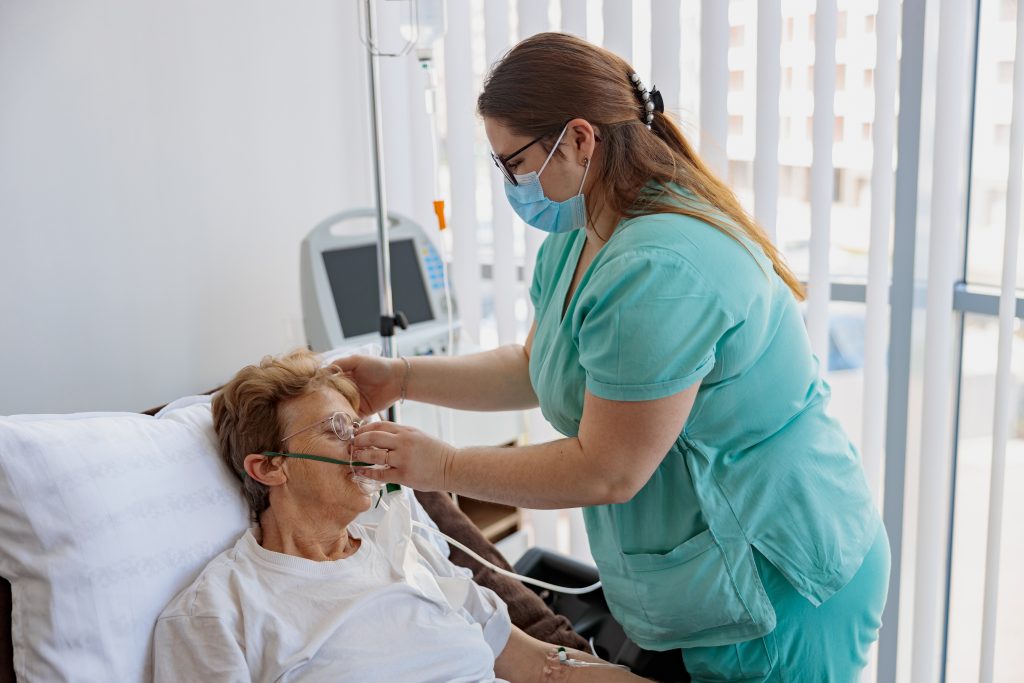
Compare costs, formats, and outcomes for every approved CNA training program across Montana.
By Hannah Pierce, BSNReviewed by TopNursing.org TeamUpdated August 14, 202618 min read
Points of interest…
Montana CNAs earn a median $39,300 annually, surpassing the national median by over $2,000.
Most students finish state-approved CNA training and clinical rotations in 4 to 8 weeks.
Employer-sponsored training and workforce grants eliminate upfront tuition for many students.
Where can you complete a CNA course in under five weeks for less than $2,000 in Montana?
Rural facilities across the state are struggling to staff shifts, making certified nursing assistants one of the most urgently needed roles. Montana projects steady growth in CNA openings, with high turnover in long-term care fueling demand. Training is brief: a four-week CNA fast track at Stone Child College or the $1,450 hybrid program through Highlands College puts certification within reach without a degree.
But that low barrier comes with a tradeoff. Montana’s spread-out geography forces many new CNAs to travel long distances to reach work, and starting wages, while above the national median, still hover near $20 per hour in many areas.
10 Best CNA Programs in Montana
Montana's top CNA programs stand out for short formats, rural access, and direct paths to state certification. Net price figures below reflect each institution's average after financial aid, not a guaranteed CNA program price.
Factors considered
First-year retention weighted most heavily
Net price after financial aid
Program-level completion volume
Rural access and delivery format
Data sources
BEA state price parities, used to adjust tuition — bea.gov
National Center for Education Statistics (IPEDS) — nces.ed.gov
Rank
School
Location
Net price
Best for
#1
Flathead Valley Community College
Kalispell, MT
~$8,000/yr (est.)
Flathead Valley adults entering healthcare
Located in Kalispell, Flathead Valley Community College runs a campus-based CNA course built around a 105-hour intensive format with hands-on clinical training and Montana's state-approved exam. The institution-wide graduation rate is about 29%, and the average net price after aid is about $8,100, though that figure is college-wide, not a guaranteed CNA quote. The program emphasizes rapid entry into long-term care and regional workforce needs in Northwest Montana.
In Butte, Highlands College of Montana Tech offers a hybrid nursing assistant program pairing online modules with a weekend skills lab and 25 clinical hours. The institution-wide graduation rate is about 45%, and the average net price after aid is about $14,900, which is college-wide, not program-specific. The $1,450 program tuition is a distinct highlight for budget-conscious students.
Rocky Boy's Reservation learners needing local training
Stone Child College in Box Elder runs a short four-week summer CNA course limited to about 10 students, with mandatory daytime classes and hands-on training. The institution-wide graduation rate is roughly 34%, and the average net price after aid is about $4,400, though that is college-wide, not a guaranteed CNA price. The program prepares graduates for the state certification exam and registry placement in rural and tribal healthcare settings.
Montana Technological University's CNA pathway in Butte uses a hybrid model with online coursework, a two-day weekend skills lab, and 25 clinical hours. Its institution-wide graduation rate is about 58%, and the average net price after aid is about $16,500, which is institution-level, not a CNA-specific quote. The program is approved by Montana DPHHS and positions graduates for state certification.
Through its Bitterroot College, The University of Montana offers a self-paced, in-person Certified Nurse Aide course in Hamilton. The institution-wide graduation rate is about 48%, and the average net price after aid is about $16,800, but that is college-wide, not program-specific. The non-credit workforce program focuses on practical skills for long-term care, hospice, and acute care in western Montana.
Becoming a Certified Nursing Assistant in Montana follows a clear, state-regulated path. The entire process, from training to testing and registration, can be finished in as little as 4-8 weeks.
Montana CNA Certification and Licensing Requirements
Completing a state-approved training program is the first major step, but earning your spot on the Montana Nurse Aide Registry requires navigating a few more checkpoints. The process is straightforward when you know what to expect from the exam, the application portal, and ongoing renewal.
Meeting the Minimum Training Hours
Montana adheres to the federal OBRA standard of 75 total training hours. Those hours split into 50 hours of classroom instruction and 25 hours of hands-on clinical practice. Every approved CNA program in the state is built around this framework, so you will log at least that amount of supervised direct care experience before you can test.
The Headmaster Competency Exam
Montana uses Headmaster (administered by D&S Diversified Technologies) for CNA competency evaluation. You must pass two components: a written (or oral) knowledge test and a manual skills demonstration. The standard combination costs $97 – a $20 written test fee plus a $77 skills test fee. If you prefer the oral version of the knowledge exam, that portion costs $31 instead, bringing the total to $108. You have a six-month window after finishing your training to sit for and pass both parts; missing that deadline usually means retraining. On test day, bring your registration confirmation and a valid photo ID. The skills portion asks you to perform several randomly selected procedures under the assessor’s observation, while the written portion covers resident rights, safety, infection control, and basic nursing skills.
Applying Through the BOUNDS Portal
Montana requires all CNA applications to be submitted electronically via the DPHHS BOUNDS portal, no paper forms. Create an account using a unique email address; the system ties that email permanently to your registry profile, so avoid using a shared or school-issued address that you might lose access to later. The portal offers application paths for CNA by Exam (new graduates), Interstate Endorsement (out-of-state CNAs), Nursing Students, and Renewal. Once you pass the Headmaster exam and submit your BOUNDS application, processing times vary, but you can track your status inside the portal. Employers verify your active registry status by searching the Montana Nurse Aide Registry directly through BOUNDS. For application questions, reach out to the DPHHS Certification Bureau at [email protected] or (406) 444-4980.
Renewal: The 8-Hour Rule
Montana’s renewal cycle runs every 24 months. Unlike states that require continuing education units, Montana simply asks that you perform at least eight hours of paid nursing-related services during each two-year certification period. This aligns with the registry’s philosophy of keeping skills current through actual work. There is no renewal fee, and the process is entirely online through BOUNDS. The system opens a 90-day window before your expiration date for you to submit your renewal. Once you attest to meeting the work requirement, renewal processing is automatic, and your status updates immediately in the registry.
Reciprocity: Interstate Endorsement
If you hold an active, unencumbered CNA registration in another state, Montana offers a streamlined path called Interstate Endorsement. You apply through the same BOUNDS portal, selecting the Interstate Endorsement application type. The main eligibility requirement is a current CNA registration in good standing from your home state. You won’t need to retake the Montana exam, but you must be listed on the sending state’s registry as active. After Montana verifies your credentials, your name appears on the Montana registry, letting you work as a CNA without delay.
Montana CNA Program Cost Comparison
The table below ranks Montana CNA programs by net price, from lowest to highest. Keep in mind that the net price shown is the college's overall average after grants and scholarships, not the specific cost of a CNA certificate. Median graduate debt is included where available; monthly loan payments would depend on the interest rate and repayment term chosen.
Employer-Sponsored and Free CNA Training in Montana
Many healthcare employers and workforce programs in Montana cover the full cost of CNA training, making it possible to enter the field without upfront tuition. From hospital systems to high school dual-enrollment, several pathways let you earn certification while someone else picks up the bill.
Employer-Sponsored Training Programs
Several Montana nursing homes and hospitals run free CNA programs tied to a work commitment. Immanuel Living in Kalispell, for example, pays student tuition for its accredited training program. Billings Clinic offers a NA to CNA Program that runs just 4 weeks, pays you for class time, covers exam fees, and accepts applicants as young as 16. These programs typically require you to work at the sponsoring facility for a set period after certification. Facilities like Genesis HealthCare and other large senior living chains often have similar earn-while-you-learn models, so it is worth inquiring directly with local nursing homes and assisted living communities.
WIOA-Funded Pathways
The Workforce Innovation and Opportunity Act (WIOA) frequently funds CNA training through Montana Job Service offices. Eligible individuals, low-income adults, dislocated workers, and recipients of certain public benefits, can apply for assistance that pays tuition, books, and sometimes transportation. Approved programs such as Great Falls College ($900), MSU Billings City College ($750), or Montana Health Network’s 4-week online course ($625) may be covered. Contact your nearest Job Service center, complete an intake assessment, and demonstrate financial need to see if you qualify. Spots are often limited, so applying early is key.
Dual-Enrollment and High School Options
Montana high school students can graduate with a CNA license at no personal cost through dual-enrollment agreements. Highlands College in Billings partners with Billings Senior, Skyview, West, and Billings Catholic Schools to offer free CNA training to area students. Great Falls Public Schools run programs at CMR and GFH high schools. These courses integrate classroom instruction with clinical rotations during the regular school day, letting you earn high school and college credit simultaneously. They lead to the same state competency exam and an immediate path into the workforce.
One Exam, Many Paths
No matter which free route you choose, the certification endpoint is identical. Every candidate must pass the Headmaster-administered exam to become a certified nurse aide in Montana. All state-approved training programs follow the same core curriculum and clinical hour requirements set by the Montana DPHHS. Your certificate carries the same weight whether you trained through an employer, a workforce grant, or a high school program, so focus on finding the path that best fits your schedule and long-term goals.
Online and Hybrid CNA Programs in Montana
Every CNA program in Montana shares one non-negotiable requirement: hands-on clinical hours completed in a healthcare facility. This rule, set by federal and state regulators, means no school can offer a fully online path to certification. However, a growing number of programs now deliver the classroom portion online, reducing commute time. These hybrid formats pair virtual didactic instruction with in-person skills labs and clinical rotations.
How Hybrid CNA Training Works in Montana
Hybrid programs split the curriculum into two distinct components. The theory, or knowledge-based coursework, is hosted on a learning management system where you watch lectures, complete readings, and take quizzes on your own schedule. You still meet deadlines, but you decide when and where to study. The hands-on component, skills practice and supervised patient care, always takes place at a physical location, whether a campus lab or a clinical site like a nursing home or hospital. Montana requires a minimum of 75 to 105 total training hours, depending on the program, with at least 20 to 40 of those hours in direct patient care.
Which Ranked Programs Offer Hybrid Options?
Two of the top-ranked CNA programs in Montana clearly advertise a hybrid delivery model. Highlands College of Montana Tech in Butte uses a hybrid format that combines online modules with a two-day weekend skills lab and a 25-hour clinical practicum. The total cost is $1,450. Montana Technological University, also in Butte, offers a certified nurse assistant certificate with hybrid online and in-person training, identical clinical hours, and the same price point. The other featured programs, Flathead Valley Community College, Stone Child College, and The University of Montana, list their formats as campus-based with no explicit online component at this time.
Who Should Consider a Hybrid CNA Program?
Hybrid training works especially well for two groups common in Montana. Working adults can keep their jobs and study during evenings or weekends without sacrificing income. Rural students who live far from campus may only need to travel for scheduled skills labs and clinical rotations rather than daily classes, dramatically cutting fuel costs and windshield time. The format still demands self-discipline and reliable internet access, but for many Montanans, the flexibility makes certification possible without relocating.
You Cannot Become a CNA Entirely Online
A quick online search might suggest otherwise, but any program promising 100% online CNA certification is either misinformed or misleading. Nursing assistant certification in every state hinges on demonstrated competency in physical tasks (lifting, bathing, feeding, and monitoring vital signs) which cannot be evaluated virtually. The Montana Department of Public Health and Human Services only approves programs that include supervised clinical experience. Being aware of this upfront saves you from wasting money on unapproved “online” courses that do not lead to registry eligibility. Always verify that a program’s clinical component meets state requirements before enrolling.
Montana CNA Salary and Job Outlook
Nursing assistants in Montana earned a median annual wage of $39,300 as of the most recent state data, outpacing the national median of $36,980. Earnings varied, with the bottom 25% making $37,040 and the top 25% reaching $46,220 or more. Metro-specific breakdowns for cities like Billings, Missoula, and Great Falls aren't available in the current BLS release, and rural pay may differ based on facility type and demand.
Statistic
Montana Nursing Assistants
Total Employment
4,800
Mean Annual Wage
$42,020
25th Percentile
$37,040
Median (50th Percentile)
$39,300
75th Percentile
$46,220
CNA Career Advancement Pathways in Montana
After six months of full-time experience as a CNA, you qualify for Medication Aide training in Montana, a certification that allows you to administer routine medications and typically boosts hourly wages by $2 to $3. This intermediate role sits between the CNA and LPN in scope of practice and is often achievable while still working, making it a practical first step up the career ladder.
Specialty CNA Roles to Boost Your Skills
Before committing to a full nursing degree, Montana CNAs can explore focused certifications that deepen clinical competence. These roles often come with employer support and higher pay.
- Certified Medication Aide (CMA): After completing a state-approved 60-hour course and passing a competency exam, you can administer oral, topical, and sublingual medications under nurse supervision.
- Restorative Aide: Specialized training in rehabilitation techniques enables you to assist residents with mobility and self-care, a role valued in long-term care and skilled nursing facilities.
- Geriatric Nursing Assistant (GNA): While not a separate certification, additional coursework in dementia and elder care strengthens your resume for Montana's aging population.
Building the CNA-to-LPN Bridge
Many of the top-ranked CNA programs featured on this page are offered at institutions that also provide LPN pathways, so your initial training can dovetail neatly into advanced credentials like the best LPN programs in Montana. For example, City College at MSU Billings and Flathead Valley Community College both run CNA and practical nursing programs, often sharing faculty and clinical sites. Your CNA hours may count toward LPN program admission, and some schools allow you to challenge introductory courses through documented experience. The LPN license opens doors to medication administration, supervision of unlicensed staff, and a substantial pay increase.
From LPN to RN and Beyond
With an LPN in hand, the path to a registered nurse career becomes shorter through LPN-to-RN bridge programs. Montana institutions like Helena College and Missoula College offer associate degree nursing (ADN) programs that articulate directly to BSN completion tracks at four-year universities. For those aiming higher, RN to BSN programs in Montana and MSN tracks are available online from multiple state universities, and advanced practice roles (NP, nurse educator) follow naturally. The Montana Nurses Association directory and our detailed LPN program listings can help you map out every rung on this ladder.
Frequently Asked Questions About CNA Programs in Montana
Navigating the path to becoming a Certified Nursing Assistant in Montana raises many questions. Here are answers to the most common ones about certification, costs, and career prospects.
The timeline varies, but most students complete a state-approved CNA training program in 4 to 8 weeks. After finishing coursework, you must pass the competency exam, which can be scheduled within a few weeks. Overall, from enrollment to certification, the process typically takes 1 to 3 months depending on program availability and exam dates.
Fully online CNA certification is not available in Montana because the state requires in-person clinical training. However, some programs offer hybrid formats where lectures and theory coursework are completed online, while lab skills and clinical rotations are in person. This can provide more flexibility while still meeting licensing requirements.
The Montana CNA exam is administered by Headmaster (D&S Diversified Technologies). It includes a written (or oral) knowledge test and a hands-on skills evaluation. Candidates can register online through the Montana portal or submit a paper application. There is a testing fee; refer to the Montana Nurse Aide Candidate Handbook for the current amount. For questions, contact Headmaster at (406) 442-8656 or [email protected].
CNA salaries in Montana vary by setting. Statewide, the median hourly wage is approximately $15.50, and annual earnings typically range from $31,000 to $35,000. Entry-level wages may be lower, while experienced aides in hospitals or specialized units earn more. For a detailed regional breakdown, consult Montana-specific BLS wage data linked in this guide.
Montana CNA certifications can transfer to other states through reciprocity. Each state has its own process, generally requiring an active CNA registry listing in good standing, verification of training hours, and a background check. Contact the destination state's Nurse Aide Registry for exact steps. Some states may require additional testing.
Free CNA training is available in Montana through employer-sponsored programs at nursing homes, assisted living facilities, and hospitals. These employers often cover tuition in exchange for a work commitment after certification. Workforce development grants and scholarships may also offset costs. Check with local healthcare employers and Montana Job Service for current opportunities.
Nursing students enrolled in a Montana nursing program can qualify for CNA certification without a separate CNA course by completing fundamentals of nursing or equivalent coursework. You must apply through the BOUNDS portal, have your official transcript sent to [email protected], and confirm eligibility with your program director and DPHHS before taking the exam.