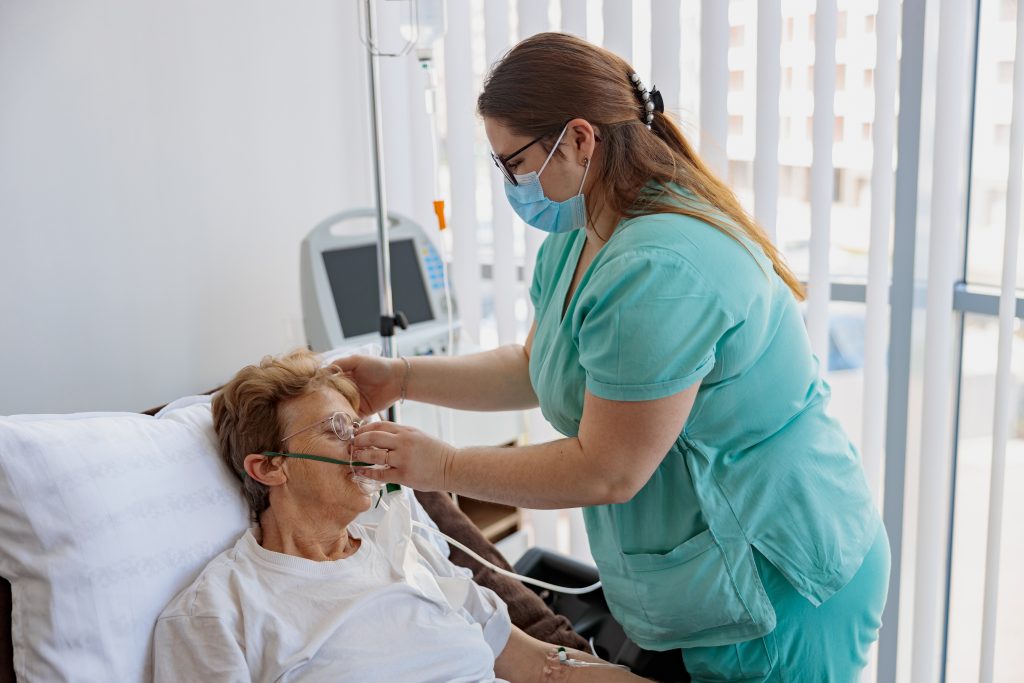
Top CNA Programs in Idaho: 2026 Rankings & Cost Comparison

Compare tuition, program length, and outcomes for every Idaho CNA training option — plus steps to get certified.

By Hannah Pierce, BSNReviewed by TopNursing.org TeamUpdated May 29, 202623 min read
Top CNA Programs in Idaho for 2026 | Rankings & Guide

Points of interest…

  • Idaho’s top CNA programs for 2026 are ranked using net price and tuition, highlighting six state-recognized schools.
  • The Idaho Launch Program covers up to 80% of tuition, stacked with workforce grants and employer partnerships.
  • Boise City offers the highest median CNA wage in Idaho at $38,860, compared to $34,900 in Pocatello.
  • The certification path includes a written or oral test plus a skills exam, typically completed in 4 to 12 weeks.

Certified nursing assistants are the most actively recruited entry-level clinical role in Idaho nursing homes and hospitals. In 2025, nursing assistants held roughly 5,900 jobs across Idaho’s six largest metro areas, but staffing gaps persist in rural counties and smaller towns.

State-approved CNA programs can be completed in four to eight weeks, the fastest direct-care credential you can earn. Tuition ranges widely from under $500 to over $1,500, and students must also cover lab supplies, background checks, and the two-part certification exam.

The certification exam is the true gatekeeper: pass rates vary by school, and a failed skills demonstration means paying to retest and waiting weeks for a retake, so programs with abundant supervised clinical hours carry an edge.

2026 Best CNA Programs in Idaho, Ranked

Idaho’s top-ranked CNA programs for 2026 are ordered by affordability, with net price and tuition leading the value comparison. All six schools below are recognized by the Idaho Health Care Association as primary state providers, meeting certification standards. Compare costs, delivery formats, and unique strengths to find the right starting point for your nursing career.

Factors considered
  • Net price after financial aid
  • In-state tuition rates
  • Total program cost
  • Institution-wide graduation rates
  • Program format and support services
Data sources
RankSchoolLocationNet priceBest for
#1
College of Southern Idaho
Twin Falls, ID$6,000/yrSouth-central Idaho students seeking flexible scheduling

College of Southern Idaho in Twin Falls delivers an 88-hour classroom and lab plus 32-hour clinical CNA program that meets all federal and Idaho standards. Students benefit from two enrollment paths (non-credit workforce training or a 6-credit academic course eligible for financial aid), with in-district tuition savings for Jerome and Twin Falls county residents. Multiple locations and day, evening, or hybrid formats make it accessible, while free tutoring supports first-generation and adult learners. It is one of only six primary state CNA providers.

Certified Nursing Assistant — On-Campus
  • 88 hours classroom/lab and 32 hours clinical experience meet all federal and Idaho standards
  • Prepares students for the Idaho CNA exam and registry placement
  • Two-path model: non-credit workforce training or 6-credit academic course with financial aid
  • In-district tuition savings for Jerome and Twin Falls county residents
  • Flexible scheduling with day, evening, and hybrid formats across multiple locations
  • Free tutoring and academic support services for all CNA students
  • Recognized as one of six primary state CNA providers by the Idaho Health Care Association

College of Western Idaho in Nampa offers a rapid 12-week CNA preparation program blending online instruction with in-person skills labs. Priced at $945, it includes all theoretical and practical training and is open to students as young as 16. Recognized statewide as a primary CNA provider, the hands-on curriculum covers patient care, infection control, and basic nursing techniques, and the program is delivered through Workforce Development with potential access to Idaho workforce grants.

Certified Nursing Assistant Preparation — Hybrid
  • Complete 12-week rapid program preparing for the CNA certification exam
  • Affordable $945 total cost covering all theoretical and practical training
  • Hybrid delivery: online coursework with in-person skills labs at Nampa Campus
  • Minimum age 16; ideal for early career starters and career changers
  • Hands-on training in patient care, infection control, and foundational nursing skills
  • Certificate of completion awarded upon successful program completion
  • Workforce Development program with potential access to Idaho workforce grants
  • Recognized among Idaho's primary CNA providers by the state health care association

College of Eastern Idaho in Idaho Falls runs a 120-hour CNA course with quarterly start dates, combining online assignments with in-person skills and clinical experience at local facilities. The registration fee bundles textbooks, materials, and state testing costs, simplifying budgeting. With formats that include a hybrid option and a satellite offering in Salmon, it serves as a direct pathway to the Idaho CNA registry and a prerequisite for the college's nursing programs.

Certified Nursing Assistant — On-Campus
  • 120-hour comprehensive course meeting Idaho CNA certification requirements
  • Registration fee includes textbooks, skills materials, and state testing fees
  • Combines online assignments with in-person skills practice and clinicals
  • Quarterly start dates in Idaho Falls and a satellite option in Salmon
  • Hybrid format available for greater scheduling flexibility
  • Clinical experience at local healthcare facilities
  • Successful completion allows eligibility for the Idaho CNA registry exam
  • Serves as a prerequisite for PN and ADN programs at CEI

North Idaho College in Coeur d'Alene prepares students for the Idaho Nurse Aide registry through a program that blends online content with hands-on skills and local clinicals. It stands out with included CPR and Customer Service in Health Care certifications, plus robust employer sponsorship opportunities that often cover training costs. Classes run at Post Falls and Bonners Ferry on multiple days, and a comprehensive hiring list helps graduates connect directly with regional healthcare employers.

Certified Nursing Assistant — On-Campus
  • Program prepares students for the Idaho Nurse Aide registry exam
  • Combines online instruction with hands-on skills and local clinicals
  • Includes CPR certification and Customer Service in Health Care certification
  • Employer sponsorship opportunities often cover training costs for qualifying students
  • Classes offered at Post Falls and Bonners Ferry locations on multiple days
  • Specific scrub and equipment requirements mirror regional clinical site standards
  • Comprehensive employer hiring list connects graduates with local job opportunities
  • Frequent start dates aligned with employer hiring cycles

Idaho State University in Pocatello delivers a 120-contact-hour CNA program (88 classroom, 32 clinical) for $850, with additional costs for textbooks and clinical attire. Multiple 12- to 20-week schedules include daytime and evening classes, and web-supplemented delivery aids rural southeast Idaho students. The program requires 100% attendance and background checks, and it provides a strong foundation into ISU's nursing and health science degrees.

Certified Nursing Assistant — On-Campus
  • 120 contact hours (88 classroom, 32 clinical) meeting Idaho certification standards
  • Course cost $850, with additional expenses for textbooks and clinical attire
  • Flexible 12 to 20 week schedules with daytime and evening classes
  • Web-supplemented delivery offers some remote learning for rural Idaho students
  • Prepares graduates for the CNA state registry exam
  • 100% attendance required for all classroom and clinical hours
  • Background checks, immunizations, and CPR certification are prerequisites
  • Serves as a strong foundation for ISU's nursing and healthcare degree programs

Lewis-Clark State College in Lewiston provides a campus-based CNA program with multiple pathways: traditional courses, skills-only training (36 hours), and a $95 challenge exam for those with prior healthcare or military medical experience. CNA certification is an entry requirement for the college's BSN program, making it a strategic step for degree-bound students. Workforce Training coordination and dedicated Nursing & Health Sciences advising support both working adults and pre-nursing learners.

Certified Nursing Assistant — On-Campus
  • Campus-based program in Lewiston with traditional and skills-only training pathways
  • Challenge exam option available ($95) for those with prior healthcare or military experience
  • CNA certification required for entry into LCSC's BSN program
  • Skills-only training provides 36 hours of hands-on practice without full coursework
  • Workforce Training coordinates courses, providing flexible scheduling for working adults
  • Graduates must separately obtain an Idaho CNA registry card for employment
  • Nursing & Health Sciences advisors assist with academic and career planning
  • Military medics and health-related field experience may qualify for the challenge pathway

How to Become a CNA in Idaho: Step-by-Step

Becoming a Certified Nursing Assistant in Idaho follows a clear five-step process managed by the Idaho Department of Health & Welfare. Most candidates complete the pathway in 4 to 12 weeks, depending on program format and exam scheduling. Here is each step in detail.

Five-step pathway to become a CNA in Idaho: prerequisites, training, exam, registry listing, and employment, typically 4-12 weeks.

Idaho CNA Program Cost Comparison

In Idaho, the headline tuition for a CNA program is just the starting point. Students should also budget for textbooks ($50-$150), scrubs and supplies ($75-$200), a background check ($40-$80), drug screening ($35-$70), immunizations and TB testing ($50-$250), and the state exam fee ($120-$150). Factoring in these additional costs, total out-of-pocket expenses for CNA training in Idaho typically range from $500 to over $2,000, depending on the program type and whether financial aid offsets tuition.

Visual showing estimated total cost range for CNA training in Idaho, from $500 to $2,000, for 2026.

Questions to Ask Yourself

Many Idaho CNA programs run intensively Monday through Friday. If your work or family obligations require a part-time track, verify availability early. Flexible schedules often extend the timeline, delaying your entry into the workforce.

Clinical rotations occur at partner facilities that may be up to an hour from campus. Consider transportation time and costs, and whether the hours (often early mornings or weekends) fit your existing responsibilities before you enroll.

Idaho Launch and some healthcare employers cover tuition fully in exchange for a work commitment. Check eligibility for grants, payment plans, or facility-based sponsorship to avoid high upfront costs or missed funding deadlines.

Online and Hybrid CNA Classes in Idaho

Can You Really Take CNA Classes Online in Idaho?

What does “online CNA classes” actually mean in Idaho? The state requires every nursing assistant candidate to complete a set number of supervised, in-person clinical hours before they can sit for the certification exam. As a result, no CNA program in Idaho is 100% online. The term “online CNA classes” almost always refers to a hybrid format: the classroom lectures, theory, and bookwork move to a self-paced digital platform, while skills labs and clinical rotations still take place in person at a designated healthcare facility.

A true hybrid program blends the convenience of online learning with the hands-on practice you need to pass the state skills test and perform safely on the job. If a school markets an “online CNA program,” scrutinize the details. It will still require you to show up for lab sessions and a clinical rotation, often on weekends or in intensive blocks.

Which Ranked Idaho CNA Programs Offer Online or Hybrid Learning?

Among the six schools we reviewed, only College of Western Idaho (CWI) in Nampa offers a program explicitly designated as hybrid. CWI’s 12-week Certified Nursing Assistant Preparation course ($945) combines online didactic content with in-person skills training at its Nampa campus. Two other programs incorporate online components even though their primary delivery is campus-based. North Idaho College (NIC) in Coeur d’Alene describes its CNA course as combining online and in-person learning, with lab and clinical sessions in Post Falls and Bonners Ferry. College of Eastern Idaho (CEI) in Idaho Falls lists a “hybrid format available” among its program highlights, though the core offering remains campus-centered. All three give you some flexibility during the theory portion, but none let you skip the required clinical hours.

What a Hybrid CNA Schedule Looks Like

In a typical Idaho hybrid program, you log into a learning management system each week to watch lectures, read materials, and complete quizzes on your own time. Deadlines keep you on pace, but there is no set class meeting time for the online portions. Then, once you have mastered the foundational knowledge, you attend concentrated lab and clinical sessions.

CWI’s program, for example, runs 12 weeks. Students complete online modules, then meet for hands-on practice and clinical rotations. NIC offers Tuesday, Friday, or Saturday class blocks from 8 a.m. to 4 p.m., with clinical placements arranged locally. CEI provides hybrid options that pair online theory with twice-weekly in-person classes and clinicals at area facilities. Expect to spend roughly 120 total hours in training, most of it for the in-person components, regardless of how much of the theory is delivered online.

For students searching for “online cna classes idaho,” the bottom line is clear: you can start your training from your living room, but you will need to attend in-person skills labs and clinical rotations. There is no fully virtual path to becoming a certified nursing assistant in Idaho. Choose a CNA program that fits your location and schedule, and verify the clinical site requirements before enrolling.

Admission Requirements by School

Admission requirements are the specific documents, health clearances, and certifications you must complete before stepping into a CNA classroom or clinical site. While Idaho sets a broad framework for nurse aide training, individual schools layer on their own prerequisites to ensure students are ready for hands-on patient care. Knowing what each program expects upfront can save you weeks of scrambling for paperwork.

Common Prerequisites Across Idaho CNA Programs

Most Idaho CNA programs share a core set of requirements. You will generally need to:

  • Minimum age: Be at least 16 years old; some schools prefer 18, especially for clinical placements.
  • Education: Hold a high school diploma or GED, though a few programs, like the College of Eastern Idaho, have no formal education prerequisite.
  • Immunizations: Provide proof of current vaccinations, including a TB test, flu shot, and the Hepatitis B series (often with a titer), plus MMR, Varicella, and Tdap. COVID-19 vaccination is required by some clinical affiliates, as seen at the College of Southern Idaho.
  • CPR certification: Complete an American Heart Association BLS for Healthcare Providers course before clinicals begin. This is nearly universal.
  • Background check: Undergo a criminal history screening; this is a state mandate for certification, but schools frequently run their own checks through vendors like StudentCheck.
  • Drug screening: Expect a urine drug test, usually required by clinical sites, though policies differ by school.

School-Specific Nuances

While the above list covers the basics, a few programs stand out for their flexibility or extra steps. The College of Eastern Idaho does not require a GED or diploma, making it accessible for non-traditional students, but it strictly enforces immunization records and the AHA BLS card. The College of Southern Idaho currently includes a COVID-19 vaccine requirement in its immunization checklist, reflecting partner facility rules. Idaho State University takes a lighter approach to background checks: most class sections skip this step entirely, but if you are assigned to the State Hospital South clinical rotation, a background check becomes mandatory. Always confirm the latest requirements directly with the program, as clinical site policies can change mid-admission cycle.

Paperwork Checklist Before Day One

To avoid delays, gather these items early:

  • Government-issued photo ID
  • High school diploma or GED transcript (if required)
  • Immunization records or titers from your healthcare provider
  • CPR certification card (front and back)
  • Completed background check authorization form
  • Drug screening appointment confirmation
  • Any school-specific health forms or physical exam documents

Each program will give you a precise list, but having these documents ready will streamline your enrollment. If you are missing any immunizations, schedule them well in advance, since Hepatitis B series can take months. Contact the program coordinator for questions about substitutions or religious exemptions.

Financial Aid and Funding Options for Idaho CNA Students

Paying for CNA training can feel like a big upfront cost, but many Idaho students piece together funding from grants, workforce programs, and employer partnerships rather than covering the full bill themselves.

Idaho Launch Program Covers Up to 80% of Tuition

The Idaho Launch program is one of the most powerful funding tools for CNA students. During the 2025-2026 cycle, it provides up to $8,000 that covers 80% of tuition and fees for eligible career training programs. CNA programs qualify because they typically run under 12 months, which means you can use the full award in a single year. There are no GPA or income requirements, making it accessible to just about anyone.

Applications open on October 1, with a priority deadline of November 30 and a final deadline of April 15. Applying early is wise because funding is limited. Keep in mind that Launch does not cover books, supplies, uniforms, background checks, drug screens, immunizations, or exam fees, so you will still need a plan for those expenses. Several colleges with top-rated CNA programs participate, including College of Western Idaho, College of Eastern Idaho, Idaho State University, and Lewis-Clark State College. Check with your school's financial aid office to confirm their Launch partnership and get help with the application.

More Ways to Fund Your CNA Training

Beyond Launch, the Workforce Innovation and Opportunity Act (WIOA) can cover training costs for individuals who meet certain eligibility criteria, such as being a laid-off worker or having a low income. Contact your local Idaho Department of Labor workforce development office to ask about WIOA-approved CNA programs and how to apply. They will walk you through the process and connect you with training providers.

Employer-sponsored training is another practical route. Many nursing homes, hospitals, and long-term care facilities across Idaho will pay for your CNA education in exchange for a work commitment after you become certified. Some programs, like the one at North Idaho College, actively partner with local employers to match students with sponsorship opportunities. This can make your training completely free while also securing a job right after graduation.

Federal Pell Grants and Financial Aid Offices

If you attend an accredited institution, you may qualify for a Federal Pell Grant, which does not need to be repaid. CNA programs at Idaho public colleges often serve a high share of Pell-eligible students. For example, at College of Southern Idaho, 86% of undergraduates receive Pell Grants; at College of Eastern Idaho, that figure is 82%; and at College of Western Idaho, it's 80%. These grants can significantly reduce your out-of-pocket costs when combined with other aid.

Before enrolling, reach out to the school's financial aid office. They can help you navigate Launch, WIOA, employer partnerships, and federal aid options all at once. Starting early gives you the best shot at assembling a package that makes CNA training affordable.

Idaho CNA Certification Exam and Licensing

The Idaho CNA certification exam offers two paths to demonstrate competency: a written knowledge test or an oral alternative. Both are paired with a hands-on skills demonstration, and your choice between written and oral depends on your comfort with reading comprehension. The written version costs $29 while the oral exam runs $39, and you'll schedule both through Prometric, the state's testing vendor.

Exam Structure and Registration

To register, submit the Idaho Nurse Aide Testing Application along with your Social Security number. Prometric administers tests in Boise and Nampa, so choose a location that minimizes travel. The exam has two required components: - Knowledge test: 60 multiple-choice questions (written) or 60 questions read aloud by a proctor (oral). You'll answer on a computer or paper. - Skills demonstration: You'll perform five randomly selected nurse aide tasks from a list of about 20. A registered nurse evaluator watches and grades you in real time.

You must pass both parts within a 6-month window. If you fail one component, you can retake just that part. Idaho allows up to 3 total attempts; after a third failure, you must complete a state-approved training program again before testing.

What to Expect on Test Day

Arrive early with a government-issued photo ID, your Social Security number (original card or official printout), and the completed testing application. No cell phones or notes are permitted in the testing area. The skills portion requires you to bring a clean scrub uniform and closed-toe shoes; you'll act as if you are in a clinical setting. The evaluator will provide all necessary equipment. Results typically post online through Prometric within a few hours, but the official outcome appears on the Idaho Nurse Aide Registry within 2 to 4 business days after both parts are passed.

After the Exam: Registry and Renewal

Once you pass, Prometric transmits your scores to the Idaho Department of Health and Welfare. Within 2 to 4 business days, your name appears on the Idaho Nurse Aide Registry, and you can verify your active status via the state's online portal. Employers often check this registry before hiring, so keep your listing current.

Idaho requires renewal every 2 years. There is no fee, but you must document at least 8 hours of paid nursing-related work under a licensed nurse during the renewal cycle. If you hold a CNA credential from another state, you can apply for reciprocity by providing verification of your certification and a clean disciplinary record on your current state's registry.

CNA Salary and Job Outlook in Idaho

In Idaho, CNA wages differ significantly by metro area. The Boise City area has the highest median annual wage at $38,860, while Pocatello reports the lowest at $34,900. Combined, these six metro areas employed approximately 5,880 nursing assistants, according to the latest BLS data. Rural employers may offer higher pay or signing bonuses to fill positions, though wages in non-metro regions are not broken out here.

Metro AreaMedian Annual Wage25th Percentile75th PercentileTotal Employment
Boise City, ID$38,860$35,810$45,4103,140
Coeur d'Alene, ID$38,540$36,460$45,650810
Idaho Falls, ID$35,800$32,780$38,680610
Twin Falls, ID$37,260$30,330$45,560550
Pocatello, ID$34,900$28,910$36,400460
Lewiston, ID-WA$38,540$36,380$45,670310
Did You Know?

The Bureau of Labor Statistics reports national median wages for nursing assistants, but actual earnings for new CNA graduates often differ based on employer, location, and shift differentials. Program-specific post-completion earnings data, which tracks what completers actually earn, is not yet reported for Idaho CNA programs. For state-level salary ranges, see the Idaho wage and outlook table.

CNA Career Advancement Pathways in Idaho

What comes after earning your CNA certification in Idaho? For many nursing assistants, the credential is a stepping stone to higher-paying, more autonomous roles. Whether you plan to become a licensed practical nurse, a registered nurse, or simply want to specialize within the CNA scope, Idaho offers several clear advancement paths that build on your initial training.

The CNA-to-LPN-to-RN Pathway in Idaho

The traditional nursing ladder starts with the CNA certificate and progresses through LPN and RN licensure. Each step increases both clinical responsibility and earning potential. A CNA can typically complete an LPN program in 12 to 18 months at an Idaho community college or technical school, with tuition ranging from $5,000 to $15,000. From LPN to RN, an associate degree in nursing (ADN) adds another 18 to 24 months of full-time study, costing roughly $8,000 to $20,000 at public institutions. For those aiming for a bachelor of science in nursing (BSN), Idaho universities offer RN-to-BSN completion programs that often take one to two years online or part-time, with prices from $10,000 to $30,000. Throughout this progression, your CNA experience counts as valuable patient-care hours that strengthen your nursing school applications and clinical performance.

Bridge Programs at Idaho Community Colleges

Many of the top CNA programs featured in our rankings also house streamlined bridge options. For example, College of Western Idaho and North Idaho College offer CNA-to-LPN advanced placement tracks that give credit for your prior nursing assistant coursework and clinical hours. These programs reduce duplication and can shorten the LPN timeline by a semester. Similarly, LPN-to-RN bridge programs at schools like College of Southern Idaho and Lewis-Clark State College provide a seamless transition for working nurses. For a complete listing of accredited pathways, explore LPN and RN programs in Idaho. These pages detail admission requirements, NCLEX pass rates, and the latest tuition figures.

Specialty CNA Roles That Boost Your Pay

Not everyone wants to leave the CNA role behind. In Idaho, you can increase your earnings by pursuing specialty certifications. Certified medication aides (CMAs) can administer routine medications in long-term care and assisted living settings after completing a state-approved medication aide training program. This certification often adds $2 to $4 per hour to a standard CNA wage. Hospice aides and home health aides also command higher pay because they require comfort with end-of-life care, family communication, and independent work in clients' homes. These specialties do not demand a nursing degree, making them attractive for CNAs who want to deepen their expertise without a multi-year educational commitment. Idaho Workforce Development Council grants may cover training costs for in-demand specialties like geriatric care and behavioral health.

Frequently Asked Questions About CNA Programs in Idaho

Get quick answers to common questions about becoming a certified nursing assistant in Idaho. Whether you are just starting your research or preparing for certification, these FAQs cover timelines, costs, and requirements.

How long does it take to become a CNA in Idaho?
Most Idaho CNA programs take 4 to 12 weeks to complete. Full-time students typically finish classroom and clinical training in one to three months, depending on the schedule. After finishing an approved program, you can schedule the state competency exam within a few weeks.
What is the average pay for CNAs in Idaho?
According to the U.S. Bureau of Labor Statistics, nursing assistants in Idaho earned a median annual wage of $33,280 in 2025, which equals about $16.00 per hour. Pay can vary by location and employer, with Boise area facilities often offering slightly higher wages.
Can you take CNA classes online in Idaho?
Some Idaho programs offer hybrid options with online coursework, but all require in-person clinical hours at a healthcare facility. You cannot complete the entire CNA training remotely because hands-on skills practice and direct patient care experience are mandatory for certification.
How much do CNA programs cost in Idaho?
CNA program costs in Idaho range from $500 to $1,500 on average. Community colleges and technical schools tend to be at the lower end, while private training providers may charge more. Many programs include textbooks, supplies, and the certification exam fee in the total tuition.
Where can I take CNA classes in Boise, Idaho?
Boise offers several options, including the College of Western Idaho, Carrington College, and training through local healthcare employers like St. Luke's and Saint Alphonsus. Many facilities provide on-site CNA programs that combine training with immediate job placement opportunities.
What are the requirements to get CNA certified in Idaho?
You must complete a state-approved training program, pass a competency exam including written and skills components, and clear a criminal background check. A high school diploma or GED is typically required. You also need current immunizations and a negative TB test before clinical rotations.
Does Idaho offer reciprocity for out-of-state CNAs?
Yes, Idaho grants certification by endorsement if you hold an active, unencumbered CNA license in another state and meet Idaho's training and examination standards. You will need to submit verification of your out-of-state credential and complete a background check, but repeating the exam is usually not required.
Does CNA certification in Idaho expire?
Idaho CNA certification must be renewed every two years. To renew, you must show proof of working at least 24 hours as a paid CNA during the 24-month period. If you do not meet the work requirement, you may need to complete a refresher course and retake the competency exam.

Recent Articles