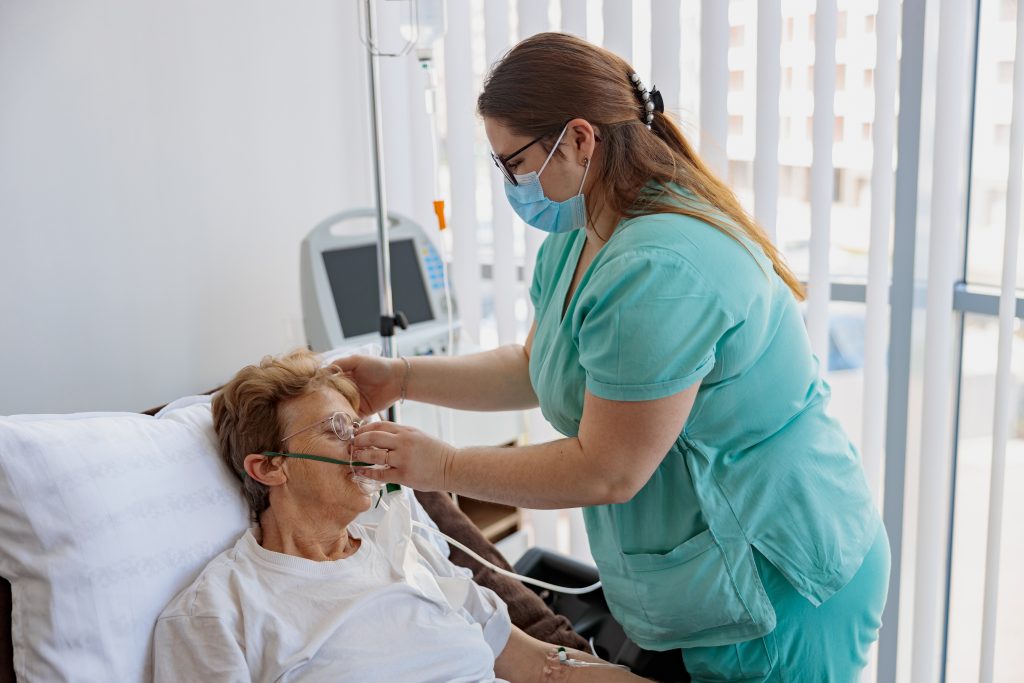
Top RN to BSN Programs in Minnesota for 2026

Compare accredited Minnesota RN-to-BSN programs by cost, format, completion time, and career outcomes.

By Maria Delgado, RNReviewed by TopNursing.org TeamUpdated May 29, 202621 min read
Top RN to BSN Programs in Minnesota (2026 Rankings)

Points of interest…

  • Many Minnesota RN-to-BSN programs can be completed fully online in as little as one year.
  • Over 70% of Minnesota RNs already hold a bachelor's degree, approaching the 80% national goal.
  • Magnet hospitals like Mayo Clinic and Allina Health require or strongly prefer BSN-prepared nurses.

Minnesota’s largest healthcare employers, including Mayo Clinic, Allina Health, and M Health Fairview, increasingly expect a bachelor’s degree for bedside and leadership roles. Twelve accredited RN-to-BSN programs in the state offer working nurses a path to that credential, but they vary sharply in net price, graduate earnings, and completion timelines. For RNs juggling shifts and family obligations, the central question is whether a faster, less expensive online program with minimal clinical hours will satisfy employer expectations and position them for wage growth. With over 70% of Minnesota RNs already holding a BSN, ADN-prepared nurses face a narrowing window to stay competitive for Magnet-recognized and specialty positions.

2026 Best RN to BSN Programs in Minnesota

This ranking highlights Minnesota RN to BSN programs that combine affordability, flexible online delivery, and strong career outcomes. We evaluated public and private options across the state, weighing net price, institution-wide graduation rates, and median student earnings to help working nurses find the right fit.

Factors considered
  • Net price affordability
  • Institution-wide graduation rate
  • Graduate earnings outcomes
  • Online and on-campus flexibility
  • Minnesota-specific credential options
Data sources
RankSchoolLocationNet priceBest for
#1
Metropolitan State University
Saint Paul, MN$17,000/yrWorking RNs advancing health equity in urban settings

Metropolitan State University in Saint Paul delivers an entirely online RN to BSN with a part-time, cohort-based structure tailored for working adults. The curriculum emphasizes holistic care, anti-racism, and health equity, and graduates qualify for Minnesota Public Health Nurse registration. The institution's overall graduation rate is 43.6%, while the average net price for all undergraduates is $16,863. Former students who received federal aid earned a median of $64,705 ten years after entry, reflecting strong long-term returns.

Registered Nurse to Bachelor of Science in Nursing — Online
  • CCNE accredited
  • 31 total credit hours, five-semester part-time progression
  • Asynchronous online classes with 45 clinical hours
  • Cohort-based structure starts fall, spring, and summer
  • Graduates qualify for Minnesota public health nursing registration
  • Endorsed by AHNCC for holistic nursing certification
  • Curriculum centers on anti-racism and health equity activism

Saint Cloud State University offers a fully online RN-BS completion that can be finished in as little as one calendar year, with courses starting every seven weeks. The 30-credit program carries a low net price of $13,529 and an institution-wide graduation rate of 40.3%. Graduates become eligible for public health nursing registration and gain leadership skills for a variety of settings. Ten-year median earnings for former federal aid recipients reach $55,813.

RN-BS Completion Option — Online
  • CCNE accredited
  • Complete in one calendar year with rolling admissions
  • 30 credit hours, entirely online, part-time or full-time
  • Courses start every seven weeks in fall, spring, summer
  • Minimum 2.5 GPA and active RN license required
  • Eligibility for Minnesota public health nursing certification
  • Leadership and management skills building

Southwest Minnesota State University's ACEN-accredited online RN to BSN serves rural Minnesota and the Upper Midwest, weaves a rural nursing thread throughout courses, and grants prior learning credits. The net price is $15,291 and the institution-wide graduation rate is 45.1%. Graduates are prepared for public health nursing registration and advanced roles, with median ten-year earnings of $51,342 for former students.

RN to BSN Program — Online
  • ACEN accredited
  • 120 total credit hours, fully online
  • No entrance exam required, 2.3 GPA minimum
  • Starts fall and spring, flexible schedule for working RNs
  • Rural nursing focus throughout curriculum
  • Eligible for Minnesota Public Health Nurse registration
  • Leadership, informatics, and community health integration

Bemidji State University offers a 100% online RN-to-BSN with a 47.9% institution-wide graduation rate and net price of $15,261. The program emphasizes rural and tribal community health in northern Minnesota and grants 15 upper-level credits for an active RN license, shortening time to degree. Former federal aid recipients see median ten-year earnings of $53,755.

Nursing B.S. (RN-BS) — Online

Rasmussen University in St. Cloud delivers an online RN to BSN with in-person clinicals anchored in Minnesota health systems like Mayo Clinic and Allina Health. The private institution reports a 53.5% overall graduation rate and a net price of $17,962. Multiple start dates and employer tuition partnerships appeal to working nurses, though median ten-year earnings for former students are $39,080.

RN to BSN — Online

Minnesota State University Moorhead provides a hybrid RN to BSN (fully online available except for F-1 students) with a 57.3% institution-wide graduation rate and net price of $17,997. The program touts a 100% job placement history and is pursuing NLN CNEA accreditation. Median ten-year earnings for former students reach $50,527.

Registered Nurse (RN) to BSN — Hybrid

Minnesota State University-Mankato features a fully online RN baccalaureate completion with rolling admissions and a net price of $19,139. The institution-wide graduation rate is 54%, and its affordable in-state tuition, along with streamlined transfer pathways from Minnesota State community colleges, makes it a practical public choice. Ten-year median earnings stand at $56,922.

RN Baccalaureate Completion Program — Online

Winona State University's online asynchronous RN-BS completion stands out with a 96% job placement rate and clinical partnerships with Mayo Clinic. The net price is $17,503 and the institution-wide graduation rate is 56.9%. Graduates earn eligibility for both public health nursing certification and school nurse licensure. Median ten-year earnings are $58,532.

RN-BS Completion Program — Online

Capella University, a Minneapolis-based online institution, offers an RN-to-BSN with a FlexPath self-paced option that students can finish in under 9 months for under $10,000. Institutional graduation rate is 20% and net price averages $17,956. Employer partnerships with Minnesota health systems can further reduce cost. Median ten-year earnings for former students reach $42,189.

RN-to-BSN Bachelor of Science in Nursing — Online

Walden University's online RN to BSN features course-based and self-paced Tempo Learning formats, and accepts up to 75% of transfer credits. The Minneapolis-headquartered institution reports a net price of $33,817 and no published overall graduation rate. Ten-year median earnings for former students are $42,810.

Bachelor of Science in Nursing (RN-BSN) — Online

Augsburg University's fully online, asynchronous RN to BSN can be completed in 12 months and emphasizes transcultural nursing with optional international practicum experiences through Augsburg's CGEE program. Net price is $23,873 and overall graduation rate is 51.7%. Median ten-year earnings are a competitive $58,829.

Bachelor of Science in Nursing Completion Program — Online

St. Catherine University, a women's college in Saint Paul, offers an online RN-BSN with practicum requirements in two courses and an optional Public Health Certification. The institution-wide graduation rate is 61.3% and net price reaches $19,764. Strong student-faculty ratio and a focus on leadership and evidence-based practice define the experience. Ten-year median earnings for former students are $59,282.

RN-BSN — Online

Minnesota RN-to-BSN Program Comparison Table

The table below provides a side-by-side look at tuition, net price, and key outcomes for the 12 ranked RN to BSN programs in Minnesota. Net price reflects the institution-wide average cost after grants and scholarships and is not a guaranteed individual quote. Use these numbers as a starting point for comparing affordability and expected earnings across programs.

SchoolIn-State TuitionOut-of-State TuitionNet Price (After Aid)Graduation RateMedian Earnings (10yr)Median DebtStudent-Faculty Ratio
Saint Cloud State University$10,245$10,245$13,52940.3%$55,813$21,05818:1
Bemidji State University$10,237$10,237$15,26147.9%$53,755$19,75018:1
Southwest Minnesota State University$10,361$10,361$15,29145.1%$51,342$20,50016:1
Metropolitan State University$9,840$9,840$16,86343.6%$64,705$17,10015:1
Winona State University$10,576$17,308$17,50356.9%$58,532$21,50014:1
Capella University$14,400$14,400$17,95620.0%$42,189$14,96841:1
Rasmussen University-Minnesota$12,199$12,199$17,96253.5%$39,080$20,89916:1
Minnesota State University Moorhead$10,428$10,428$17,99757.3%$50,527$20,00017:1
Minnesota State University-Mankato$9,572$18,942$19,13954.0%$56,922$21,10621:1
St Catherine University$38,428$38,428$19,76461.3%$59,282$24,1819:1
Augsburg University$45,452$45,452$23,87351.7%$58,829$25,34714:1
Walden University$11,067$11,067$33,817N/A$42,810$20,83431:1

Questions to Ask Yourself

Some Minnesota RN to BSN tracks are entirely remote, while others require campus visits or local clinical placements, which can affect your scheduling flexibility and commuting needs.

Minnesota schools vary in credit evaluation; maximizing transfer credits can shorten a program from two years to as little as 12 months, directly impacting your graduation date and tuition costs.

Many Twin Cities and regional hospitals provide financial support for BSN advancement, often tied to specific partner schools, so choosing a program that aligns with your employer benefits can significantly lower out-of-pocket expenses.

How Long Does an RN to BSN Take in Minnesota?

How long does an RN to BSN take in Minnesota? The timeline splits into two main paths: a fast-paced full-time schedule that can finish within a year, or a part-time approach that stretches the program to two or three years. Your choice depends on work demands, family obligations, and how soon you want the career boost a bachelor's degree provides.

Full-Time and Part-Time Options

Full-time RN-to-BSN programs in Minnesota usually take 12 to 18 months of focused study after completing an associate degree. Minnesota State University, Mankato offers an RN Baccalaureate Completion program that finishes in 12 months full-time1, while St. Cloud State University's Accelerated Online RN-to-BSN compresses the nursing major into just 10 months2. Both programs require 30 credits in the major.12

Part-time tracks are built for working nurses. Mankato's part-time option spans 18 to 24 months1, letting you spread those 30 credits over a longer period. Many schools also let you adjust your pace term by term, so you can speed up or slow down as your life allows.

Accelerated and Short-Term Course Formats

Some Minnesota programs accelerate completion by breaking the calendar into shorter sessions. St. Cloud State uses 7-week modules2 instead of traditional 16-week semesters. That structure helps you tackle one or two courses at a time and move through the curriculum quickly. Other state universities offer similar 8-week terms, though the exact schedule varies by school. Accelerated formats demand more hours per week but can significantly shorten your time to graduation.

How Transfer Credits Affect Duration

Credit transfer policies directly determine how long your RN-to-BSN takes. Programs usually accept 60 to 90 credits from a prior associate degree and general education courses. The more credits that transfer in, the fewer BSN courses you need to complete. At Mankato and St. Cloud State, the 30-credit nursing major presumes you arrive with a full block of lower-division credits already satisfied. A later section on admission requirements and credit transfer policies details how to maximize eligible credits and avoid repeating coursework.

RN to BSN Tuition and Financial Aid in Minnesota

Tuition and financial aid for an RN-to-BSN program in Minnesota cover the direct costs of earning your bachelor's degree and the many ways you can reduce or offset those costs through scholarships, employer programs, and state grants. Understanding the real net price you'll pay, not just the sticker tuition, makes it easier to plan a manageable path.

What You Can Expect to Pay

Net price, the amount students actually pay after grants and scholarships, varies widely among Minnesota's RN-to-BSN programs. Public universities tend to offer the lowest net costs. Saint Cloud State University shows a net price around $13,500, while Bemidji State University and Southwest Minnesota State University fall in the $15,000–$16,000 range. Metropolitan State University and Winona State University sit between $16,800 and $17,500. Private institutions show more variation: Capella University and Rasmussen University report net prices near $18,000, while Walden University and Augsburg University top $23,000 and $33,800, respectively. Sticker tuition alone can be misleading, so always compare each school's net price estimate.

Scholarships for Minnesota Nursing Students

Working RNs in Minnesota have access to targeted scholarships that don't need to be repaid. The Minnesota Nurses Association (MNA) offers a Member Scholarship of $7,500 for the 2026–2027 academic year; the application deadline is June 1, 2026, and you must be an MNA member in good standing. The Mary Eliza Mahoney Scholarship supports nurses of color with up to $10,000 ($2,500 per semester). For smaller outlays like certification costs, the MNA's Certification Reimbursement Scholarship provides $500. At the federal level, the HRSA Nurse Corps Scholarship covers full tuition and required fees plus a monthly living stipend, with a two-year service obligation after graduation. HRSA also offers loan repayment covering 60% to 85% of qualifying debt. Some individual schools, like Southwest Minnesota State University, have their own RN to BSN Education Advancement Scholarship of $1,500 (application deadline August 15, 2026). Lastly, Minnesota state grant programs may further reduce costs for eligible residents.

Employer Tuition Reimbursement

Many of Minnesota's largest health systems actively invest in their nursing workforce. Mayo Clinic, Allina Health, M Health Fairview, and Essentia Health all offer tuition reimbursement or upfront payment programs for RN-to-BSN study. Typical benefits cover a set dollar amount per year or per credit hour, often contingent on continued employment for a defined period after coursework. A critical step: contact your human resources department and submit your reimbursement application before your program starts. Policies can change, and approval locked in before the first class ensures you won't miss out on funding.

Managing Student Loan Debt

Median federal graduate debt for Minnesota RN-to-BSN completers ranges from about $15,000 at Capella University to just over $25,000 at Augsburg University. Most programs cluster between $17,000 and $21,500. While these amounts are manageable given typical nursing salaries in the state, every dollar you avoid borrowing through scholarships or employer aid reduces your post-graduation financial pressure. Checking each program's net price and stacking multiple funding sources keeps your out-of-pocket costs low.

Online RN to BSN Programs Available in Minnesota

Earning a BSN online lets you keep working while you study, but the clinical component can be the make-or-break detail. Minnesota nursing programs handle those required practice hours in different ways, so it pays to dig into the specifics before you enroll.

Clinical Hours Vary by Program

Every online RN-to-BSN in Minnesota includes some form of clinical or practicum experience, because accrediting bodies and the state board require it. At Metropolitan State University, for example, the BSN completion track wraps clinical encounters into community health and leadership courses. St. Catherine University builds a capstone project and fieldwork into its curriculum. Winona State University integrates a population-focused practicum, and Bemidji State University includes a public health nursing experience. The number of hours and the setting differ: one school may ask for 45 hours of community assessment while another expects 90 hours split across two courses. Visit each school’s nursing department page and download the current student handbook to see exactly what is required.

Completing Practicum Hours at Your Workplace

Many students ask straightaway whether they can log clinical hours on their own unit. The answer depends on the program’s learning objectives. When a course covers population health or leadership, your regular bedside shift rarely qualifies. However, some programs let you design a project at your employer under an approved preceptor. Metropolitan State often allows this if the experience matches the course aims. Other programs, like St. Catherine’s, may require placement in a non-acute setting you are not already assigned to. The safest approach: email the program director before applying, describe your current role, and ask how clinical placement typically works.

State Authorization and Out-of-State Enrollment

If you live outside Minnesota but are considering a Minnesota online RN-to-BSN, the National Council for State Authorization Reciprocity Agreements (NC-SARA) is the gatekeeper. Most Minnesota public universities and many private colleges participate. Check nc-sara.org to confirm the school’s status. Even with NC-SARA, some programs impose state-specific limits for clinical placement: a school may admit you but cannot guarantee a practicum site in your state, or your state board may require additional paperwork. Contact admissions and the program advisor early to avoid a last-minute scramble.

Steps to Confirm Your Eligibility

  • Review each program’s website: Look for pages on clinical education, practicum requirements, and frequently asked questions. Note any mention of employer-based hours or out-of-state placements.
  • Check the Minnesota Board of Nursing: Visit mn.gov/boards/nursing for state-level regulations on BSN clinical standards.
  • Look up NC-SARA: The directory at nc-sara.org lists which institutions are approved for interstate distance education.
  • Contact the program directly: An academic advisor can clarify whether you can complete hours locally, how preceptors are approved, and what documentation your home state expects.

Taking these steps before you apply helps you avoid surprises and find an online program that fits your work schedule, location, and career goals.

What RN-to-BSN Graduates Earn in Minnesota

Wages for registered nurses in Minnesota can differ by thousands of dollars from one metro to the next. The chart below plots 2019 mean annual earnings for three key labor markets, highlighting the geographic spread that BSN-prepared nurses navigate as they advance their careers.

Mean RN wages in Minneapolis-St. Paul ($81,510), Rochester ($77,920), and Duluth ($63,200) in 2019.

Admission Requirements and Credit Transfer Policies

Balancing flexibility with the right academic fit is central when comparing RN to BSN admission policies in Minnesota. While most programs share a core set of prerequisites, they diverge sharply on how they value your prior learning and work experience.

Common Admission Requirements

Across Minnesota, the baseline for admission is consistent: you must hold an unencumbered active RN license (or be eligible to sit for the NCLEX and obtain it shortly after enrollment) and have graduated from an accredited associate degree or diploma nursing program. GPA minimums generally range from 2.3 to 3.0. Public universities like Metropolitan State, Bemidji State, and Minnesota State Mankato often set the bar at 2.5 or lower, while private institutions like St. Catherine University require a 2.5. A few programs, such as Southwest Minnesota State, accept a 2.3. Most schools compute GPA across all prior coursework, not just nursing courses.

Transcripts, an application fee (waived at Bemidji State and Capella), and proof of CPR certification are typical documentation. Some programs allow you to apply before passing the NCLEX, giving you a head start on enrollment.

Credit Transfer and Residency Policies

RN to BSN programs in Minnesota are designed as degree-completion pathways, so credit transfer is a cornerstone. Many programs cap transfer credits at a percentage of the total degree: Walden University accepts up to 75% of required credits, while Capella University allows up to 135 quarter credits. Public universities often articulate a block of credits from your associate degree, leaving roughly 30–40 nursing-specific credits to complete the BSN. For instance, Metropolitan State and Winona State require 30–31 core nursing credits that must be earned in residence. Rasmussen University lets you transfer up to 134 credits, keeping the on-site requirement to a minimum.

Residency in this context rarely means on-campus attendance, most programs are fully online. Instead, it refers to the minimum number of credits you must take directly from the institution to earn your degree. Typically, that residency requirement equals the nursing major credits, as general education and elective credits are already satisfied by your associate degree.

Competency-Based Credit for Work Experience

Several Minnesota programs recognize that your nursing experience equals learning. Capella University’s FlexPath and Walden’s Tempo Learning are competency-based formats that let you progress at your own pace, turning what you already know into course credit. Southwest Minnesota State offers prior learning assessment credits, and Bemidji State awards “RN Advantage” credits, a $5,000 tuition savings that acknowledges your clinical background. These options can shorten your timeline and lower costs, but they require self-discipline and strong organizational skills.

Admission Competitiveness

Institution-wide acceptance rates from the most recent available data show Metropolitan State admits 99% of applicants, while Bemidji State is more selective at 56%. However, these figures are not program-specific; RN to BSN cohorts are often less competitive because applicants already hold an RN license. Programs may be open-enrollment or lightly selective, focusing more on fit and completion potential than on sheer numbers.

Did You Know?

Magnet-designated health systems like Mayo Clinic and Allina Health drive the demand by requiring or preferring BSN-prepared nurses. Minnesota is approaching the Institute of Medicine's 80% BSN goal, with over 70% of RNs already holding a bachelor's degree. For ADN-prepared nurses, earning a BSN is becoming essential to remain competitive in the state's top hospitals.

Frequently Asked Questions About Minnesota RN-to-BSN Programs

Choosing the right RN-to-BSN program in Minnesota involves weighing several factors. Below, we answer common questions to help you compare options and decide on your next step.

What is the top nursing program in Minnesota?
The best program depends on your priorities, but the ranking table earlier in this article compares top Minnesota RN-to-BSN options based on cost, length, and format. For many, the University of Minnesota’s pathway stands out due to its strong reputation and flexible online structure. Consider what matters most to you: affordability, completion speed, or a specific focus area.
Who has the easiest RN to BSN program?
Many Minnesota RN-to-BSN programs are designed for working nurses with streamlined admission and generous credit transfer. Fully online programs with no clinical hours, such as those highlighted in our comparison table, are often considered the least demanding. To find the simplest path, look for programs that accept the most transfer credits and have flexible pacing.
How much does a RN BSN make in Minnesota?
The earnings infographic in this article breaks down typical salaries for BSN-prepared RNs in Minnesota. Nationally, the BLS median annual wage for registered nurses is about $86,000, but state-level figures can be higher or lower. For accurate Minnesota data, see the infographic and note that pay varies by location and specialty.
Are there fully online RN to BSN programs in Minnesota?
Yes, several accredited Minnesota schools offer 100% online RN-to-BSN completion programs. The online programs section of this article lists available options. These allow you to complete coursework asynchronously while working, making them a practical choice for many nurses. Be sure to verify that the program meets the requirements of your employer or any future plans.
Do RN-to-BSN programs in Minnesota require clinical hours?
It varies by school. Some programs include a clinical or practicum component, often in community health, while others rely on project-based or portfolio assessments. Programs designed for working RNs may waive direct clinical hours because you already hold an active license. Review each program’s curriculum details in the comparison table to see what is required.
What is the #1 BSN program in the US?
National rankings such as U.S. News & World Report consistently place the University of Pennsylvania’s BSN program at the top, citing its research output and clinical training. Keep in mind that ‘best’ rankings consider many factors; a top-ranked national program may not be the best fit for every student or geography. For Minnesota nurses, local program fit often outweighs national prestige.
Does Minnesota require a BSN to become an RN?
No, Minnesota does not mandate a BSN for initial RN licensure. You can become an RN with an associate degree or diploma. However, a BSN is required for public health nurse certification in the state, and many hospitals prefer or require a BSN for hire or advancement. Some employers may offer tuition assistance to help you earn the degree.
How do I choose between RN-to-BSN programs in Minnesota?
Focus on accreditation, total cost, program length, and flexibility. Use the comparison table to weigh tuition, online availability, and credit transfer. Also consider whether you need a program with no clinical hours. The earlier Ask Yourself section can help you clarify your priorities. Reach out to admissions advisors for specific questions about your situation.

Recent Articles