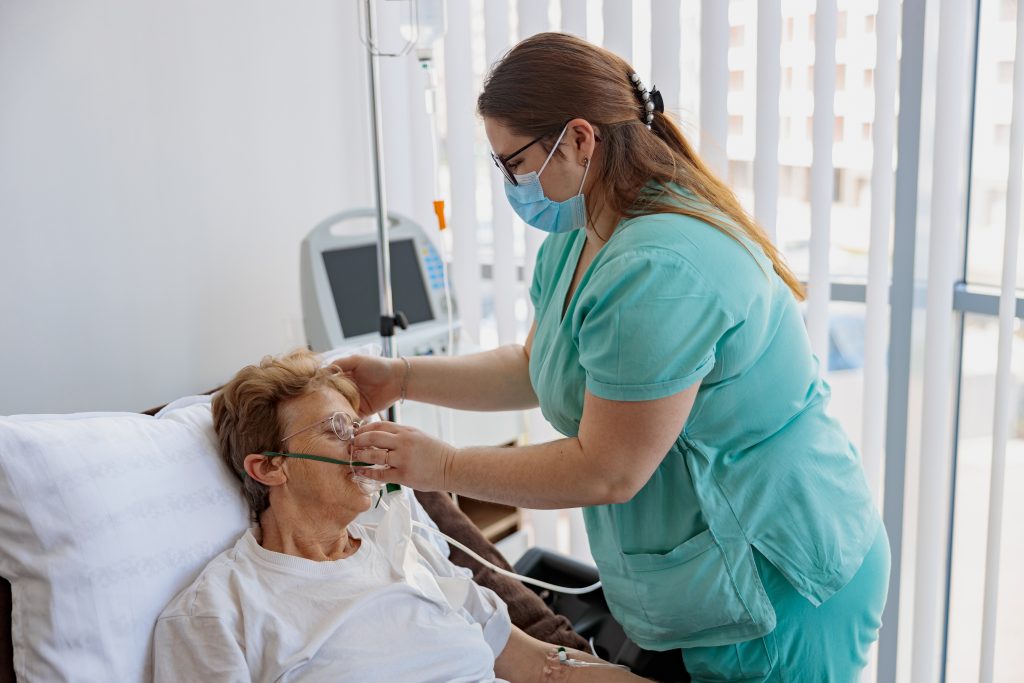
Top Nursing Schools & BSN Programs in Montana for 2026

Compare tuition, NCLEX pass rates, accreditation, and outcomes across Montana's top-ranked nursing programs.

By Maria Delgado, RNReviewed by TopNursing.org TeamUpdated May 29, 202621 min read
Top Nursing Schools in Montana (2026 Rankings)

Points of interest…

  • Montana RNs earned a median wage of $81,000 in 2025, with the lowest 10% making about $63,000.
  • Applying for RN licensure by endorsement in Montana costs $200 via the NURSYS system.
  • This article ranks eight Montana nursing programs on value, outcomes, and training quality.
  • All RN applicants must complete a fingerprint-based criminal background check before receiving a license.

Montana’s nursing pipeline is compact: just eight institutions produce the state’s registered nurses. An associate degree takes two years and costs less upfront, while a bachelor’s program requires four years but aligns with employer preferences at Magnet hospitals.

Choosing the right school involves more than tuition. NCLEX pass rates from the Montana Board of Nursing and median earnings data published in College Scorecard show wide outcome gaps even among these few programs.

A program’s first-time pass rate can directly affect hiring prospects in Billings, Missoula, and the state’s critical access hospitals.

2026 Best Nursing Programs in Montana, Ranked

These eight Montana nursing programs represent the best combination of value, outcomes, and training quality for 2026. Each profile includes key metrics and unique strengths to help you find the right fit.

Factors considered
  • NCLEX pass rates and preparation
  • Clinical hour requirements and placements
  • Graduate earnings and job outlook
  • Affordability via net price and fees
  • Program accreditation and state approval
Data sources
RankSchoolLocationNet priceBest for
#1
Montana Technological University
Butte, MT~$16,000/yr (est.)In-state students pursuing a public BSN

Montana Tech's CCNE-accredited BSN is the state's highest-ranked nursing program, blending nearly 1,000 clinical hours with cutting-edge simulation training. As one of only two public pre-licensure BSNs in Montana, it offers affordable in-state tuition and a health care informatics minor. Graduates benefit from strong placement rates and a curriculum built for advanced specialization.

Bachelor of Science in Nursing — On-Campus
  • Earn your BSN at Montana's top-ranked nursing program
  • Complete nearly 1,000 clinical hours across diverse healthcare settings
  • Train in state-of-the-art simulation labs with hands-on scenarios
  • Benefit from CCNE accreditation and a curriculum built for NCLEX success
  • Gain a strong foundation for advanced nursing specializations
  • Add a health care informatics minor unique to the region
  • Join a program with high graduate placement rates in Montana hospitals

Carroll's private BSN stands out for its liberal arts integration and two track options: a traditional four-year path or an accelerated 15-month program for career changers. Clinical placements begin early in Helena, and the curriculum aligns with the Nurse Licensure Compact for out-of-state mobility. With a Board of Nursing approval through 2032, it combines selective admissions with strong NCLEX preparation.

Bachelor of Science in Nursing — On-Campus
  • Blend clinical skills with a liberal arts foundation in Helena
  • Choose a traditional or accelerated 15-month BSN track
  • Begin clinical placements at the 200-level in local healthcare systems
  • Prepare for the NCLEX with a curriculum aligned to the Nurse Licensure Compact
  • Meet selective admission standards: 3.30 GPA and test score thresholds
  • Access scholarships and financial aid to manage private college costs
  • Develop leadership skills through hands-on management courses

Salish Kootenai's direct-admit BSN emphasizes rural and Native community health, reflected in its clinical rotations across urban and tribal settings. The ACEN-accredited program offers high-fidelity simulation and a 6:1 student-faculty ratio on a tribal college campus. Students benefit from early entry options and a cohort-based progression tailored to first-generation and underserved learners.

Direct Admit BSN — On-Campus
  • Enroll in a direct-admit BSN on a tribal college campus in Pablo
  • Experience high-fidelity simulation and small faculty-to-student ratios
  • Complete clinical rotations in urban and rural Montana hospitals
  • Qualify for the NCLEX-RN with ACEN-accredited training
  • Apply early with a NEX exam score of 138 or higher
  • Receive financial aid and scholarships, including tribal resources
  • Join a cohort-based program fostering peer support and progression

Montana State University's BSN spans five campuses, making it a top choice for place-bound students across the state. The program achieves a 92.05% first-time NCLEX pass rate and is recognized nationally for rural nursing research. Direct entry for Montana high school graduates and new simulation facilities enhance access and training quality.

Bachelor of Science in Nursing — On-Campus
  • Study across five Montana campuses with a focus on rural healthcare
  • Achieve a 92.05% first-time NCLEX pass rate in a comprehensive BSN
  • Access Direct Entry for Montana high school graduates with a 3.0 GPA
  • Complete eight semesters with hands-on clinicals from the start
  • Train in new simulation labs funded by philanthropic investment
  • Benefit from a curriculum recognized nationally for rural nursing research
  • Prepare for high-demand RN roles in diverse Montana communities

Missoula College's ASN program combines rigorous ACEN-accredited training with a small cohort of 18 students, ensuring personalized acute-care preparation. With Board of Nursing approval through 2033, it provides a stable pathway to RN licensure in western Montana. The four-semester curriculum includes intensive labs, simulations, and clinical rotations.

Associate of Science in Nursing — On-Campus
  • Earn an ASN in four semesters at Missoula College
  • Join a small cohort of just 18 students for personalized attention
  • Master acute care nursing through labs, simulations, and clinical rotations
  • Meet admission prerequisites with a B or better in key courses
  • Graduate ready to pass the NCLEX-RN and seek Montana licensure
  • Learn in a program ACEN-accredited and state board approved through 2033
  • Take the first step toward a stable RN career in western Montana

Flathead Valley's LPN-to-RN bridge program delivers an accelerated, two-semester path to the NCLEX-RN. The 28-credit curriculum focuses on direct patient care and is state board approved for Montana licensure. Affordable community college tuition and strong local job demand make it a practical choice for working LPNs in Kalispell.

Registered Nurse — On-Campus
  • Advance from LPN to RN in just two semesters of full-time study
  • Complete 28 credits focused on direct patient care and assessment
  • Prepare for the NCLEX-RN exam with a curriculum tailored for working LPNs
  • Benefit from Montana state board approval for licensure eligibility
  • Satisfy clinical requirements with a background check and immunizations
  • Enter a high-demand field with diverse job opportunities in Kalispell
  • Access affordable community college tuition and financial aid

Providence's traditional BSN integrates compassionate, mission-driven care with state-of-the-art simulation training. The four-year program offers direct entry and pre-nursing tracks, with a 3.0 GPA threshold. Graduates emerge ready for diverse roles in Great Falls and beyond, supported by financial aid at this Catholic institution.

Traditional Bachelor of Science in Nursing — On-Campus
  • Pursue a four-year BSN grounded in compassionate, ethical care
  • Choose direct entry or a pre-nursing pathway with a 3.0 GPA minimum
  • Train in a state-of-the-art nursing simulation facility on campus
  • Combine liberal arts and nursing for a well-rounded professional foundation
  • Qualify for the NCLEX with a curriculum focused on clinical excellence
  • Access scholarships and financial aid at this Catholic mission-driven university
  • Graduate ready for diverse nursing roles in Great Falls and beyond

City College at MSU Billings provides an NLN CNEA-accredited ADN with flexible admission options like the MSUB Readiness Exam. The program emphasizes hands-on clinicals and technology, preparing graduates for the NCLEX-RN and the region's strong RN job market. With a median state wage of $59,900, it's a cost-effective entry to nursing in south-central Montana.

Associate Degree in Nursing — On-Campus
  • Complete an ADN at City College with hands-on clinical experience
  • Prepare for the NCLEX-RN in a program accredited by NLN CNEA
  • Gain admission through alternative pathways like the MSUB Readiness Exam
  • Benefit from state-of-the-art technology integrated into nursing labs
  • Join a program approved by the Montana State Board of Nursing
  • Enter a field with strong job growth and a median wage of $59,900 in Montana
  • Serve Billings and south-central Montana communities as a new RN

Montana Nursing Program Tuition & Cost Comparison

While many nursing school rankings focus solely on prestige or NCLEX pass rates, no competitor page offers a straightforward side-by-side comparison of Montana nursing program costs. The table below lists in-state and out-of-state tuition and net price (the average amount students pay after federal financial aid) for all eight nursing schools in the state. Because net price is calculated at the institution level, treat it as a rough guide rather than a guaranteed cost for nursing students specifically. Where data are available, we also include median graduate debt to help you gauge long-term financial commitment.

SchoolIn-State TuitionOut-of-State TuitionNet Price (Institution-Wide)Median Graduate Debt
Flathead Valley Community College$6,223$11,659$8,099$10,500
Salish Kootenai College$6,399$11,583$7,945$12,923
Montana State University Billings$7,280$22,897$16,524$18,209
Montana Technological University$8,289$26,094$16,481$18,750
Montana State University$8,460$33,287$22,499$22,500
The University of Montana$8,552$33,671$16,784$22,400
University of Providence$30,448$30,448$17,649$18,750
Carroll College$41,484$41,484$23,960$25,757

NCLEX Pass Rates for Montana Nursing Schools

Montana NCLEX-RN Pass Rates at a Glance

Data from the Montana Board of Nursing reveals how the state's programs perform on the national licensure exam.1 While individual school reports vary by year, the aggregated figures provide a clear picture of nursing education quality in Montana.

  • Montana BSN Programs (2022 , 2024): 478 first-time test-takers achieved a 93.31% pass rate.1
  • Montana ADN Programs (2022 , 2024): 210 first-time test-takers achieved a 91.43% pass rate.1
  • Montana Tech BSN (2022 , 2023): A standout performer with a 96% pass rate.3
  • Statewide All Programs (2022): The overall pass rate was 83.06%, reflecting all test-takers including repeats.1

For comparison, the national first-time NCLEX-RN pass rate for U.S.-educated nurses was 86.7% in 2025.2 Montana’s recent BSN and ADN aggregates comfortably exceed that benchmark, signaling strong program effectiveness across the state.

What NCLEX Pass Rates Reveal About Program Quality

NCLEX pass rates serve as a critical indicator of how well a nursing school prepares its graduates for entry-level practice. The exam tests competencies that directly impact patient safety, so consistent high performance suggests a curriculum aligned with current clinical standards, effective teaching methods, and robust student support systems.

A pass rate that steadily trends upward, or remains above 90%, often reflects a program that refines its coursework based on exam blueprints and student feedback. Conversely, rates that dip or fluctuate widely can point to gaps in clinical rotations, faculty turnover, or outdated instructional materials. Prospective students should review multi-year data rather than a single snapshot, as one year’s results may be skewed by a small cohort size.

Accreditation and the 80% Benchmark

Both the Accreditation Commission for Education in Nursing (ACEN) and the Commission on Collegiate Nursing Education (CCNE) expect programs to maintain an 80% or higher first-time NCLEX pass rate. Falling below this threshold can trigger a formal review, probation, or even loss of accreditation. For students, attending a program that loses accreditation can jeopardize eligibility to sit for licensure exams and transfer credits.

Because of this, schools with pass rates consistently above 80% demonstrate not only academic rigor but also a commitment to continuous improvement. It is wise to confirm a program’s current accreditation status and examine its three-year NCLEX trend before enrolling. The Montana Board of Nursing publishes these figures annually,1 making them a reliable yardstick for program quality.

Public Data and Transparency

The Montana Board of Nursing requires all pre-licensure programs to report NCLEX results each year. This transparency allows candidates to compare schools objectively. When reviewing rates, note whether a figure represents first-time test-takers or all takers, first-time numbers are the standard accreditation metric. Some schools also publish their internal data on program websites, but the board’s reports remain the most consistent source for cross-school comparisons.1

Questions to Ask Yourself

Clinical placements in Montana often concentrate in larger cities, so rural residents may need to commute or relocate temporarily.

Non-resident tuition can be substantially higher; verify residency classifications and total costs upfront to avoid extra debt.

Online or hybrid delivery offers flexibility, but required in-person labs and clinicals still demand time on campus or at partner sites.

High NCLEX pass rates indicate solid preparation, but a program's location and culture also affect your daily routine and support network.

Accreditation & Board Approval at a Glance

Montana nursing programs must clear two separate hurdles to be recognized: national accreditation and state board approval, and missing either can derail your career. Understanding the difference helps you avoid enrolling in a program that won't let you sit for the NCLEX or transfer credits.

Accreditation: CCNE vs. ACEN

Two organizations grant national nursing accreditation in the U.S. The Commission on Collegiate Nursing Education (CCNE) focuses on baccalaureate and graduate nursing programs. In Montana, all four BSN programs with full approval, Montana State University, Montana Technological University, and the University of Providence, hold CCNE accreditation. The Accreditation Commission for Education in Nursing (ACEN) is more common for associate-degree programs, though it also accredits diploma and higher levels. Among Montana ADN programs, Aaniiih Nakoda College’s ASN is ACEN-accredited. Both CCNE and ACEN are recognized by the U.S. Department of Education, so nationally accredited programs open doors to financial aid, licensure in other states, and admission to advanced degrees.

State Board Approval: a Separate Requirement

National accreditation alone does not authorize a graduate to take the NCLEX in Montana. Every nursing program in the state must also receive approval from the Montana Board of Nursing. This approval confirms the curriculum meets state standards and is renewed on a set cycle. For instance, Montana Technological University’s BSN approval runs through 2032, while the University of Providence BSN is approved through 2026. Even if a program has CCNE or ACEN accreditation, a lapsed state approval invalidates graduates’ eligibility for the licensing exam.

Checking a Program’s Status Before You Enroll

Prospective students can verify a program’s standing through two free public tools: the CCNE or ACEN online directories, and the Montana Board of Nursing’s approved programs list. Because accreditation can change, as seen with Blackfeet Community College, which holds only conditional state approval through 2026 and no national accreditation, it is essential to check both sources shortly before applying. Some ASN programs, like those at Helena College, Flathead Valley Community College, and Great Falls College MSU, have current state approval but do not list a national accreditor. Students aiming for later RN-to-BSN advancement should confirm that credits will transfer and that the program meets employers’ hiring requirements.

Consequences of Choosing an Unaccredited Program

Attending a program without national accreditation can block access to federal financial aid, including Pell Grants and student loans. Graduates of non-accredited programs may also be ineligible for advanced nursing degrees, which almost universally require a nationally accredited undergraduate foundation. In a workforce that increasingly prioritizes NCLEX pass rates and accreditation status, picking a fully accredited, board-approved school protects your flexibility to practice in Montana, move to another state, or continue your education. Always align your choice with both accreditation and state board status from day one.

How to Become a Nurse in Montana

Montana requires all RN applicants to pass a fingerprint-based criminal background check before licensure. Nurses already licensed in another state can apply by endorsement through NURSYS and pay a $200 application fee. Be sure to plan for processing times and temporary permits if you want to start working quickly.

Steps to become an RN in Montana: prerequisites, nursing degree, NCLEX, state licensure, and renewal every two years.

Types of Nursing Degrees Offered in Montana

Understanding the nursing degree landscape in Montana starts with knowing which credential aligns with your nursing career paths. From two-year associate programs to doctoral degrees, each pathway serves a distinct purpose. Below, we break down the options available within the state and online.

ADN: The Fastest Route to RN Licensure

An Associate Degree in Nursing (ADN) typically takes two years and is offered at many Montana community colleges and technical centers. Graduates are eligible to sit for the NCLEX-RN and enter the workforce as registered nurses. ADN programs focus on clinical skills and direct patient care, making them a practical choice for students who want to start working quickly or keep costs low. Rural hospitals, long-term care facilities, and smaller clinics often hire ADN-prepared nurses. However, larger healthcare systems increasingly prefer or require a BSN, especially in acute-care settings.

Traditional BSN: The Degree Hospitals Prefer

A Bachelor of Science in Nursing (BSN) is a four-year degree that adds coursework in leadership, research, public health, and evidence-based practice. Montana’s public universities, such as Montana State University and the University of Montana, offer BSN programs, along with private institutions like Carroll College. A BSN is now the standard for new hires at many hospitals nationwide, and this trend is strong in Montana’s urban centers. Facilities pursuing Magnet recognition, a marker of nursing excellence, mandate that a certain percentage of their RNs hold a BSN, which drives demand for graduates with this degree.

Accelerated and Bridge Programs

For career changers who already hold a bachelor’s degree in another field, an Accelerated BSN (ABSN) compresses nursing coursework into roughly 12 to 15 months. In-state ABSN options are limited, but Montana State University offers a rigorous on-campus track. Online ABSN programs from accredited out-of-state schools are an alternative for those willing to complete clinical rotations locally. For working ADN nurses, RN-to-BSN bridge programs are widely accessible online through Montana universities, allowing them to earn a bachelor’s degree while continuing to work. These flexible programs often take one to two years and remove the need for relocation.

Graduate Degrees for Advanced Practice

Advanced practice roles such as nurse practitioner, nurse educator, or clinical nurse leader are among the many nursing specialties that require a master’s (MSN) or doctoral degree (DNP). Montana has limited in-state graduate nursing programs, but online MSN and DNP tracks from accredited universities nationwide are well-established. Nurse practitioner specialties, including family and psychiatric mental health, are commonly pursued via distance learning with local clinical preceptorships. A graduate degree can also lead to roles in nursing administration or health policy.

Montana RN Salary & Job Outlook

Montana RN Wages at a Glance

Montana's registered nurses earned a median annual wage of $81,000 as of 2025, according to the latest wage data. The earnings range is wide: the lowest 10 percent of RNs made roughly $63,000, while the top 10 percent cleared $106,000 annually. For those in the middle half of the distribution, pay stretched from $70,000 at the 25th percentile to $94,000 at the 75th percentile. These figures reflect the state's mix of hospital, clinic, long-term care, and community health roles across urban and frontier settings.

How Montana Compares Nationwide and Regionally

The $81,000 Montana median sits below the national median for registered nurses, though the gap narrows when accounting for the state's lower cost of living. RN wages in neighboring states fall within a similar band; Idaho, Wyoming, and North Dakota all report median figures that roughly parallel Montana's, giving the region a consistent pay landscape for new graduates. While national wage data is not broken down at the state level for every metric, the Bureau of Labor Statistics projects 5% growth in RN jobs nationally from 2024 to 2034, with about 189,100 openings expected each year, many of them tied to retirements and an aging population. Montana's own demand is fueled by its rural healthcare shortages and expanding outpatient services, suggesting similar or stronger proportional growth in the coming decade.

Metro-Level Pay: Billings, Missoula, and Great Falls

Location matters within the state. Billings offers the highest median RN wage at $82,000, with the top 10 percent earning $107,000. Missoula and Great Falls follow closely at medians of $79,000 and $78,000, respectively. While the differences are modest, Billings' larger hospital systems and specialty centers tend to drive up the top end of the pay scale. Nurses willing to work in the state's smaller towns or remote critical access hospitals may find lower base salaries but often benefit from loan repayment incentives or housing stipends that boost overall compensation.

Debt and Earnings: The Cost of Nursing School in Montana

Typical federal student debt for Montana nursing graduates ranges from $10,500 to nearly $26,000, depending on the program. When measured against median earnings 10 years after entry, which vary from $32,725 to $61,772 across the schools in our ranking, the resulting debt-to-earnings ratio stays manageable across the board. For instance, graduates of the most affordable associate-degree programs may carry debt equal to just 27% of one year's typical earnings, while those completing higher-cost bachelor's programs see ratios closer to 40-50%. That means a new RN in Montana can realistically cover monthly student loan payments with less than one week's pay, leaving ample room for other living expenses. Choosing a program with lower tuition and strong regional job placement can further stretch the value of your degree.

Job Growth and Demand for RNs in Montana

State-specific employment numbers show between 10,000 and 11,000 RNs working in Montana. Although precise statewide growth projections aren't published separately, the national outlook points to steady expansion, and Montana's healthcare employers consistently report difficulty filling nursing vacancies. The state's elderly population share is above the national average, ensuring long-term demand in geriatric care, home health, and chronic disease management. New graduates who complete clinical rotations in local facilities often receive job offers before graduation, especially in high-need specialty areas like ICU, labor and delivery, and perioperative nursing.

Did You Know?

Clinical placement availability is a critical concern for nursing students in rural Montana, where vast distances can limit opportunities. Programs partner with regional hospitals, tribal health centers, and critical access facilities to provide essential hands-on training. Prospective students should ask schools directly about clinical site availability and whether placements require relocation within the state. Early planning helps ensure a smooth clinical experience.

Frequently Asked Questions About Montana Nursing Schools

Choosing a nursing school in Montana creates many questions about admissions, costs, and outcomes. Below are answers to common queries to help you make an informed decision.

What are the best nursing schools in Montana?
The best nursing schools are evaluated by NCLEX pass rates, accreditation, and clinical opportunities. Montana State University and Montana Technological University are highly regarded BSN programs with strong placements and competitive admission standards. Both meet Montana Board of Nursing requirements and prepare graduates well for licensure.
How much does nursing school cost in Montana?
Tuition for nursing school in Montana varies widely depending on whether you pursue an ADN or BSN, and which school you attend. Community college ADN programs tend to be more affordable than university BSN programs. Detailed cost breakdowns are available in the tuition comparison table within this article.
What is the NCLEX pass rate for Montana nursing programs?
NCLEX pass rates for Montana nursing schools are generally at or above national averages, but specific rates vary by program and year. Prospective students should review each school's latest data, which is publicly available through the Montana Board of Nursing. The NCLEX pass rate section of this article also details school-by-school performance.
Does Montana State University have a good nursing program?
Yes, Montana State University's BSN program is well-regarded. It requires a minimum 3.0 GPA for admission and a C- or better in prerequisite courses. The curriculum includes extensive clinical training, and graduates consistently perform well on the NCLEX, securing jobs across the state.
What are the admission requirements for Montana nursing schools?
Admission requirements vary, but generally include a minimum GPA (2.5 for ADN, 3.0 for BSN), completion of science prerequisites like Anatomy and Microbiology, and a passing score on an entrance exam such as the TEAS. A background check is also required. Some programs, like Montana Tech, require a TEAS score of 68% or higher.
Can I complete a nursing degree online in Montana?
While some nursing coursework may be available online, Montana nursing programs require in-person clinical experiences. Online-only clinical hours are not accepted. Hybrid options exist, but direct patient contact is essential for licensure and skill development.
How long does it take to become an RN in Montana?
An Associate Degree in Nursing (ADN) typically takes two years of full-time study, while a Bachelor of Science in Nursing (BSN) requires four years. Accelerated tracks may shorten the timeline for those with prior degrees. Both pathways prepare graduates to sit for the NCLEX-RN.

Recent Articles