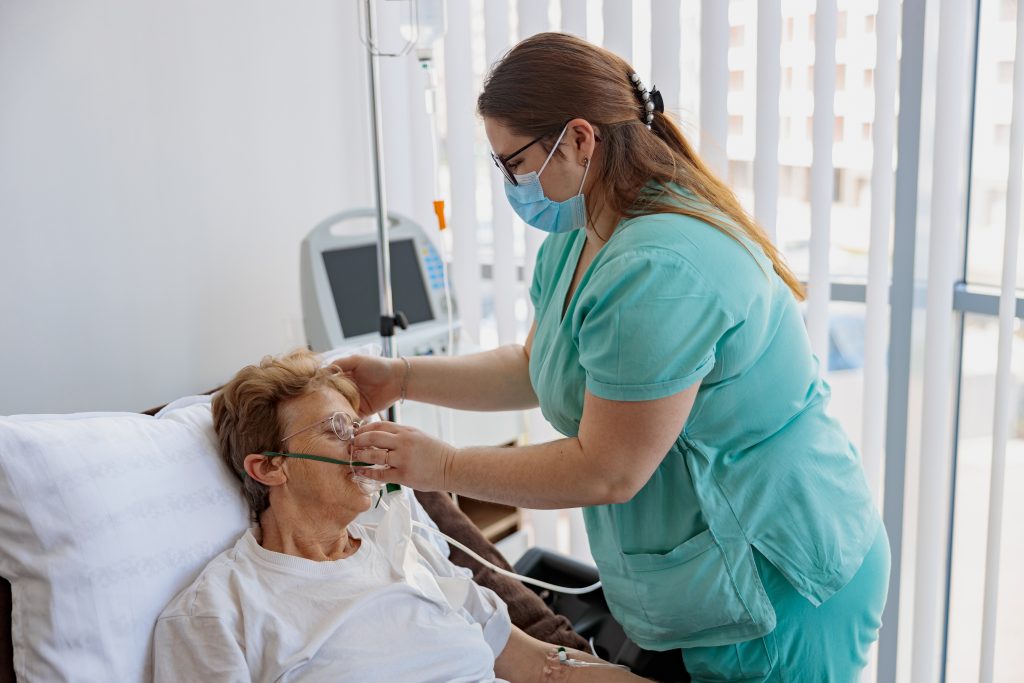
Top Nursing Schools & Programs in Arizona for 2026

Compare accredited BSN programs across Arizona by cost, outcomes, NCLEX prep, and more.

By Hannah Pierce, BSNReviewed by TopNursing.org TeamUpdated May 29, 202625+ min read
Top Nursing Schools in Arizona (2026 Rankings)

Points of interest…

  • Net price for Arizona BSN programs averages $11,100, ranging from $4,714 to $16,674.
  • Arizona RNs earn a median $85,530 annually, with Phoenix at $87,280 and Tucson at $82,410.
  • Accelerated BSN programs in Arizona can be finished in just 12 to 18 months.

With Phoenix and Tucson healthcare systems expanding rapidly, Arizona’s demand for BSN-prepared nurses continues to intensify. The median annual RN wage statewide sits at $85,530, though salaries in the Phoenix metro area top $87,280.

Our 2026 rankings evaluate nursing schools using three criteria that determine real value: net price after aid, graduation rates, and post-graduation earnings. These numbers, drawn from federal data, cut through marketing claims to show which BSN programs deliver the strongest return.

The same data set underpins the NCLEX pass rates and cost comparisons that follow. For students weighing six-figure tuition against a decade of loan payments, selecting a school with transparent outcomes isn’t optional: it’s survival.

Best Nursing Programs in Arizona, 2026 Rankings

Our 2026 rankings weigh affordability, student success, and career outcomes to spotlight the BSN programs that offer the strongest value for Arizona nursing students. Each entry includes the school's overall graduation rate as a benchmark, though individual program results may differ.

Factors considered
  • Net price and affordability
  • Institution-wide graduation rates
  • NCLEX first-time pass rates
  • Median graduate earnings
  • Program delivery flexibility
Data sources
RankSchoolLocationNet priceBest for
#1
University of Arizona
Tucson, AZ~$17,000/yr (est.)Outcome-driven nursing candidates

The University of Arizona's College of Nursing combines public-university value with a 94% first-time NCLEX pass rate, and its BSN programs are consistently recognized as top performers in the state. Students can choose between a conventional 24-month pathway in Tucson or an accelerated 15-16 month integrative health track in Gilbert with clinical rotations across the Phoenix metro. Post-graduation, alumni report the highest median earnings among ranked Arizona BSN programs, at $59,979 nationally after 10 years.

Bachelor of Science in Nursing (Conventional) — On-Campus
  • 24-month full-time pathway on the Tucson campus
  • Blends simulation, technology, and clinical placements
  • Consistently exceeds 90% first-time NCLEX pass rate
  • CCNE-accredited curriculum with summers off
  • Access to university research and healthcare networks
  • Supportive faculty and small-group clinical instruction
  • 15-16 month accelerated program in Gilbert, AZ
  • Hybrid online and in-person format for working students
  • Focus on holistic, patient-centered nursing practices
  • Clinical rotations throughout the Phoenix metropolitan area
  • High NCLEX success comparable to the conventional pathway
  • Prepares graduates for diverse integrative health settings

Arizona College of Nursing-Tempe delivers a focused, career-oriented 3-year BSN program with CCNE accreditation and a notably high 89% overall graduation rate. The campus prioritizes personalized attention and night class options, making it accessible for students balancing work or family obligations. With a median graduate debt of just $9,500, the program offers an exceptionally low financial entry point for a private nursing education.

Bachelor of Science in Nursing — On-Campus
  • Complete your BSN in as few as 3 years
  • CCNE-accredited program with state-of-the-art simulation labs
  • Night classes available for general education courses
  • Clinical rotations integrated throughout the curriculum
  • Personalized academic support and small cohort feel
  • Financial aid and scholarships accessible to most students
  • Foundational coursework in biology, development, and nursing

Northern Arizona University's BSN program stands out with its hybrid delivery model and emphasis on holistic, patient-centered care across multiple campuses. The school serves a high share of Pell Grant recipients and reports strong 10-year median earnings of $54,384. An accelerated 12-month pathway is available for students who already hold a bachelor's degree in another field, making it a practical choice for career-switchers who want a public-university education.

Bachelor of Science in Nursing — Hybrid
  • Four-and-a-half-year hybrid format with online and on-campus learning
  • Accredited by CCNE; prepares for NCLEX-RN licensure
  • Emphasizes leadership, quality improvement, and patient safety
  • Hands-on clinical experiences in diverse Arizona healthcare settings
  • Competitive admission with required pre-professional coursework
  • Multiple format options including compressed and global tracks
  • 12-month intensive program for bachelor's degree holders
  • Hybrid design with both online and on-campus components
  • Minimum 3.0 GPA required from previous degree
  • Clinical practice and leadership skill development embedded
  • Holistic care philosophy with a focus on rural and underserved populations
  • Available at the Flagstaff campus with CCNE accreditation

Pima Medical Institute-Mesa offers an accelerated nursing pathway through its campus-based associate degree, designed to get students into the workforce quickly. The program's 20-month length and 67% overall graduation rate reflect a practical, hands-on approach with clinical externships. Graduates carry a median debt of $9,500 and earn a median of $38,673 ten years out, presenting a solid return for an affordable investment.

Nursing Associate Degree Program — On-Campus
  • Complete in 20 months on the Mesa campus
  • Prepares you for the NCLEX-RN exam
  • Includes clinical externships for real-world experience
  • Covers anatomy, physiology, pharmacology, and patient care
  • Financial aid available for eligible students
  • Hands-on training with modern equipment and simulators
  • 100% online program for working registered nurses
  • Can be completed in approximately one year
  • Leadership and management focus for career advancement
  • Transfer up to 42 nursing credits
  • Evidence-based research and community health perspectives
  • No additional licensing required beyond your RN

Carrington College-Tucson provides a campus-based associate degree in nursing that emphasizes practical skill development and NCLEX-RN readiness. With an overall graduation rate of 66% and a retention rate of 79%, the program supports students through to completion. Graduates see a median 10-year earnings of $36,718, and the school serves a high proportion of Pell Grant recipients, indicating broad access for students with financial need.

Associate Degree in Nursing — On-Campus
  • Campus-based program in Tucson, AZ
  • Blends theory with hands-on clinical experience
  • Prepares students for the NCLEX-RN exam
  • Admission requires high school diploma or GED
  • Focus on patient care, procedures, and healthcare ethics
  • Financial aid options available for eligible students
  • Practical approach designed for real-world nursing demands
  • Online post-licensure program for working RNs
  • Complete the degree in as few as 15 months
  • Advanced nursing skills and leadership development
  • CCNE-accredited curriculum with flexible pacing
  • Ideal for nurses seeking career advancement
  • Builds on existing clinical experience with evidence-based practice

Aspen University focuses exclusively on graduate nursing education, with online MSN programs that cater to working professionals seeking administrative or specialized roles. The school maintains an ultra-low 3:1 student-faculty ratio and affordable tuition at $5,910 per year, appealing to cost-conscious nurses aiming to move into leadership. Its overall graduation rate of 27% reflects a non-traditional student body, while median graduate debt remains moderate at $15,756.

Master of Science in Nursing (Administration and Management) — Online
  • 100% online program with 8-week terms
  • Complete in about 2 years (36 credit hours)
  • Covers healthcare finance, strategic management, and legal issues
  • Requires BSN, active RN license, and 1 year of experience
  • Includes a 120-hour practicum and a capstone project
  • CCNE-accredited with federal financial aid and military discounts
  • Online program focusing on evidence collection and legal contexts
  • Same 36-credit, 2-year structure as other MSN tracks
  • Prepares RNs for roles in forensic investigation and consulting
  • Includes a 120-hour local practicum under preceptor supervision
  • Tuition of $17,100 with monthly payment plans available
  • Requires BSN, active RN license, and 1 year of nursing experience
  • Online specialization merging nursing with data and technology
  • Curriculum covers health informatics, data analysis, and security
  • 12 courses totaling 36 credits; projected 2-year completion
  • Includes a practicum and capstone for real-world application
  • Total estimated cost of $20,875 including fees and textbooks
  • Admission requires BSN, RN license, and 1 year of experience

Estrella Mountain Community College offers a highly affordable nursing pathway with an in-district tuition under $2,400 and a net price of $12,254. The campus-based Associate in Applied Science in Nursing prepares students for RN licensure in just four semesters, and its Concurrent Enrollment Program lets motivated learners earn both an AAS and a BSN simultaneously. With a recent three-year average NCLEX pass rate above 97%, graduates enter the workforce with minimal debt and solid job prospects.

Associate in Applied Science (AAS) in Nursing — On-Campus
  • Four-semester program on the Avondale campus
  • Prepares for RN licensure and NCLEX exam
  • Concurrent Enrollment Program option earns AAS and BSN
  • In-state tuition under $20,000 for the university portion
  • Requires health and safety documentation, CPR, and background check
  • Part of the Maricopa Nursing program network

Arizona College of Nursing-Phoenix mirrors the Tempe campus in offering a rapid 3-year BSN program, but its net price of $36,660 is the highest among ranked schools. The program remains accredited by CCNE and provides strong student support with night classes and advanced simulation technology. It may be best suited for students who value speed and a clear, structured schedule and are willing to invest more upfront for a private education.

3-Year BSN Program — On-Campus
  • Campus-based program with a 3-year completion timeline
  • CCNE-accredited with state-of-the-art simulation labs
  • Night class options for general education requirements
  • Personalized attention and small cohort sizes
  • Clinical rotations integrated into every semester
  • Financial aid and scholarships available for qualifying students

Mohave Community College provides the lowest net price in the ranking at $5,974, making it exceptionally affordable for in-district students. The campus-based AAS program serves a high Pell Grant population and includes clinical training that may extend into Las Vegas, broadening practical experience. Graduates earn a median of $35,522 after 10 years with a typical debt load of just $9,700, offering one of the strongest value propositions in Arizona.

Nursing - Registered Nursing - RN - A.A.S. — On-Campus
  • On-campus program with prerequisites in biology and chemistry
  • Requires a 2.85 GPA, TEAS test, and background clearance
  • Accredited by the National League for Nursing Accrediting Commission
  • Prepares you for the NCLEX-RN exam and RN licensure
  • Hands-on clinical training, including possible Las Vegas rotations
  • Emphasizes computer literacy and modern nursing technology
  • Affordable in-district tuition at $2,208 per year

Grand Canyon University's pre-licensure BSN program is built on a evidence-based, holistic nursing philosophy with a strong emphasis on ethical practice and leadership. The campus-based program in Phoenix prepares students for the NCLEX-RN through immersive simulations and clinical practice. With a net price of $22,472 and 10-year median earnings of $42,186, it represents a balanced private-university option, though its 43% overall graduation rate signals that student support remains an area of focus.

Bachelor of Science in Nursing — On-Campus
  • Campus-based pre-licensure program in Phoenix
  • Emphasizes holistic, evidence-based nursing practices
  • Hands-on clinical practice and immersive simulation labs
  • Strong focus on critical thinking and ethical decision-making
  • Leadership development and patient safety integrated throughout
  • Prepares students for the NCLEX-RN exam
  • Admission criteria include specific prerequisites and a competitive GPA

How We Ranked Arizona Nursing Schools

A ranking based on reputation might admire a school’s history. Ours measures what students actually pay and earn.

The Weighted Criteria

We built a composite score from four equally weighted factors, each pulled from the latest federal data:

  • Net price after aid: What the typical in-state undergrad pays after grants and scholarships. This captures real affordability, not sticker shock.
  • Institution-wide graduation rate: The percentage of full-time, first-time students who finish within 150% of expected time. A higher rate signals strong support systems that nursing students also benefit from.
  • Program-level median earnings (1‑year and 4‑year): Using College Scorecard figures for nursing majors, we look at median earnings one year after graduation (a proxy for early career traction) and four years out (longer-term return). We average the two to reward programs that deliver both quick employment and durable salary growth.
  • Online or campus flexibility: Schools earn a small bonus if they offer a fully online RN‑to‑BSN track or if a pre‑licensure BSN has hybrid or remote coursework, acknowledging that flexibility matters for working nurses.

Each metric is standardized, so no single factor runs away with the ranking. We then rank schools by their total score.

What We Left Out (and Why)

You will notice that NCLEX pass rates, clinical hour totals, and admissions selectivity are not part of our formula. Those are critical for licensure readiness, but they are discussed separately in each school’s profile and in our NCLEX comparison table. A sky‑high pass rate at an expensive private school might not serve a student who needs a low‑cost, high‑return pathway. We treat NCLEX as a threshold (schools must be accredited) rather than a scoring input.

Why Transparency Matters

Scan the search results for “best nursing schools in Arizona” and you will seldom find a clear explanation of how rankings were built. That lack of transparency erodes trust. By laying out every weighting, data source, and exclusion, we give you the tools to decide if our priorities align with yours. All figures come from the U.S. Department of Education’s College Scorecard and IPEDS, using the most recent snapshot available as of May 2026. No school pays for placement, and no subjective reputational surveys influence the order.

Arizona BSN Program Cost Comparison

Among the ranked nursing schools in Arizona, the average net price after financial aid is about $11,100, but costs span from as low as $4,714 at Central Arizona College to $16,674 at University of Arizona. These net price figures are institution-wide averages, so what you actually pay as a nursing student could be higher or lower depending on your financial aid package.

SchoolIn-State TuitionOut-of-State TuitionNet Price (After Aid)Type
Central Arizona College$2,250$4,500$4,714Public
Mohave Community College$2,208$7,968$5,974Public
Yavapai College$2,948$9,486$8,683Public
Arizona Western College$3,060$9,870$8,983Public
Eastern Arizona College$2,352$9,552$9,197Public
Northland Pioneer College$2,664$10,320$9,240Public
Glendale Community College$2,358$8,959$11,650Public
Phoenix College$2,358$8,959$12,055Public
Mesa Community College$2,358$8,959$12,132Public
Estrella Mountain Community College$2,358$8,959$12,254Public
Scottsdale Community College$2,358$8,959$13,336Public
GateWay Community College$2,358$8,959$13,339Public
Coconino Community College$3,473$9,987$13,996Public
Northern Arizona University$12,619$20,044$14,158Public
University of Arizona$13,573$39,903$16,674Public

Questions to Ask Yourself

Some Arizona BSN programs with modest sticker prices report NCLEX pass rates below 80%, while higher-cost universities often exceed 90%. A gap like that can delay licensure and income, offsetting upfront savings.

Accelerated programs condense clinical hours and coursework, meaning you enter the workforce faster, but tuition per credit can be 20 to 40% higher. Weigh lost income during a longer program against higher loan payments afterward.

Several Arizona institutions now offer hybrid BSN paths with online coursework and local clinical placements. If relocating to a campus isn't feasible, confirming a program's clinical site availability in your region is essential before enrolling.

NCLEX Pass Rates for Arizona Nursing Programs

What do NCLEX pass rates tell you about an Arizona nursing program's quality and your future success?

Why First-Time Pass Rates Matter

NCLEX-RN first-time pass rates are the most transparent quality indicator for nursing schools. They measure the percentage of a program's graduates who pass the licensing exam on their first attempt. Since you cannot work as a registered nurse without this license, a school's pass rate directly reflects how well it prepares students for the test and for entry-level nursing practice.

A consistently high pass rate suggests strong instruction, robust clinical training, and effective exam preparation. Conversely, a low or declining rate can signal gaps in curriculum, inadequate student support, or admission standards that do not align with the program's rigor.

What's Considered a Strong Pass Rate?

In 2024, the national first-time NCLEX-RN pass rate for U.S.-educated students was 91.16%.1 This benchmark helps you evaluate individual programs. While no single number defines excellence, many quality programs consistently exceed 90%. Some reach 95% or higher.

A pass rate below 80% is a red flag. It indicates that at least one in five graduates fails the licensing exam on the first try, potentially delaying their career and adding retake fees. When assessing a school, look for stable or improving pass rates over multiple years, not just one good cohort.

How to Find Arizona-Specific Data

The Arizona State Board of Nursing (AZBON) publishes annual NCLEX pass rate reports for all approved nursing programs in the state. Their publications break down results by school and degree type, including BSN programs. To check the latest figures, visit the AZBON website and look for the most recent NCLEX Performance Report, typically released in the first quarter of the year for the previous year's data.

Because pass rates can fluctuate, review at least two years of data when possible. Some schools publish their own pass rates on their websites, but always verify against the official AZBON reports for accuracy.

A Note on the 2024-2025 Data Cycle

AZBON's reporting cycle may lag by a few months as they validate results. When you research programs, confirm the data year and whether the figures represent all first-time test-takers or only those who graduated within a specific timeframe. Always use the most recent state board data available to make informed comparisons.

What Arizona BSN Graduates Earn After Graduation

When evaluating nursing school value, two earnings pictures matter. The first is program-specific graduate data, which shows what completers of a particular BSN program earn in their first years after school. The second is occupational wage data, which reflects what all RNs in a state make, no matter where they trained. For Arizona BSN programs, graduate-level earnings data are not currently available, but statewide RN wage figures offer a reliable earnings baseline.

Arizona RN Salaries at a Glance

According to the Bureau of Labor Statistics, registered nurses in Arizona earned a median annual wage of $96,890 in 2024. Pay spans a wide range: the lowest 10% of earners made about $69,930, while the highest 10% exceeded $123,480. For comparison, the national median for RNs sat at $93,600, making Arizona’s figure roughly 3% higher than the U.S. midpoint.

Earnings also shift by metro area. The Phoenix-Mesa-Chandler and Tucson regions, which employ the bulk of Arizona’s nurses, typically report median wages above the state average, reflecting higher demand and cost of living. Exact metro figures vary with each BLS release, but graduates targeting those markets can expect pay on the higher side of the range.

What This Means for New BSN Graduates

Entry-level RNs often land near the lower end of the pay scale. A new BSN graduate in Arizona might start in the $70,000 to $80,000 range, with rapid growth as they gain experience or pursue specialties like critical care or perioperative nursing. Those who move into advanced roles, such as nurse management or clinical nurse specialist positions, can push earnings toward the 90th percentile and beyond.

It is also worth remembering that BLS figures capture base salary only. Shift differentials, overtime, on-call pay, and signing bonuses, all common in nursing, can add thousands to annual take-home pay and are not reflected in these medians.

As you weigh Arizona nursing schools, treat these statewide numbers as a floor for your career earning potential. When program-level graduate earnings data become available, they will allow a finer comparison of how specific schools influence short-term pay outcomes.

Arizona RN Salary Snapshot

In Arizona, RNs earn a median annual wage of $85,530, with Phoenix metro topping $87,280 and Tucson at $82,410. Nationally, the median is $86,070, and the field is projected to grow 6% through 2033.

Median RN salary in Arizona ($85,530), Phoenix ($87,280), Tucson ($82,410), and national ($86,070), per BLS May 2023.

Online vs On-Campus BSN Options in Arizona

Arizona nursing schools offer several paths to a BSN, from traditional on-campus programs to accelerated and hybrid formats. While fully online BSN options are scarce, many programs incorporate online coursework, but all require in-person clinical hours to meet state licensing requirements.

Traditional On-Campus BSNAccelerated BSNHybrid BSNFully Online BSN
Typical Duration2-4 years depending on transfer credits12-16 months (for students with a previous bachelor's degree)4-4.5 years (includes pre-professional courses)
FlexibilityFixed on-campus schedule; little remote courseworkIntensive, full-time format with little flexibility; often cohort-basedMix of online coursework and periodic on-campus sessions
In-Person Clinical Hours600+ hours (e.g., University of Arizona requires over 600 hours)Varies by program (Grand Canyon University: 56 hours; others may have more)Similar to traditional BSN hours
Best ForStudents who prefer structured, hands-on learning on campusCareer changers with a bachelor's degree who want to transition quicklyWorking adults or students who need some flexibility but value occasional in-person instruction
Example Arizona SchoolsUniversity of Arizona, Grand Canyon University, Arizona College of NursingArizona State University (12 months), Grand Canyon University (16 months)Northern Arizona University

How to Get a BSN in Arizona: Step-by-Step

A traditional BSN takes about four years, while accelerated programs for those with a prior degree can be finished in 12 to 18 months. Every pathway ends with the same state requirements: pass the NCLEX-RN and secure an Arizona RN license, which includes a mandatory fingerprint clearance card.

Six-step pathway to earn a BSN and become a registered nurse in Arizona, from prerequisites through state licensure.

Getting Into an Arizona BSN Program: Admission Requirements

Gaining admission to a BSN program in Arizona is often far more competitive than the university’s overall acceptance numbers suggest. While the University of Arizona reports an institution-wide acceptance rate around 86%, its nursing cohorts are significantly more selective. Northern Arizona University’s overall acceptance rate hovers near 90%, yet the nursing major requires a separate, competitive application. This disconnect means students must prepare for a process that goes well beyond general university admission standards.

Prerequisite Coursework and GPA Expectations

BSN programs across the state require a strong foundation in science and math. Nearly all expect completion (with a grade of C or higher) of prerequisites including anatomy and physiology, microbiology, chemistry, and statistics. Some also mandate nutrition, lifespan development, or psychology. GPA requirements vary widely: some private schools like Arizona College of Nursing may consider applicants with a minimum 2.75 GPA, while public universities set higher bars. Arizona State University’s direct-admit BSN program typically requires a 3.80 core GPA, though applicants with a 3.50 and a top-10% class rank (or ACT 25 / SAT 1230) may qualify. The University of Arizona and Northern Arizona University publish similar prerequisite GPAs in the 3.2 to 3.5 range for competitive consideration, though official minimums may be lower.

Entrance Exams and Additional Requirements

Many programs require the TEAS (Test of Essential Academic Skills) or HESI exam. Minimum scores vary; a TEAS composite of 65% to 75% is common, but applicants with stronger GPAs may edge out lower scores. Additional requirements often include a criminal background check, drug screening, CPR certification, and proof of immunizations. Some schools (like Arizona College) maintain a 100% acceptance rate for qualified applicants who meet all admissions criteria, but this does not reflect the selectivity of the nursing core once enrolled. Transfer students should note that space is limited, and many programs only accept a small cohort each fall or spring.

Why Accreditation and Clinical Placements Matter

Not all nursing programs are accredited equally. The two main national accreditors are the Commission on Collegiate Nursing Education (CCNE) and the Accreditation Commission for Education in Nursing (ACEN). Arizona State University, University of Arizona, and Northern Arizona University all hold CCNE accreditation. Graduating from an accredited program is essential for RN licensure and may affect employment or graduate school eligibility. Additionally, verify that the Arizona Board of Nursing has approved the program; this is a separate, required step. Clinical site partnerships can elevate a program’s quality. Schools affiliated with major healthcare systems like Banner Health, Dignity Health, or Tucson Medical Center often offer more robust clinical rotations and preceptorships, giving students a competitive edge in the job market.

Arizona is projected to face a shortage of 30,000 nurses by 2025, according to Nightingale College's nursing shortage analysis.

Frequently Asked Questions About Arizona Nursing Schools

Choosing a nursing school is a big decision. Below, we answer the most common questions prospective students in Arizona ask about accredited BSN programs, costs, timelines, prerequisites, and more. For detailed comparisons, check the rankings and cost tables earlier in this article.

What are the best nursing schools in Arizona?
Arizona has several top-tier nursing schools, including Arizona State University, University of Arizona, and Northern Arizona University. Rankings earlier in this article consider NCLEX pass rates, graduation rates, and student outcomes. For a complete list with scores, see the 2026 rankings section. Community colleges and private institutions like Brookline College also offer accredited programs worth exploring.
How much does nursing school cost in Arizona?
Tuition varies widely. Public university BSN programs typically range from $20,000 to $40,000 for in-state students, while private schools may cost $60,000 or more. Our cost comparison table breaks down estimated total program expenses for each ranked school, including fees and supplies. Financial aid, scholarships, and loan forgiveness programs can reduce out-of-pocket costs.
How long does it take to get a BSN in Arizona?
A traditional BSN generally takes four years of full-time study. Accelerated programs for students with prior college credits can be completed in 12 to 18 months. Part-time and online tracks may extend the timeline. The step-by-step infographic earlier outlines typical pathways and timelines for earning a BSN in Arizona.
What NCLEX pass rate should I look for when choosing a nursing school?
Aim for schools with consistent NCLEX first-time pass rates above 85 percent. That indicates strong preparation. Arizona's top programs exceed 90 percent. The article's dedicated section lists recent NCLEX pass rates for BSN graduates in Arizona. A rate trending upward is a good sign, but also consider clinical placement quality and student support services.
Can I complete a BSN online in Arizona?
Yes, several Arizona schools offer hybrid or fully online BSN programs, especially for RN-to-BSN or accelerated tracks. However, pre-licensure BSN programs still require in-person clinical rotations. Check the online vs. on-campus comparison section for details on flexibility and which universities offer remote coursework options.
What are the prerequisites for nursing school in Arizona?
Typical prerequisites include anatomy, physiology, microbiology, chemistry, statistics, and nutrition, plus a minimum GPA often around 2.75-3.0. Many programs require TEAS or HESI entrance exams, a background check, and CPR certification. The admission requirements section earlier provides a detailed checklist and school-specific variations.
Does Arizona have a nursing shortage?
Yes, Arizona faces a significant nursing shortage due to rapid population growth and an aging workforce. The state projects thousands of annual openings for RNs. This demand translates to abundant job opportunities for BSN graduates, often with competitive salaries and signing bonuses, as highlighted in the salary snapshot section.

All RN Programs in Arizona by City

Beyond the top 10 programs, Arizona has many additional nursing schools worth exploring. The directory below lists all remaining RN programs across the state, organized by city to help you find options near you.

Phoenix Area

GateWay Community College
Offers an ACEN-accredited Associate in Applied Science (AAS) in Nursing on campus in Phoenix. Includes clinical experiences and prepares graduates for RN licensure. Net price approximately $13,339.
  • Associate in Applied Science (AAS) in Nursing
Phoenix, AZ · On-Campus
Brookline College-Phoenix
Provides an accelerated 3-year Bachelor of Science in Nursing with a blend of online and on-campus learning. Prepares for the NCLEX-RN; net price approximately $30,072.
  • Bachelor of Science in Nursing
Phoenix, AZ · On-Campus
Phoenix College
Earn an ACEN-accredited Associate in Applied Science in Nursing on campus. Prepares graduates for RN or LPN roles in various healthcare settings. Net price around $12,055.
  • Associate in Applied Science (AAS) in Nursing
Phoenix, AZ · On-Campus
Carrington College-Mesa
Offers an Associate Degree in Nursing on campus and an online RN to BSN program. The associate program focuses on practical skills for quick workforce entry; net price $48,877 for the campus program.
  • Associate Degree in Nursing
  • Bachelor of Science in Nursing (RN to BSN)
Mesa, AZ · On-Campus & Online
Mesa Community College
Gain an ACEN-accredited Associate in Applied Science in Nursing on campus. Includes hands-on clinical experiences and preparation for RN licensure. Net price approximately $12,132.
  • Associate in Applied Science in Nursing
Mesa, AZ · On-Campus
Scottsdale Community College
Pursue an ACEN-accredited Associate in Applied Science in Nursing on campus. Emphasizes safety, quality care, and evidence-based practice. Net price about $13,336.
  • Associate in Applied Science (AAS) in Nursing
Scottsdale, AZ · On-Campus
Arizona State University
Earn a Bachelor of Science in Nursing online through ASU's flexible program. Ideal for working students, with financial aid options; net price data not available.
  • Nursing, BSN
Scottsdale, AZ · Online
Glendale Community College
Complete an ACEN-accredited Associate in Applied Science in Nursing on campus. Curriculum covers patient care, legal/ethical standards, and teamwork. Net price around $11,650.
  • Associate in Applied Science (AAS) in Nursing
Glendale, AZ · On-Campus

Tucson Area

Pima Medical Institute-Tucson
Provides a 20-month Associate Degree in Nursing on campus, preparing students for the NCLEX-RN. Hands-on training included; net price data not available.
  • Associate Degree Nursing
Tucson, AZ · On-Campus
Arizona College of Nursing-Tucson
Offers a 3-year BSN program with no prerequisites required. CCNE-accredited with evening classes, hands-on labs, and clinical rotations. Net price approximately $37,136.
  • Baccalaureate Degree Program in Nursing
Tucson, AZ · On-Campus

Northern Arizona

Coconino Community College
Earn an Associate of Applied Science in Nursing in Flagstaff. Four-semester program includes clinical experience and preparation for the NCLEX-RN. Net price around $13,996.
  • Nursing
Flagstaff, AZ · On-Campus
Yavapai College
Complete an Associate of Applied Science in Nursing in Prescott. 44.5-credit, four-semester program with hands-on clinical training; net price approximately $8,683.
  • Associate of Applied Science in Nursing
Prescott, AZ · On-Campus

Central Arizona

Central Arizona College
Join a competitive Associate degree nursing program in Coolidge, with starts in fall and spring. ACEN-accredited, GPA 2.75 required; net price about $4,714.
  • Nursing (AAS)
Coolidge, AZ · On-Campus

Western Arizona

Arizona Western College
Earn an Associate Degree in Nursing in Yuma. Campus-based program accredited by ACEN, focusing on rural healthcare. Net price approximately $8,983.
  • Associate Degree in Nursing
Yuma, AZ · On-Campus

Eastern Arizona

Eastern Arizona College
Pursue an Associate of Applied Science in Nursing in Thatcher. ACEN-accredited program with concurrent enrollment options to BSN programs. Net price about $9,197.
  • Associate of Applied Science in Nursing
Thatcher, AZ · On-Campus

Recent Articles