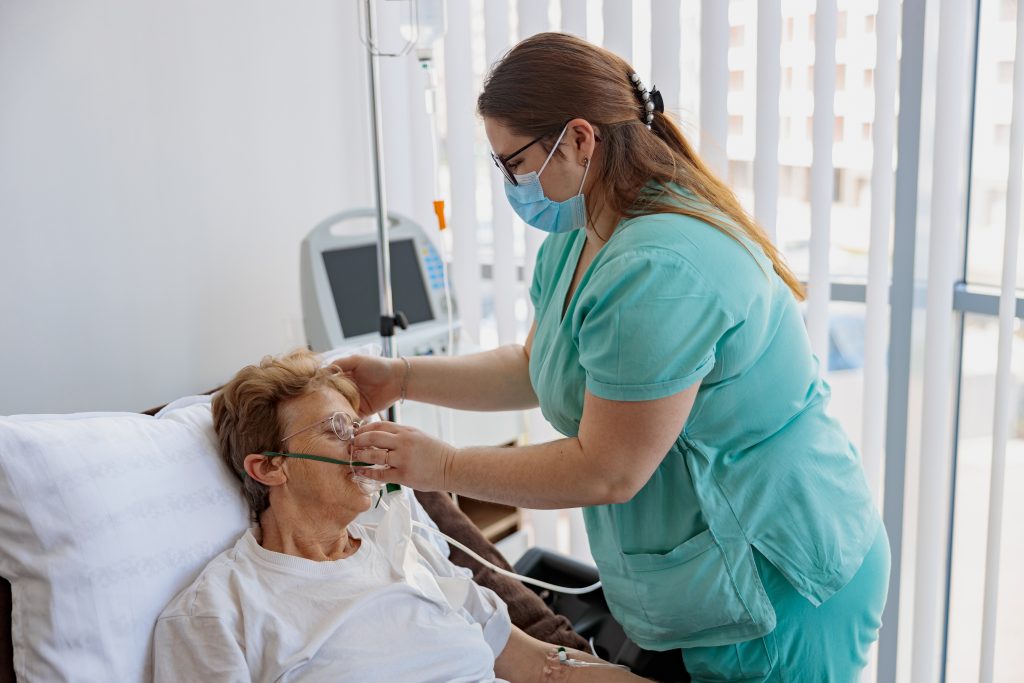
Top CNA Programs in Tennessee for 2026

Compare costs, program length, and outcomes at Tennessee's highest-rated CNA training schools.

By Hannah Pierce, BSNReviewed by TopNursing.org TeamUpdated May 29, 202620 min read
Top CNA Programs in Tennessee (2026 Rankings)

At a Glance

  • The 2026 ranking of Tennessee CNA programs emphasizes net price, graduation rates, and student earnings.
  • CareRite Centers and Ballad Health offer free CNA training in 2026 with a one-year work commitment.
  • Tennessee CNAs earn a median $36,750 annually, with strong demand in metropolitan areas like Nashville.
  • Passing Headmaster’s two-part clinical and written exam is required for state certification.

Tennessee’s healthcare employers continue to hire CNAs at a strong pace, and accelerated programs now put certification within reach in five to eight weeks. While some coursework can be completed online, state rules still require in-person clinical hours, a bottleneck that shapes program availability.

Net prices across the programs ranked here run from $4,270 at Roane State Community College to $24,345 at Southern Adventist University, with several TCAT campuses charging under $1,250 in total tuition and fees. Because clinical placements are capped, the cheapest seats often fill months ahead; the best program for you may be the one with an open slot when you’re ready to enroll.

2026 Best CNA Programs in Tennessee

This ranking evaluates Tennessee CNA programs through an affordability-weighted lens, emphasizing net price, financial aid, and student outcomes like graduation rates and earnings. Programs are scored based on cost, completion metrics, and workforce readiness. The result is a practical list for budget-conscious nursing students.

Factors considered
  • Net price and affordability
  • Institutional graduation rates
  • Graduate earnings data
  • Program structure and length
  • Student-faculty ratios
Data sources
RankSchoolLocationNet priceBest for
#1
Tennessee College of Applied Technology-Harriman
Harriman, TN$10,000 – $15,000/yrHybrid learners on a budget

TCAT Harriman's CNA program is an affordable, state-approved pathway with a blend of online didactic work and on-campus clinical training. The institution reports a net price of $11,148 and an overall graduation rate of 69%. The 120-hour program can be completed in about two months, with evening classes to accommodate working students.

Certified Nursing Assistant — On-Campus
  • 120-hour state-approved certificate program
  • Part-time evening classes fit work schedules
  • Completion qualifies for TN certification exam
  • $1,249 tuition plus $324 for books/supplies
  • 2-month length for rapid entry into workforce
  • On-campus clinical training included
  • Online coursework available for didactic portion

TCAT Oneida-Huntsville provides a highly personalized CNA experience with a student-faculty ratio of just 7:1 and an institutional graduation rate near 74%. The campus-based Nursing Aide program costs $576 in tuition, with a net price of $15,875, and opens doors to diverse healthcare settings. Day classes include 40 hours of clinical training in real care facilities.

Nursing Aide — On-Campus
  • 120-hour program with 40 clinical hours
  • $576 total tuition, $179 for textbooks
  • Daytime classes on the Oneida campus
  • Hands-on training in assisted living and hospitals
  • Small 7:1 student-faculty ratio for individual attention
  • State-approved for TN CNA exam eligibility

TCAT Knoxville's Nursing Aide program is designed for working adults with day and night class options across multiple campus locations in Knoxville and Maryville. At a net price of $20,012 and an institutional graduation rate of 71%, it offers flexibility without sacrificing training quality. The fast-track format includes 120 clock hours and costs approximately $850 all-in.

Nursing Aide — On-Campus
  • 2-month fast-track certificate program
  • 120 clock hours including clinical training
  • $591 tuition; estimated total cost $850
  • Day and evening classes for maximum flexibility
  • Multiple campus locations in Knoxville and Maryville
  • Background check and drug screen required for admission
  • Prepares graduates for state CNA test
  • Financial aid may be available for eligible students

Dyersburg State Community College offers a highly affordable CNA program with a net price of just $4,612 and 90% of students receiving Pell Grants. The institution-wide graduation rate of 34% reflects the open-access mission, and graduates see median earnings of $36,132. The program is a 3-credit course covering patient care fundamentals and documentation.

Certified Nursing Assistant — On-Campus
  • 3-credit course with classroom and clinical components
  • Training covers patient confidentiality and documentation
  • Focus on diverse healthcare settings and patient rights
  • Develops practical skills for direct patient care
  • Ideal for quick entry into nursing assistant roles
  • Campus-based delivery in Dyersburg

Roane State's Clinical Nurse Aide program has over 20 years of experience and a low net price of $4,270, with 90% of students receiving Pell Grants. The institution reports a graduation rate of 36% and graduates earn a median of $39,407. Campus-based training integrates Tennessee licensure preparation.

Clinical Nurse Aide (CNA) with Tennessee State Licensure — On-Campus
  • Program includes Tennessee state licensure preparation
  • Instructors with extensive healthcare experience
  • Campus-based hands-on training
  • Part of an established healthcare education division
  • Over 20 years of CNA education experience
  • Suitable for career changers and new graduates
  • Prepares for entry-level patient care roles

Walters State Community College in Morristown provides a swift path to CNA certification with a program completed in less than 12 weeks, meeting Tennessee's 75-hour requirement. The net price is $5,387, and the institution-wide graduation rate is 33%. The program includes vital sign monitoring, patient hygiene, and direct care skills.

Certified Nursing Assistant (C.N.A.) — On-Campus
  • Less than 12-week training program
  • State-approved certification preparation
  • 75-hour comprehensive curriculum
  • Direct patient care skills training
  • Multiple healthcare employment settings
  • Graduates eligible for TN certification exam
  • Training in vital signs and personal hygiene assistance
  • $899 program fee plus $123 textbook
  • 35 hours of clinical experience included
  • Must be at least 18 years old to enroll
  • CPR certification and TB test required
  • State exam fee of $140 not included
  • Clinical training in scrubs required
  • Prepares for Tennessee nurse aide licensure

Miller-Motte College in Chattanooga is a private career college with a 5-week accelerated CNA program that accepts students on a rolling basis every five weeks. The net price is $23,958, and the institution reports a 60% graduation rate. Graduates earn a median of $31,102, and the school offers career services and financial aid.

Certified Nursing Assistant — On-Campus
  • 5-week accelerated certificate program
  • 120 clock hours of intensive training
  • Rolling admissions every five weeks
  • Hands-on campus-based training
  • Prepares students for state CNA exams
  • Financial aid and career services available
  • Covers patient safety and HIPAA compliance
  • Curriculum includes medical terminology

Southern Adventist University offers a distinctive hybrid Clinical Nurse Aide program with online didactic coursework and local clinical rotations in Tennessee, lasting 4-6 months. The net price is $24,345, but graduates see high median earnings of $53,723. The institution has a 49% graduation rate and a strong 83% retention rate.

Clinical Nurse Aide — On-Campus
  • 4-6 months program length
  • $2,000 total tuition
  • NRSA and CCMA certifications included
  • High school diploma required for admission
  • 100% online with in-person clinical rotations
  • No prerequisite courses needed
  • Expert-led video training
  • National certification exam included

How to Become a CNA in Tennessee: Step-by-Step

The path from zero experience to working CNA in Tennessee typically spans 4 to 12 weeks, depending on the program’s pace and format. Here is a step-by-step timeline of what to expect.

Step-by-step timeline for becoming a CNA in Tennessee: meet eligibility, complete state-approved training, pass the exam, and register with the state, 2026.

Tennessee CNA Training Requirements

State regulations establish a 75-hour floor for CNA programs in Tennessee, but many schools exceed that benchmark, providing extra clinical practice or classroom instruction. That contrast matters because where you train can shape how prepared you feel on day one of the job.

Mandatory Training Hours

Tennessee requires all CNA training programs to include a minimum of 75 total hours. Of those, at least 16 hours must be supervised clinical training in a long-term care facility. This mirrors the federal minimum set by the Omnibus Budget Reconciliation Act (OBRA) of 1987. While the state does not demand more than the federal floor, program graduates still need to demonstrate competence through a state-administered competency exam before they can be listed on the Nurse Aide Registry.

Prerequisites for Enrollment

Before starting a program, students must meet several non-academic requirements:

  • Age: You must be at least 18 years old.
  • Education: A high school diploma or GED is not mandatory, but programs may have their own academic readiness standards.
  • Criminal background check: Every applicant undergoes a state and federal fingerprint-based background check. Tennessee law disqualifies individuals with felony convictions for abuse, neglect, or misappropriation of property, though other offenses are reviewed case by case.
  • Health screening: A physical exam, a negative tuberculosis (TB) test, and proof of hepatitis B vaccination (or a signed declination) are required. Many programs also mandate a drug screening.

What Makes a Program State-Approved?

A state-approved CNA program is one that appears on the Tennessee Department of Health’s list of approved nurse aide training providers. Only these programs satisfy the licensing board’s curriculum standards and clinical site agreements. Completing a non-approved program, even one that covers the same material, will not qualify you to sit for the competency exam. The Department of Health audits programs regularly to ensure instructors, facilities, and curricula remain compliant.

Beyond the Minimum: Variable Program Lengths

Although 75 hours is the baseline, many community colleges, technical schools, and healthcare employers offer programs that stretch to 100, 120, or even 150 hours. Longer programs often weave in additional lab time, more diverse clinical rotations, or soft-skills workshops. For a student weighing cost and speed against depth of preparation, this variation is worth investigating upfront. Employers sometimes prefer graduates from extended programs because those candidates tend to need less remediation on the job. Checking a program’s total hours and clinical structure before enrolling can make a tangible difference in your first months as a nursing assistant.

CNA Certification and Licensing in Tennessee

Passing a state-approved training program is only half the battle; the real gatekeeper for Tennessee CNAs is the two-part competency evaluation administered by Headmaster. Even well-prepared graduates can struggle if they underestimate the clinical skills demonstration or the time pressure of the knowledge test. Understanding the exam structure, registration logistics, and what comes after you pass helps you move from student to certified nursing assistant without unnecessary delays.

The Competency Evaluation

Tennessee uses D&S Diversified Technologies, operating as Headmaster, to assess new CNAs. The exam has two components that you must schedule and pass separately: a written (or oral) knowledge test and a hands-on skills evaluation.

  • Knowledge test: 100 multiple-choice questions covering basic nursing concepts, safety, infection control, and resident rights. You have 90 minutes and must score at least 75%. If you have difficulty reading English, you can request an oral version.
  • Skills test: You will be graded on five randomly selected clinical skills. You have 35 minutes and must perform each skill with at least 80% accuracy, including every required key step. Even minor omissions can cause a failure, so practice precisely as your program taught you.

The total exam fee is $98, $30 for the knowledge portion and $68 for the skills, and you have up to 24 months from your training completion date to pass both parts. If you fail one section, you can retake just that portion, but Headmaster limits retest attempts to three before you must retrain.

Registering and Test-Day Essentials

Create an account on the Headmaster website, select your training program, and pay the fees online. Testing centers are located across Tennessee, including sites in Knoxville, Nashville, Memphis, and Chattanooga. Schedule early because high-demand slots fill weeks ahead. On test day, bring your Headmaster admission ticket, a valid government-issued photo ID, and your social security card. Wear a clean, short-sleeved uniform top, closed-toe non-skid shoes, and minimal jewelry. You are also expected to bring a wristwatch with a second hand for the skills test, digital or smart watches are not allowed.

After the Exam: The Tennessee Nurse Aide Registry

Once you pass both portions, Headmaster forwards your results to the Tennessee Department of Health, which places your name on the Nurse Aide Registry within about 10 business days. No additional state application fee exists beyond the exam costs. Employers verify your active status through the online registry, so keep your name and address current with the department.

Statewide pass-rate statistics are not centrally published, but many training programs track their graduates’ first-time success. If pass rates matter to you, ask a school for its recent outcomes before you enroll.

Maintaining Active Certification

Tennessee requires CNAs to renew their registration every 24 months. To stay active, you must have worked at least eight hours as a paid nursing assistant during that two-year window. Qualifying employment includes work in a licensed nursing home, hospital, or home health agency. If you fall short of the eight-hour minimum, your certification lapses, and you must retake the competency exam. There is no continuing education requirement for renewal, but any formal in-service training you receive at work can strengthen your resume.

Transferring an Out-of-State CNA License

CNAs who hold an active, unencumbered certification in another state can apply for reciprocity to join the Tennessee Nurse Aide Registry. Submit a completed endorsement application, a $20 processing fee, and verification of your current license from the other state’s registry. Tennessee does not accept endorsements from Florida because Florida’s registry does not meet Tennessee’s equivalency standards. If you have been out of practice longer than two years, you may need to retrain or re-test, regardless of your out-of-state status.

Questions to Ask Yourself

Aligning class times with your current commitments prevents burnout and scheduling conflicts.

Close proximity reduces commute stress and frees time for study and hands-on practice.

Some Tennessee employers cover CNA training in exchange for a work commitment, saving you thousands.

Choosing a school with credit transfers or bridge options avoids duplicating courses if you advance.

Online and Hybrid CNA Programs in Tennessee

The Reality of Online CNA Training in Tennessee

When you look for online CNA programs in Tennessee, you won't find a fully remote option. The state requires every nursing assistant candidate to complete hands-on clinical hours in a licensed healthcare facility. That means programs can move the lecture portion online, but skill practice and patient care experience must happen in person. Most of the programs in our ranking reflect this: schools like Tennessee College of Applied Technology-Harriman, Dyersburg State Community College, and Roane State Community College are campus-based, with classes meeting on a set schedule. However, some programs incorporate digital learning tools or self-paced lectures to reduce time in the classroom. Southern Adventist University, for example, describes its clinical nurse aide program as "100% online with clinical rotations." While the didactic portion is delivered through video lectures and online modules, students still report to a clinical site for the required lab and patient-care hours.

What Hybrid Means for Your Schedule

A hybrid CNA program splits training into two parts. You study topics like infection control, patient rights, and basic nursing skills through an online platform, watching videos, taking quizzes, and reading on your own time. Then you attend scheduled clinical shifts at a partner nursing facility, usually a long-term care center or hospital. The balance varies by school. Some compress clinicals into a few full-day weekends; others spread them over several weeks.

The programs listed on this page are predominantly campus-based, so if you're seeking a true hybrid option, you'll need to look closely at the program description or contact the admissions office directly. Southern Adventist is one clear example where the listed highlights indicate an online component, though it still culminates in in-person clinical training.

Pros and Cons of the Hybrid Format

  • Flexibility: Online coursework lets you learn when it fits your life, which is ideal for parents or people working a day job.
  • Reduced commuting: You save time and transportation costs by not driving to campus for lectures.
  • Self-discipline required: Without set class times, you must manage your own study schedule or risk falling behind.
  • Clinical scheduling: You still have to block out in-person hours, which may be limited to specific times or locations. If the clinical site is far, that can add travel time.
  • Partnerships vary: Many programs partner with local nursing homes or hospitals. The quality and distance of that clinical site can make a big difference, so ask where you'll do your hands-on training before you enroll.

For working adults, the online theory portion can be a major plus, but it's not a shortcut. You'll still need to complete every required clinical hour, usually 40 to 60 hours total, under the supervision of a licensed nurse.

Most Affordable CNA Programs in Tennessee

Several Tennessee nursing homes and healthcare systems offer free CNA training in 2026, often in exchange for a work commitment. CareRite Centers provides a three-week program at no cost with a one-year full-time commitment, while Ballad Health delivers a 100-hour hybrid program. Memphis Jewish Home & Rehab, NHC, and Tennessee State Veterans' Homes also waive tuition, and state policy under the Tennessee Department of Health supports free training and testing for candidates employed by skilled nursing facilities. For those seeking a college-based path, the following programs are among the most affordable when ranked by average net price after financial aid.

SchoolIn-State TuitionNet Price (After Aid)
Roane State Community College$4,998$4,270
Dyersburg State Community College$4,758$4,612
Walters State Community College$4,752$5,387
Tennessee College of Applied Technology-HarrimanN/A$11,148
Tennessee College of Applied Technology-Oneida-HuntsvilleN/A$15,875

CNA Salary and Job Outlook in Tennessee

CNA training programs in Tennessee are often short and affordable, many costing under $1,500 and taking just a few weeks to complete. With a median salary of $35,040 per year statewide, newly certified nursing assistants can quickly see a strong return on investment. The table below breaks down wages and employment across Tennessee's major metro areas.

Location25th PercentileMedian Annual Wage75th PercentileTotal Employment
Tennessee (Statewide)$31,160$35,040$37,45033,020
Nashville-Davidson--Murfreesboro--Franklin, TN$36,050$38,780$45,0406,630
Memphis, TN-MS-AR$33,220$36,830$38,5204,000
Knoxville, TN$32,630$36,920$37,7403,100
Chattanooga, TN-GA$33,320$36,050$38,7801,930

CNA Earnings at a Glance: Tennessee vs. National

Tennessee nursing assistants earn a median annual wage of $36,750, according to the Bureau of Labor Statistics. This figure serves as a baseline for comparing earnings across metropolitan areas and against national averages. Cost of living adjustments make these comparisons important for career planning.

Median annual wage for nursing assistants in Tennessee is $36,750

CNA Career Advancement Pathways in Tennessee

Tennessee’s investment in healthcare workforce development is paying off with an unprecedented number of bridge programs that let nursing assistants become licensed practical nurses in under a year.

From CNA to LPN: A One-Year Step

Certified nursing assistants can move into licensed practical nursing through dedicated bridge programs at Tennessee Colleges of Applied Technology (TCATs) and community colleges. These pathways often require 6–12 months of CNA work experience and 9–14 months of full-time study. For example, TCAT Memphis and Southwest Tennessee Community College both offer low-cost CNA-to-LPN bridges that build on your clinical foundation. The salary jump is substantial: in Memphis, LPNs typically earn $38,000–$52,000, compared to the $28,000–$38,000 range for CNAs. TCAT Elizabethton even grants a Nursing Assistant certificate after the first 36 clinical hours, giving students an early credential to work while they finish the LPN diploma.

Becoming an RN: LPN-to-RN Bridges and ADN/BSN Pathways

LPNs ready to advance can pursue an associate degree in nursing (ADN) through an LPN-to-RN bridge program, which typically takes 12–18 months. Jackson State Community College, for instance, offers a 20-credit career mobility track with a February 1 deadline that leads to RN licensure after passing the NCLEX-RN. Many community colleges across the state pair CNA and LPN training with an ADN pathway, so students can actually start their nursing education at one institution and move seamlessly into advanced nursing roles. Registered nurses in the Memphis area see salaries between $55,000 and $72,000 for ADN-prepared RNs and $60,000–$80,000 with a bachelor’s degree. Across Tennessee, the earning potential follows a similar upward trajectory.

Beyond the RN: BSN Completion and Advanced Practice

Once you hold an RN license, online RN-to-BSN programs let you earn a bachelor’s degree while working, often in as little as 12 months. A BSN opens doors to management roles and is required for graduate study leading to nurse practitioner, clinical nurse specialist, or nurse educator positions. Many Tennessee employers now prefer or reimburse nurses pursuing their BSN. The step from RN to advanced practice registered nurse can more than double the typical CNA salary, making the investment in each level of education a strategic financial decision.

Seamless Transitions at Tennessee Community Colleges

What makes this career ladder especially accessible in Tennessee is the alignment among TCATs, community colleges, and four‑year universities. Students commonly begin at a TCAT for practical nursing, then transfer credits to a partner college’s ADN program, and later complete a BSN online through a state university. Before enrolling in any CNA program, ask about articulation agreements and bridge options, the right choice can save both time and cost as you climb the nursing ladder.

Frequently Asked Questions About CNA Programs in Tennessee

Choosing a CNA program is a big step toward a nursing career. These answers cover the most common questions about training, costs, and licensure in Tennessee, helping you make an informed decision.

How long does it take to complete a CNA program in Tennessee?
Most full-time CNA programs in Tennessee run 4 to 8 weeks, while part-time or evening tracks may take 8 to 12 weeks. The state requires a minimum of 75 hours of training, including classroom instruction and hands-on clinical practice, so program length varies by schedule and school.
How much does CNA training cost in Tennessee?
CNA program tuition in Tennessee typically ranges from $500 to $1,500. Affordable options exist at community colleges, technical centers, and some high schools, while employer-sponsored programs in nursing homes often cover all costs in exchange for a work commitment after certification.
Can you take CNA classes online in Tennessee?
Yes, many Tennessee programs offer online coursework for the theory portion, but state regulations require in-person clinical hours at a healthcare facility. Hybrid models let you complete lectures remotely, then attend scheduled labs and clinicals on-site to build hands-on skills.
What is the average pay for a CNA in TN?
As of 2025, CNAs in Tennessee earn a median hourly wage near $15.50, which translates to roughly $32,200 per year. Pay can rise with experience, certification in specialized areas, and employment in hospitals or metropolitan regions like Nashville or Memphis.
How do I get my CNA license in Tennessee?
After finishing a state-approved training program, you must pass the Tennessee Nurse Aide Competency Exam, which has a written (or oral) section and a skills demonstration. Upon passing, your name is placed on the Tennessee Nurse Aide Registry, making you eligible for employment.
What are the requirements to become a CNA in Tennessee?
Tennessee requires CNAs to be at least 16 years old, hold a high school diploma or GED, and complete a state-approved 75-hour training program. You also need a criminal background check, a physical exam, and a negative TB test before taking the competency exam.
Do Tennessee nursing homes offer free CNA training?
Yes, many skilled nursing facilities and long-term care centers in Tennessee provide free CNA training to individuals who agree to work for them for a set period, often six months to a year. This is a cost-saving path that also guarantees immediate job placement.

Recent Articles