CNA Program Costs and Financial Aid Options for Delaware Students
For many Delaware CNA students, the biggest financial decision is not just which program to choose, but whether to pay out of pocket, tap into state and federal aid, or commit to an employer who will cover training in exchange for a work commitment. Each path carries its own tradeoffs between immediate affordability and long-term flexibility, and Delaware offers a range of options to help you get certified without breaking the bank.
Program Costs for Delaware Students (Online)
Because no in-state CNA programs appeared in our ranking, Delaware students rely on online programs from accredited schools nationwide. The estimated total costs for these programs span a wide bracket. Among the top-ranked online programs, you will find options as low as $230 at Infinity College and up to $6,368 at Odessa College, with most programs clustering between $1,500 and $4,500. For example, Durham Technical Community College lists an estimated cost of $1,664, while Victoria College offers a program at $3,043. These figures often represent net out-of-pocket expenses after grants and scholarships, and many schools allow you to pay in installments or qualify for further assistance.
Delaware-Specific Financial Aid: WIOA and State Grants
The Workforce Innovation and Opportunity Act (WIOA) is a major funding source for Delaware residents. Administered through the Delaware Department of Labor and accessible via Delaware JobLink, WIOA can cover the full cost of CNA training at approved providers, including tuition, textbooks, and exam fees. To apply, you typically need to provide identification, Social Security card, proof of income or unemployment, Delaware residency, and documents like SNAP or TANF records. Because WIOA focuses on in-demand fields such as healthcare, CNA programs frequently qualify as eligible training. Additionally, the Delaware Department of Health and Social Services occasionally offers training subsidies for healthcare workers, and the Delaware Workforce Training Grant supports employers who partner with training providers, though that grant flows through companies rather than directly to students.
Federal Aid: Pell Grants and Loans
If you enroll in a qualifying certificate program at a Title IV–eligible institution, you may be able to use federal Pell Grants, which do not need to be repaid. The ranked online programs show high Pell participation rates: at Midland College, for instance, over 92% of students receive Pell Grants, while Durham Technical Community College reports over 88%. This indicates that CNA students commonly qualify for need-based federal aid, especially at community colleges. Be sure to complete the FAFSA to determine your eligibility, and check with the program's financial aid office to confirm that the specific CNA track meets federal aid requirements.
Employer-Sponsored Training: Free with a Commitment
Several Delaware healthcare employers will pay for your CNA training upfront if you agree to work for them after certification. Notable examples include ChristianaCare, Bayhealth, and Genesis HealthCare, all of which operate nursing homes, hospitals, or long-term care facilities in the state. These programs often include the cost of the certification exam and may provide wages during training. The tradeoff is a service commitment, typically six months to a year, which can be an ideal arrangement if you plan to gain experience at that facility anyway. Check current openings on employer websites or contact human resources directly for details.
Budgeting for Extra Expenses
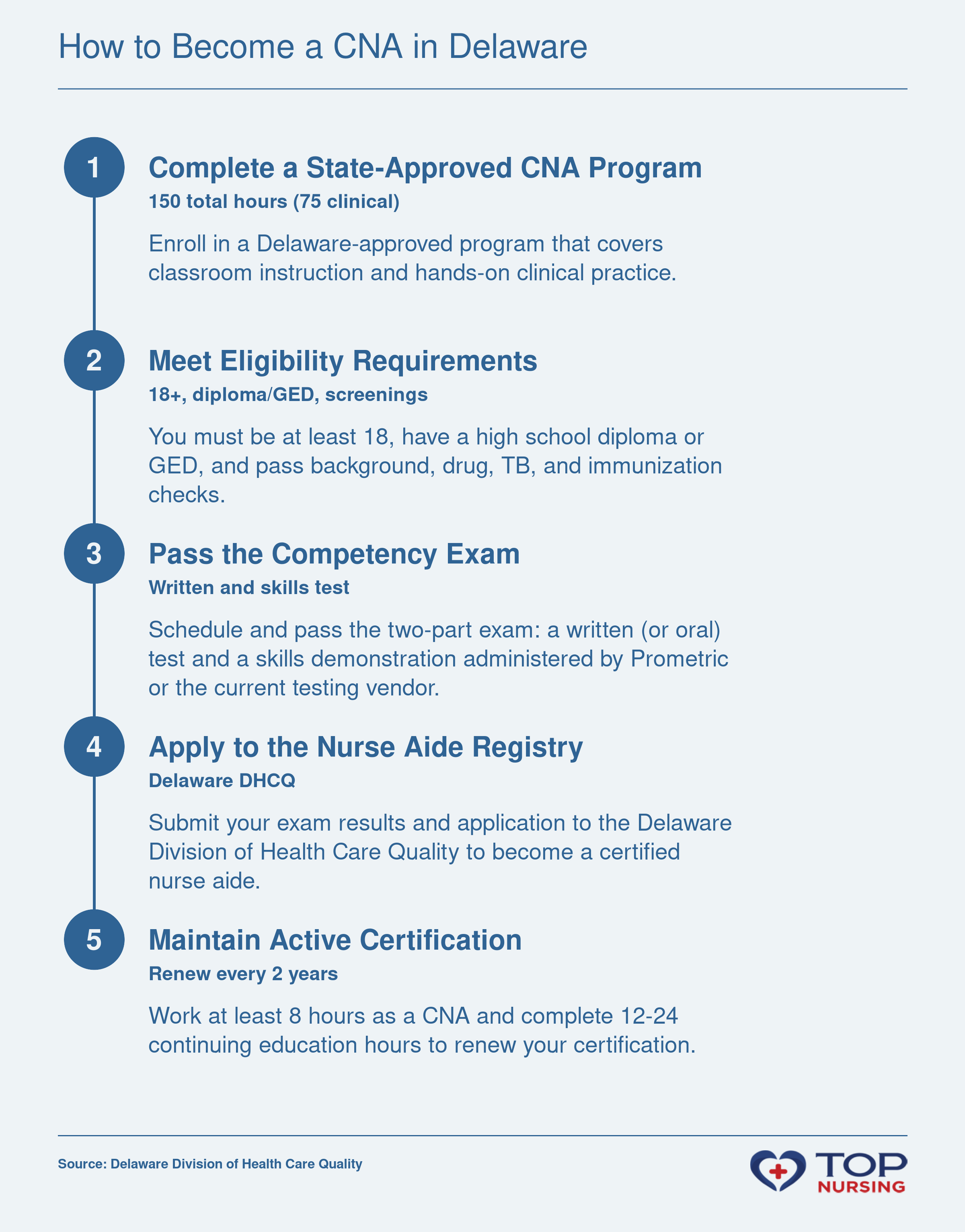
Beyond tuition, your total out-of-pocket costs will include several smaller but necessary items. Expect to pay for textbooks (approximately $50–$150), scrubs and shoes ($50–$100), a criminal background check ($50–$75), drug screening ($30–$50), and the Delaware CNA certification exam, which costs around $115–$150. Many programs bundle some of these costs into tuition, so review the school's breakdown carefully. When comparing program costs, always ask for a detailed list of what is covered and what remains your responsibility, so you can budget accurately from day one.